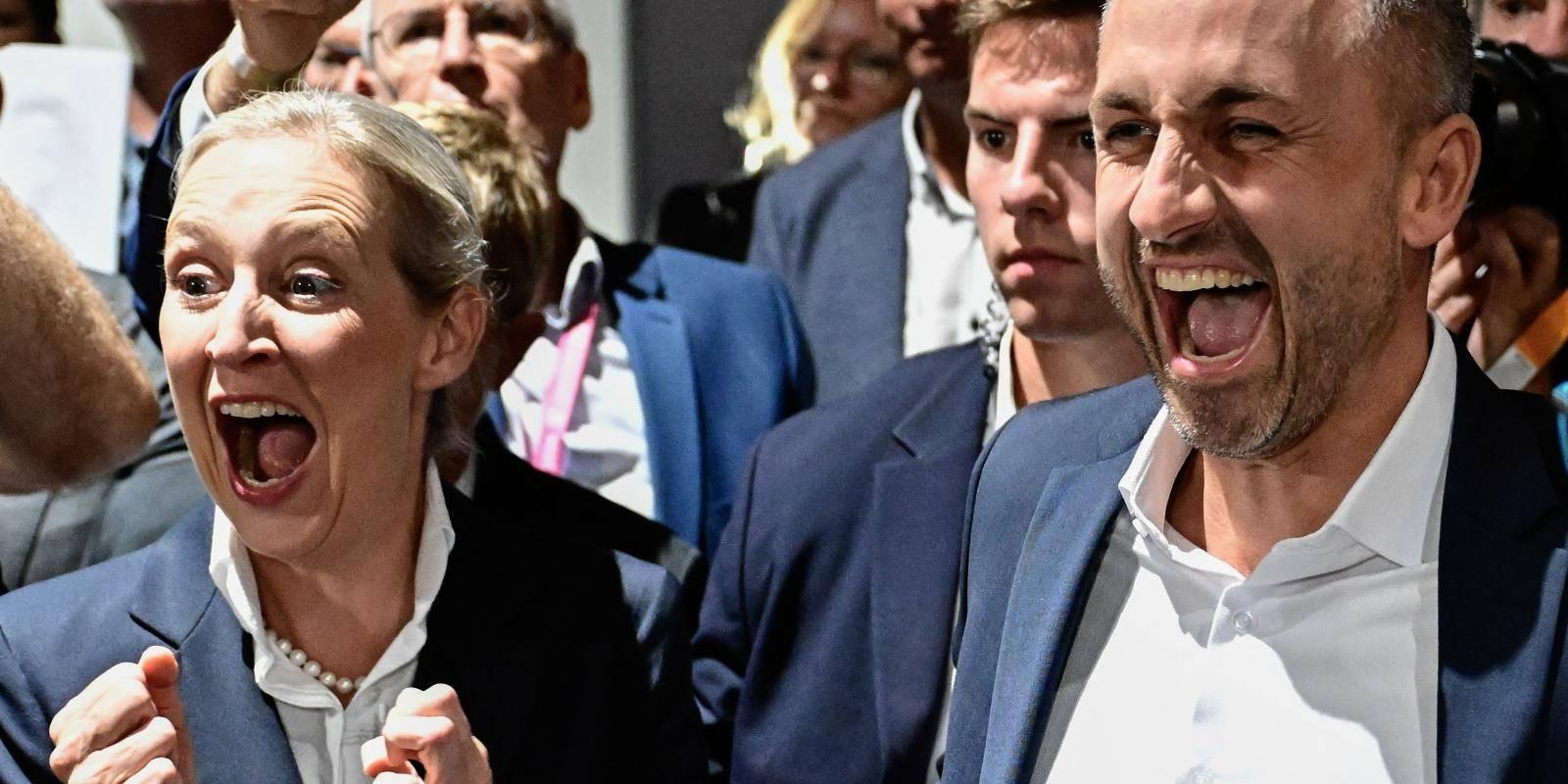

On 6 September 2026, the state election in Saxony-Anhalt, Germany, produced a result that would have been difficult to imagine even a few years earlier: Alternative for Germany (AfD) won 43.8% of the vote and 39 of the 83 seats. The party fell just three seats short of the 42 required for an absolute majority.
These election results have shocked many. The party is regarded as far-right, and some of its members have been accused of holding neo-Nazi views. Since the Second World War, no far-right party has achieved such a result in any German election. Germany’s Federal Office for the Protection of the Constitution classified the AfD as extremist in 2025, placing it under heightened state surveillance. The agency based its decision primarily on the party’s promotion of an ethnically defined conception of the nation, which it deemed incompatible with the free democratic order. Against this backdrop, the party has achieved such a result, albeit in a single state election. It should also be noted, however, that the party challenged the agency’s decision, and in February 2026 a court in Cologne issued an interim ruling in the AfD’s favour.
This article will not examine Germany’s political and party systems, the reasons behind the party’s electoral success, or related questions. These matters could be the subject of a separate article or study. The results of an election held in one part of an established democracy such as Germany provide a useful opportunity to revisit democracy, reassess its significance, and better understand it. I believe this subject is particularly important for Armenia. Our democracy remains very fragile. Today, it is the target of the Kremlin’s hybrid attacks. We must also acknowledge that a substantial portion of our population has yet to internalise the values of liberal democracy, while our democratic institutions are still taking shape. In this article, I will briefly address only certain conceptual questions concerning liberal democracy.
First, is it possible to build a liberal democracy in the complete absence of people who embrace liberal democratic values? In theory, perhaps it is, particularly when imposed “from outside.” Yet it is reasonable to assume that if there are no such people at all, there is also no demand for building such a political system. If, for example, people consider such a system alien to them, why would they build a state based on it? This raises another question, however: whom do we mean by “people,” and how many are we talking about? Do we mean the entire population living in a given territory?
Political regimes, including democracies, are often established through revolutions. Does the entire population carry out a revolution? Certainly not. Research shows that any long-established regime, including a highly authoritarian one, invariably has a substantial base of support. Some within this segment of society often enjoy privileges over others, and a revolution is therefore not in their interests. Moreover, even after a democratic regime has been established, large groups may oppose it. Many others have no interest in politics at all: they are indifferent to the type of regime in place. These are facts supported by various surveys and other studies.
Can we say that it is the majority of the population that establishes democracy? I do not think we can assert this either. The problem is that we lack a precise means of measuring such things. If the answer is that people demonstrate their support through elections, matters are not so straightforward here either. Even in established democracies, not all citizens vote. Nor does the majority always vote for political forces committed to liberal democratic values, as the German example itself illustrates.
I believe we can argue that, if a liberal democratic regime can be established, there must at least be some group of active citizens who share liberal democratic values, while the majority of the population, at a minimum, does not actively resist the process of building a liberal democracy. This does not mean, however, that the majority will necessarily defend liberal democracy if it comes under threat. Indeed, it is often the institutions themselves that shape a democratic environment.
But let us ask another question: can forces opposed to liberal democracy come to power through elections? Yes, they can. There are many examples in international experience. Why are such forces able to come to power? We can, of course, point to voters’ desire for change, their disappointment with mainstream political forces and their policies, and other factors. Yet I believe that none of these would lead people to vote for forces opposed to liberal democracy if one condition were present. I would like to put forward the following hypothesis: such forces can come to power because there is no stable absolute majority—a sufficiently large critical mass—of citizens who firmly embrace liberal democratic values, live by them, and possess a strong civic consciousness. If such a stable, predominant majority existed, there would be no reason for voters within it suddenly to support someone seeking to trample on their values.
I am not referring to the behaviour of the electorate of any particular party that supports liberal democracy. A substantial portion of a party’s electorate may change its position for various reasons. I am referring to people with particular civic qualities and liberal democratic values, for whom freedom, civic responsibility, equality before the law, tolerance, and diversity are as essential as air and water.
Does a stable majority of this kind exist in Armenia? I do not believe so. Such a majority certainly does not exist even in many advanced democracies, as election results often demonstrate.
The strongest guarantee that liberal democracy will become virtually irreversible is the existence of a critical majority of citizens firmly committed to its values. Naturally, the larger this majority, the stronger the guarantee. Yet, as already noted, even for established democracies, having such a critical mass is a luxury. What else, then, must be done to preserve liberal democracy?
First, readers may wonder why I consistently emphasise the word “liberal” when discussing democracy. The reason is that democracy can, in practice, also be illiberal, although in the contemporary world it is liberal democracy that is generally regarded as genuine democracy. Briefly put, it is a democratic system in which the exercise of power is constrained by fundamental human rights and freedoms. For example, a liberal democratic system cannot adopt a law abolishing fundamental human freedoms. No institution—not even the people themselves—can decide, for instance, that people with blue hair should be tortured or that citizens who listen to heavy rock music should be imprisoned. Even holding a referendum on such questions is prohibited.
There are also cases, however, in which democracy appears to exist because, for example, competitive elections are held, while fundamental freedoms are severely restricted and violated. This is why the term “illiberal democracy” has become established in political science. Today, for example, this is often the kind of regime that emerges when the far right comes to power through elections.
Let us now return to the question of what we should do to preserve liberal democracy. I believe that, above all, we must use various means to foster liberal democratic values among a large number of citizens. The entire education system, particularly its humanities component, should be grounded primarily in this objective. This, however, is a long-term undertaking. In the shorter term, propaganda targeting liberal democracy must be countered effectively, whether within the education system or during election campaigns. There must be a policy of zero tolerance towards hate speech targeting people on the basis of any aspect of their identity, whether sex, religious or political beliefs, ethnicity, or other characteristics.
In other words, a liberal democratic society must do everything possible to ensure that no force opposed to liberal democracy ever becomes an appealing political choice. Naturally, many conceal their worldview, which makes it difficult, for example, to ban neo-Nazi activities. For this reason, I believe the state should take a firmer stance towards specific statements—and especially actions—that oppose liberal democracy and contravene the law, whether they come from political or civic groups or from the individuals representing them.
Following the AfD’s impressive electoral showing in Saxony-Anhalt, demonstrations are being held in Germany calling for the party to be banned. But perhaps matters should never have been allowed to reach the point where it became a mainstream party. As Steven Levitsky and Daniel Ziblatt argue in their bestselling book How Democracies Die, traditional political parties themselves often play an important role in the political success of extremist forces. In pursuit of short-term political gains, they may cooperate with these forces. As a result, extremist forces move out of the political margins, gain wider acceptance, and gradually become part of the political mainstream. Levitsky and Ziblatt argue that there should be gatekeeping institutions that prevent such forces from approaching power. If those institutions fail, however, mainstream politicians must assume their role. In other words, the responsibility for defending liberal democracy rests first and foremost with political actors who embrace its values. All of this is particularly relevant to Armenia.
Edgar Vardanyan
This article was produced by the Armenian Council Research Center with the support of the Yerevan Office of the Friedrich Naumann Foundation for Freedom’s South Caucasus regional programme.
The opinions and positions expressed in this article do not necessarily reflect the views of the Friedrich Naumann Foundation for Freedom or its staff.