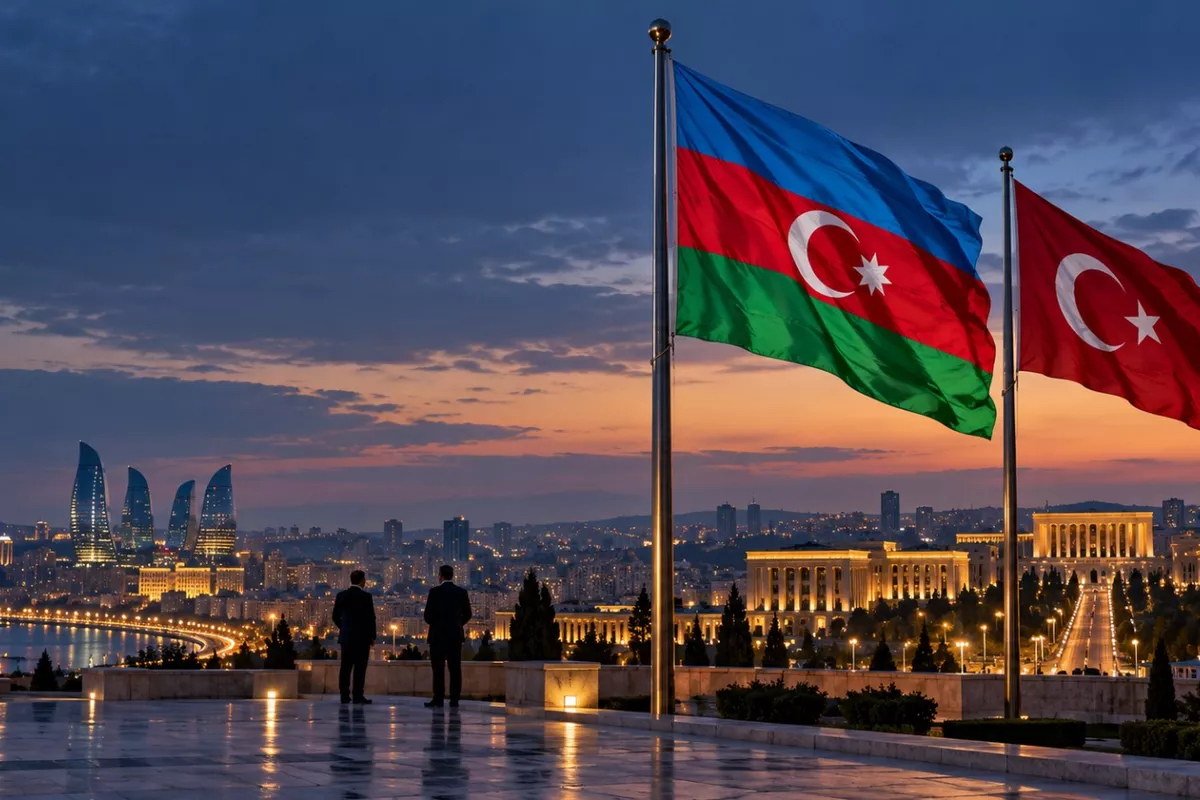

In international relations, the alliance between Turkey and Azerbaijan is often presented as a seamless model of ethnocultural and political unity, encapsulated since the 1990s in the official slogan “One Nation, Two States”. Nevertheless, an analysis of regional security dynamics shows that this bilateral axis, while strategically robust, is not free of tactical disagreements and underlying tensions.
The discontent that became apparent in the two countries’ public and media spheres in September–October 2026, concerning restrictions on wearing the hijab (headscarf) in Azerbaijan’s public schools and the rights of Muslims, represents only the surface manifestations of these tensions. Beneath this discourse on religion and values lie deeper geopolitical contradictions whose origins date back to the early 1990s.
Historical Crises in the Alliance: From Elchibey to the Gülenists
The historical evolution of Turkish–Azerbaijani relations demonstrates that Ankara’s and Baku’s national interests have not always fully aligned:
- Abulfaz Elchibey’s presidency (1992–1993). The pronounced pan-Turkist policies of Azerbaijan’s second president, Abulfaz Elchibey, and his pursuit of the closest possible alignment with Ankara encountered geopolitical realities. During the First Karabakh War, Turkish Prime Minister Süleyman Demirel’s government refrained from providing the direct military support Baku expected, seeking to avoid a direct military confrontation with Russia. This demonstrated that, at least during that period, the regional balance of power and Turkey’s own security took precedence over obligations arising from ethnic kinship.
- The Zurich Protocols of 2009. Another diplomatic crisis erupted in bilateral relations in 2009, when Turkey and Armenia signed the Zurich Protocols on normalising relations. Azerbaijani President Ilham Aliyev’s administration viewed this as a strategic betrayal, as Ankara sought to open the Armenian–Turkish border without first securing satisfaction of Baku’s demands on the Karabakh issue. In response, Baku threatened to raise the price of natural gas supplied to Turkey and seek alternative energy routes. Ankara consequently felt compelled to retreat and, partly for this reason, freeze the protocols’ ratification process.
- Disagreements over Gülenist (FETÖ) networks. Following the attempted coup of 15 July 2016, Turkish President Recep Tayyip Erdoğan demanded that Baku dismantle the educational and media networks associated with Fethullah Gülen’s movement. Even earlier, Azerbaijani media had reported that Erdoğan had presented Aliyev with an ultimatum: “Either me or Gülen.” Initially, the Azerbaijani authorities responded cautiously and slowly, as Gülenist institutions were deeply involved in educating the country’s elite and shaping its state apparatus. Only under direct political pressure from Ankara did Baku close Qafqaz University and ANS TV and extradite suspects.
The Hijab Discourse of 2026 and Geopolitical Contradictions
Following the Azerbaijani government’s adoption of Decision No. 309 in September 2026, restricting the wearing of the hijab in public schools, Turkish religious and civil society groups sharply criticised Baku, while protests took place outside Azerbaijan’s consulate in Istanbul. Beneath this dispute over religion and values, however, lie several fundamental strategic disagreements:
The Israel factor. Ankara and Baku pursue diametrically opposed policies towards Israel. While Turkey has adopted a strongly anti-Israeli position, seeking to assume leadership of the Islamic world, Azerbaijan maintains a deep strategic, military-technical and energy alliance with Tel Aviv, including oil supplies to Israel through SOCAR via the Baku–Tbilisi–Ceyhan pipeline. Israel’s military and political presence in the South Caucasus through Azerbaijan is a strategic concern for Ankara.
The question of recognising Northern Cyprus. For years, Ankara has indirectly pressed Baku to formally recognise the independence of the Turkish Republic of Northern Cyprus. Azerbaijan, however, has refrained from doing so, concerned that diplomatically recognising an unrecognised territory could undermine its own position under international law regarding its territorial integrity.
Control over the Armenian–Turkish dialogue. Baku has consistently harboured concerns that the normalisation of relations between Yerevan and Ankara could outpace Armenian–Azerbaijani negotiations. The Azerbaijani side fears that Turkey, seeking to improve its standing in relations with the West, might open the Armenian–Turkish border or establish diplomatic relations before Armenia and Azerbaijan conclude a peace treaty.
Tactical Changes within an Unchanging Strategy
An analysis of both the history and current dynamics of Ankara–Baku relations shows that “One Nation, Two States” represents a flexible strategic alliance rather than absolute unity.
Regional realities, external pressures or domestic political needs may prompt the two countries to adjust their tactics, resorting to public disputes, the instrumentalisation of religious discourse or diplomatic pressure. Their long-term strategic objectives, however—securing the predominance of Turkic influence in the South Caucasus, controlling transit and energy corridors, and maintaining the regional balance of power—remain unchanged. Current disagreements over the hijab or diplomatic issues therefore do not dismantle the Turkish–Azerbaijani axis. Instead, they reveal the complex, ongoing processes of competition and redistribution of interests within it, sometimes also exposing vulnerabilities that have long characterised relations between the two states.
Diana Karapetyan
This article was produced by the Armenian Council Research Center with the support of the Yerevan Office of the Friedrich Naumann Foundation for Freedom’s South Caucasus region.
The opinions and positions expressed in this article do not necessarily reflect the views of the Friedrich Naumann Foundation for Freedom or its staff.
Sources
- Azerbaijan and Turkey spar over hijab ban https://eurasianet.org/azerbaijan-and-turkey-spar-over-hijab-ban
- Turkey and Azerbaijan: An alliance tested by diplomacy and FETÖ crackdown https://eurasianet.org/turkey-azerbaijan-alliance-gulen
- The Limits of the Turkish-Azerbaijani Alliance https://carnegieendowment.org/research/2010/05/turkey-and-azerbaijan-between-brotherhood-and-state-interests
- Protests in Istanbul over Azerbaijan school hijab restrictions https://oc-media.org/protests-in-istanbul-over-azerbaijan-school-hijab-restrictions/
- Azerbaijan threatens Turkey gas deal over Armenia talks https://www.reuters.com/article/world/azerbaijan-threatens-turkey-gas-deal-over-armenia-talks-idUSTRE5A93KV/