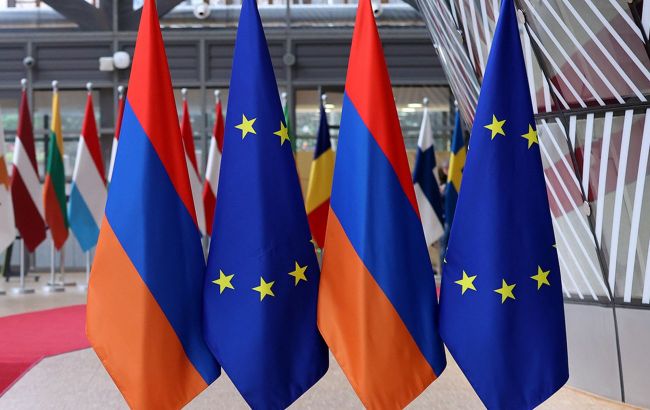

The prospect of Armenia joining the European Union has recently become a subject of public and political debate. An application for EU membership, however, should not become an end in itself or the sole measure of Armenia’s European integration policy. For Armenia, the more important question is what must be done today to be better prepared for possible membership tomorrow and to derive the greatest benefit from that process.
The Present and Future of Armenia–EU Relations
Armenia–European Union relations have changed substantially in recent years. They are no longer merely a distinct strand of foreign policy. Cooperation with the EU now encompasses legal and institutional reforms, economic integration, citizens’ mobility, security, digitalisation, energy, transport, and the gradual adoption of European standards.
In 2025, Armenia’s National Assembly adopted a law on launching the country’s EU accession process. In substance, this was more a political declaration than the formal launch of that process. In August 2026, Prime Minister Nikol Pashinyan announced that Armenia intended to begin the process of submitting a formal membership application in the near future.
Although this announcement does not yet mean that a final political decision to submit an application has been made, it has stimulated discussion of Armenia’s EU membership in political circles and among the public. These discussions, however, often veer towards extremes, without a comprehensive understanding of the accession process: the significance of submitting an application is frequently overstated, while the importance of reforms is overshadowed.
An application for EU membership is an important political step, but it is not an end in itself. What matters more is making steady progress towards meeting the criteria required for membership, which also improve the effectiveness of the country’s governance and economy.
Brussels’ response to statements from Yerevan can be characterised as positive but cautious. The European Commission notes that Armenia is closer to the EU than ever before, while emphasising that accession is a merit-based process governed by clear criteria and begins with a formal application.
The deepening of Armenia–EU relations began long before membership entered the current political agenda. The Comprehensive and Enhanced Partnership Agreement (CEPA), signed in 2017 and in force since 2021, established a broad framework for Armenia’s gradual alignment with European standards. This process has accelerated in recent years: the visa liberalisation dialogue was launched in 2024, a new Armenia–EU Strategic Agenda was adopted at the end of 2025, and the first Armenia–EU summit was held in Yerevan in May 2026.
These developments highlight an important point: Armenia’s European integration need not be equated with the formal EU accession process. Armenia can and should continue to deepen its relations with the EU, regardless of when it submits a membership application. Aligning legislation and public administration with European standards, expanding economic ties, diversifying energy and transport links, increasing citizens’ mobility, and developing security cooperation are important for Armenia irrespective of the timing of membership.
The path to EU membership consists of several successive stages: submitting a formal application, assessment by the European Commission, the granting of candidate status by a decision of the member states, opening negotiations, aligning legislation and institutions with EU standards during those negotiations, concluding negotiations, and signing and ratifying an accession treaty. Each stage requires both progress by Armenia and political decisions by EU member states. Submitting an application is therefore an early step in a lengthy process, rather than a step close to its completion.
The experience of countries seeking EU membership also demonstrates this. Ukraine and Moldova submitted membership applications in March 2022 and received candidate status in June of that year, but negotiations were not formally opened until June 2024. Georgia’s experience likewise shows that candidate status does not automatically guarantee further progress. The duration of accession negotiations and the subsequent stages depends both on progress with reforms and on political decisions by EU member states.
In other words, how quickly an application is submitted does not determine how quickly the accession process will proceed. What matters more is the strength of the institutions, economy, and state capacity with which a country enters that process.
In Armenia’s case, there is an additional foreign policy consideration. Armenia remains a member of the Russian-led economic bloc and several other organisations: the Eurasian Economic Union (EAEU), the Commonwealth of Independent States (CIS), and the Collective Security Treaty Organization (CSTO). So far, Yerevan has managed to deepen relations with the European Union while also seeking to manage the risks arising from Russia.
A formal membership application could alter that balance. It would represent not merely a deepening of cooperation, but a more explicit political affirmation of Armenia’s strategic orientation. It could therefore increase political and economic pressure from Russia and narrow Yerevan’s room for manoeuvre in certain areas.
Under these circumstances, time is one of Armenia’s most important political resources. It must be used to reduce external dependencies, expand energy and transport alternatives, deepen economic ties with European markets, improve the effectiveness of public administration, and broaden security partnerships. Notably, Russia is already attempting to deprive Armenia of that time by demanding a referendum and a choice between the prospects of EAEU and EU membership, while openly threatening various consequences.
Armenia’s priority in European integration should therefore not be reduced to “submitting a membership application as quickly as possible.” A more effective approach is to accelerate practical integration with the EU while preparing for a possible accession process.
This approach does not mean abandoning the prospect of membership or postponing a decision on it indefinitely. It means distinguishing the long-term objective from the steps needed to achieve it.
Conclusion
Armenia’s priority in European integration should be to enter the EU accession process from the strongest possible position, rather than simply to enter it as quickly as possible. This requires accelerating the adoption of European standards, reducing external dependencies, and expanding Armenia’s economic, energy, transport, and security alternatives. A membership application would then represent more than an expression of political aspiration: it would be a strategic decision taken by a better-prepared and more resilient Armenia.
This article was produced by the Armenian Council Research Center with the support of the Yerevan Office of the Friedrich Naumann Foundation for Freedom’s South Caucasus regional programme.
The opinions and positions expressed in this article do not necessarily reflect the views of the Friedrich Naumann Foundation for Freedom or its staff.