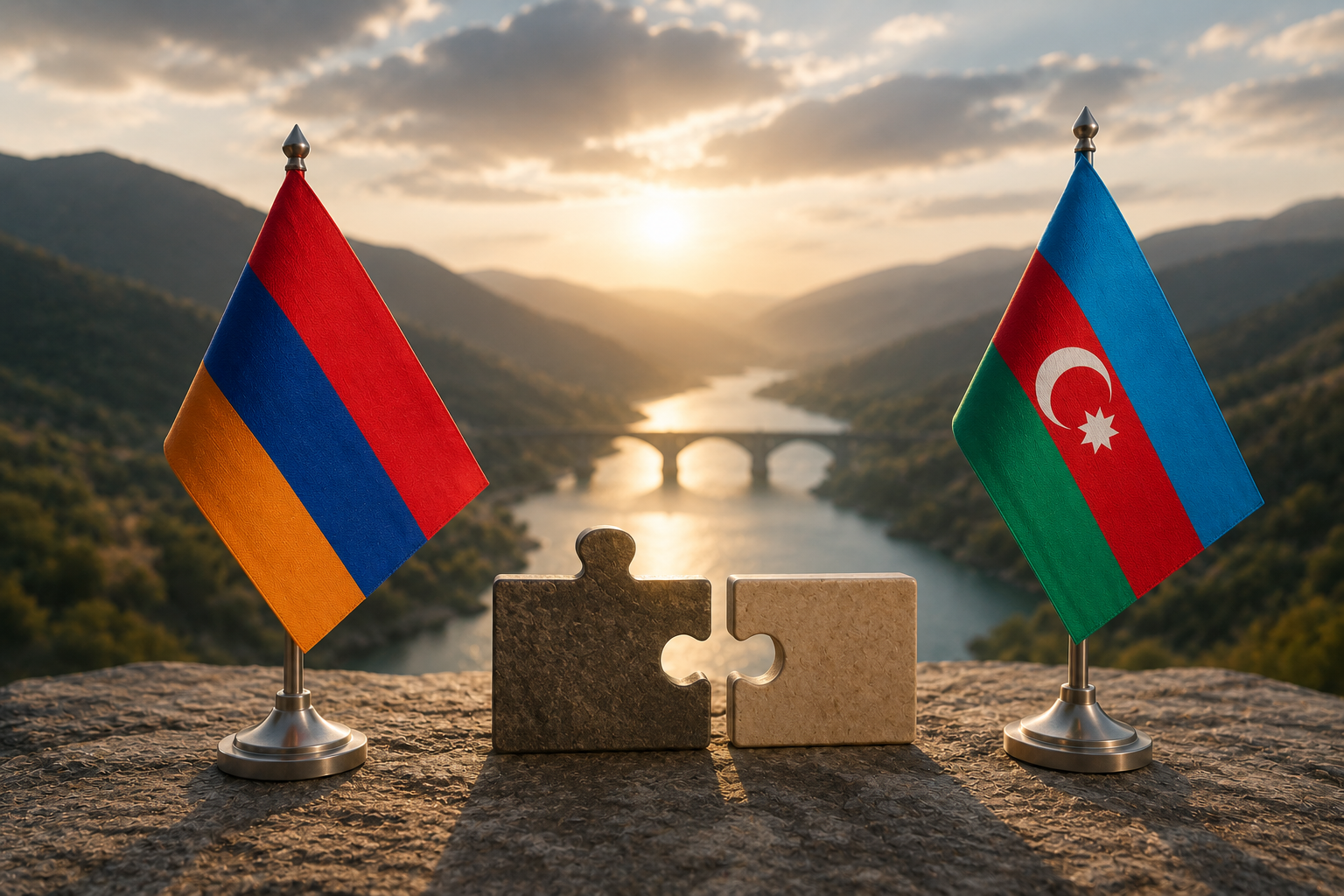

Armenia’s parliamentary elections held on June 7 were characterized by a high level of competition and an intense electoral campaign. The pre-election debate was dominated by Armenia–Azerbaijan relations, the future of already concluded agreements, Armenia’s foreign policy orientation, socio-economic challenges, and other key issues.
Among these themes, peace emerged as perhaps the most politicized and heavily instrumentalized issue. At times, campaign rhetoric escalated significantly, ranging from warnings of a potential new war to narratives concerning the “return of 300,000 Azerbaijanis.”
On June 14, Armenia’s Central Electoral Commission announced the final results of the vote. In the newly elected National Assembly, the Civil Contract party will hold 64 seats, Strong Armenia 29 seats, and the Armenia Alliance 12 seats. This distribution of mandates enables the ruling party to once again form a government independently in August.
The institutionalization of peace occupies a central position in the Civil Contract party’s electoral platform, which ran under the slogan “Stand Up for Peace” («Տե՛ր կանգնիր խաղաղությանը»). Viewed through the prism of the ongoing negotiation process, the election results can be interpreted as a public reaffirmation of both the mandate of Armenia’s negotiators and the agreements they have reached.
What to Expect from the Peace Process
Against this backdrop, it is useful to outline possible short- and medium-term developments in the Armenia–Azerbaijan peace process.
For analytical clarity, the process can be divided into several interconnected components.
1. Peace Treaty
The future of the peace treaty remains the most significant source of uncertainty in the Armenia–Azerbaijan peace process. The document was initialed on August 8, 2025. The Armenian side has repeatedly expressed its readiness to proceed toward its final signing and ratification. Azerbaijan, however, has linked this process to a precondition requiring the removal from the preamble of Armenia’s Constitution of the reference to the Declaration of Independence, which, according to the Azerbaijani side, implies territorial claims against Azerbaijan.
It should be noted that in Decisioni No. SDO-1590 of April 29, 2021, concerning the interpretation of the constitutional framework of unamendable provisions, the Constitutional Court of the Republic of Armenia held that the constitutional preamble falls within the category of provisions not subject to amendment. This positionii was later reaffirmed in the Court’s ruling regarding the regulations governing the border delimitation commissions. In practical terms, this means that the constitutional preamble cannot be changed through constitutional amendments.
The Armenian government has consistently stated that it does not share Azerbaijan’s interpretation of the relevant constitutional provisions. At the same time, it has emphasized that constitutional reform has been part of the ruling party’s agenda since 2018iii. Beginning in 2024, this reform agenda gradually evolved into the broader concept of adopting an entirely new constitutioniv.
In March 2026, Armenia’s Minister of Justice announced that the draft text of the new Constitution, prepared by the Constitutional Reform Council, had already been completed, although it still lacked a preamblev. In June, following the parliamentary elections, he further stated that “the text has not yet been finalized, as a number of participating stakeholders have not yet submitted their comments and proposals.”vi According to the Minister, only after all remaining opinions are collected, reviewed, and incorporated will a decision be made regarding publication.
Although the draft text has not yet been made public, the Prime Minister of Armenia has repeatedly expressed the view that the new Constitution should not contain a reference to the Declaration of Independence, while also emphasizing that the final decision rests with the people of Armeniavii.
The possibility of submitting a new Constitution to a referendum also raises a number of legal and procedural challenges. The central issue is that, following the parliamentary elections, the Civil Contract party failed to secure a constitutional majority (two-thirds of parliamentary seats), creating uncertainty regarding the prospects for adopting a new Constitution.
Under Article 202viii of the Constitution, the right to initiate the adoption of a new Constitution or constitutional amendments belongs to at least one-third of the total number of deputies, the Government, or 200,000 eligible voters. However, the decision to submit a constitutional draft to a referendum must be approved by at least two-thirds of the total number of members of the National Assembly. The Constitution provides no mechanism for bypassing this requirement.
In practical terms, this means that the Civil Contract party may initiate the process either with the support of at least one-third of parliamentary deputies or through the collection of 200,000 signatures. However, lacking a constitutional majority (70 seats), it cannot advance a draft Constitution to a referendum without the support of opposition parties or individual opposition lawmakers.
Under the current circumstances, three possible scenarios can be envisaged:
· The legal deadlock persists: Azerbaijan maintains its precondition, the peace treaty remains unsigned, but dialogue continues on other tracks of the peace process, including the implementation of certain provisions contained in the draft agreement.
· Domestic political developments enable Civil Contract to secure the support of at least six opposition deputies, making it possible to proceed to a constitutional referendum (the outcome of which remains a separate analytical question).
· Azerbaijan revises its position on the precondition, thereby creating the necessary conditions for the signing and ratification of the peace agreement.
2. Transport Connectivity
In the context of transport connectivity and regional unblocking, developments may be expected in two main directions in the near future. The first relates to the TRIPP initiativeix.
In early June, Armenia’s Foreign Minister and the U.S. Secretary of State signed the Framework Agreement on Strategic Cooperation regarding TRIPP. Before it can enter into full force, the agreement must still undergo the relevant domestic legal procedures in both countries.
Notably, under a mandate from the U.S. Department of State’s Partnership for Global Infrastructure and Investment (PGII), a team from the American engineering and consulting firm AECOM has been conducting site surveys in Armenia for several months in connection with TRIPP. The team is carrying out technical and economic assessments and preparing proposals related to the construction of railways and other associated infrastructurex.
Following the final ratification of the TRIPP framework agreement, construction work on the project could begin on the ground as early as the second half of this year. This commitment was also reiterated by the Prime Minister of Armenia in the aftermath of the elections.
Another potential infrastructure-related development concerns the Yeraskh–Nakhchivan border railway. As early as December 2025, the Armenian government raised with the Russian side the issue of restoring sections of the railway connecting Armenia with Nakhchivan and Turkeyxi, noting that the concessionary management rights over Armenia’s railway network are held by
South Caucasus Railway, a Russian-operated company. The Russian side, however, has shown limited interest in these projects, citing their lack of economic viabilityxii.
Given Moscow’s position, the Armenian government has opted to proceed independently with the restoration of the Yeraskh–Nakhchivan railway and the Akhurik–Turkey border railway, and has already announced a tender for the design phase of the projectxiii.
In the short term, the restoration of the Yeraskh–Nakhchivan railway could enable rail transit of goods from Azerbaijan to Nakhchivan via Armenia and Georgia, in a manner similar to the current transport of freight to Armenia from Russia and Kazakhstan through routes crossing Azerbaijan and Georgia. Such railway interconnectivity could contribute to confidence-building and support the broader process of reopening regional transport links.
In the longer term, if progress is achieved in the regional unblocking process, the Yeraskh–Nakhchivan railway could play an important role in improving Armenia’s overall railway connectivity and in facilitating a future rail link between Armenia and Iran.
3. Delimitation and Demarcation
Another important track of the peace process is the delimitation and demarcation process between Armenia and Azerbaijan. To date, the two countries have delimited and demarcated 12.6 kilometers of their shared border out of a total length of approximately 1,000 kilometers.
The delimitation commissions have held 13 meetings so far, the most recent of which took place in Aghveran on April 29, 2026xiv. Within the framework of this process, the parties have reached two understandings:
1. Delimitation and demarcation will continue along a north-to-south axis;
2. In parallel with the process of unblocking communications, certain sections of the border may be subject to expedited delimitation and demarcation.
During the latest meeting of the delimitation commissions, the parties agreed upon and exchanged draft guidelines concerningxv:
· the working procedures of the delimitation expert groups,
· the procedures for developing delimitation maps,
· the drafting and publication procedures for delimitation-related documentation.
The development and implementation of these technical instruments may contribute to a smoother continuation of the delimitation process. However, the timeline for the commencement of actual field operations remains dependent on the political will of the parties.
4. Economic Relations
Economic cooperation between Armenia and Azerbaijan is also gradually developing. In October 2025, Azerbaijan announced the lifting of the ban on the transit of cargo to Armenia through its territory. This decision enabled the rail transportation of goods from Russia and Kazakhstan to Armenia via Azerbaijan and Georgia.
Starting in December, Armenia began importing petroleum products from Azerbaijan, which are likewise transported by rail through Georgia. According to data from Azerbaijan’s State Customs Committee, goods worth 11.2 million USD were exported to Armenia between January and May of this yearxvi.
It is noteworthy that a certain asymmetry persists in these trade relations. Although Armenia has announced the removal of restrictions on the transit of goods from Azerbaijan to Nakhchivan, from Azerbaijan to Turkey, and in the opposite direction, official Baku has not yet made use of these opportunities. Armenian exports to Azerbaijan have so far taken place only indirectly, and their volumes remain minimal.
Despite this, positive dynamics can be observed. The parties have exchanged lists of goods in which they have expressed mutual import interest. In addition, within the framework of the April 29 meeting in Aghveran, a discussion was held with the participation of Armenian and Azerbaijani business representatives, focusing on the development of trade and economic cooperation, mutual supply of goods and services, and issues related to transit transportationxvii. It is expected that in the near future the existing asymmetry in trade relations will be reduced, and the Azerbaijani side will begin importing Armenian goods in meaningful volumes.
According to media reports, discussions are also underway regarding the potential export of flowers, aluminum foil, and sugar from Armenia to Azerbaijan.
It is noteworthy that, against the backdrop of Russian restrictions on Armenian exports, new opportunities for economic cooperation between Armenia and Azerbaijan may gradually emerge.
5. Confidence-Building Measures
The low level of mutual trust in the Armenia–Azerbaijan peace process remains one of its most significant challenges, shaped by a combination of both objective and subjective factors. Official statements suggest that efforts aimed at addressing this issue will continue in the period ahead.
Notably, following the elections, on June 14 a meeting took place in Dilijan between Armenia’s Security Council Secretary Armen Grigoryan and Hikmet Hajiyev, Assistant to the President of Azerbaijanxviii. Hajiyev entered Armenia by land through the delimited and demarcated section of the interstate border, in full compliance with all relevant procedures. The parties agreed to hold the next such meeting in Azerbaijan.
A post-election meeting in this format may be interpreted as a reaffirmation of the parties’ commitment to the peace process. One of the key topics discussed by the officials was measures aimed at strengthening trust between civil societies.
The “Peace Bridge” initiative, established in 2025 and bringing together experts, civil society representatives, and media professionals from both countries, has held four meetings to date—two in Armenia and two in Azerbaijan. This public diplomacy platform, often described as “track 1.5,” continues its activities with the aim of expanding its network of participants and contributing to the strengthening of mutual trust. It is also noteworthy that, in a recent congratulatory message addressed to Ilham Aliyev, Donald Trump, among various positive developments, referenced the “Peace Bridge” initiative, which can be considered an important acknowledgment.
Conclusion
In conclusion, the Armenia–Azerbaijan peace process retains significant potential for further development, the realization of which will depend on political will, sustained support from international partners, and the achievement of incremental but tangible progress.
Narek Minasyan
This article was produced by the Armenian Council research center with the support of the Yerevan office of the Friedrich Naumann Foundation for Freedom in the South Caucasus region.
The views and opinions expressed in this article do not necessarily reflect those of the Friedrich Naumann Foundation for Freedom or its staff.