
Introduction
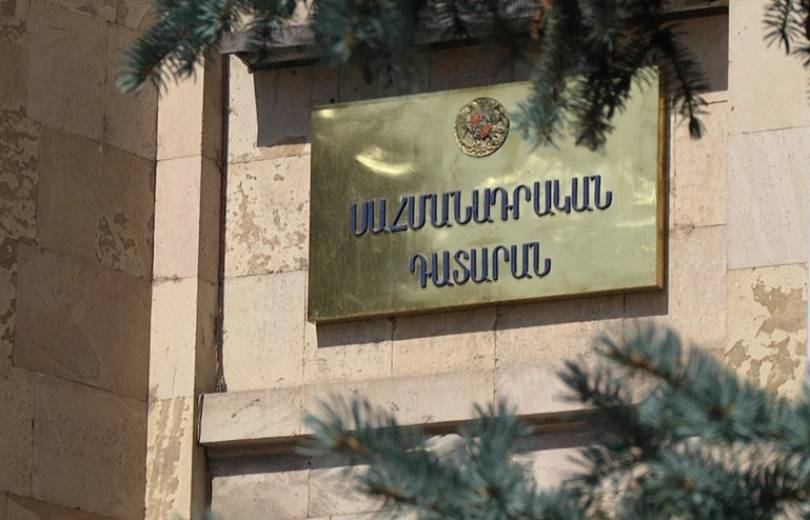
This paper examines the principal findings of the Constitutional Court’s decision in the case concerning challenges to the results of the 2026 National Assembly elections. Of the eighteen political forces that participated in the elections, seven filed applications with the Constitutional Court contesting the legality of the election results. Prior to the judicial proceedings, it was decided that two of the nine judges of the Court would not participate in the examination of the case due to concerns regarding potential bias.
Within the framework of its review, the Constitutional Court considered it necessary to address, in particular, the following issues:
- Whether criminal proceedings initiated against candidates included in the electoral lists of participating political forces, as well as against certain other participants in the electoral process, had an impact on the overall election results;
- Whether there had been any misuse of administrative resources, including through the implementation of economic and social programs or measures by the government;
- Whether the decision of the Central Electoral Commission not to order repeat voting in certain polling stations had affected the overall election outcome;
- Whether calls for violence or threats made during the election campaign could have influenced the election results;
- Whether the facts and arguments presented by the applicants concerning other alleged violations possessed sufficient evidentiary value to justify invalidating the election results.
Criminal Proceedings and the Presumption of Innocence
With regard to the first issue, the Constitutional Court emphasized the importance of upholding the presumption of innocence. In the Court’s assessment, unless required for the purposes of criminal proceedings, law enforcement authorities should have refrained—at least until and including election day—from mentioning the name of any political force participating in the elections in public communications concerning alleged criminal acts or their alleged perpetrators.
At the same time, the Court stressed that political parties themselves had a responsibility to ensure the integrity of the electoral process and to publicly condemn instances of vote-buying carried out in their name. According to the Court, this did not occur.
The Court further observed that public statements concerning the alleged guilt of a candidate or other participants in the electoral process may jeopardize their public reputation and create negative perceptions of the respective political force or individual. Nevertheless, it concluded that a substantive examination of whether the presumption of innocence had been violated in the criminal proceedings in question—given the specific factual circumstances of those cases—fell outside the scope of the constitutional review before the Court.
Misuse of Administrative Resources and Socio-Economic Measures
Addressing the alleged misuse of administrative resources, particularly in relation to social programs, pension increases, bonuses for public servants, and comprehensive health insurance, the Court noted that, although the legislation does not impose restrictions on the government’s implementation of socio-economic measures during the election campaign period—so as to ensure the continuity of government—the implementation of such measures must not contain elements of election campaigning, be accompanied by campaign promises directed at voters, or involve any other campaign-related activities capable of influencing the free expression of the voters’ will.
The implementation of socio-economic measures must remain free from campaign content and serve exclusively the implementation of public policy, thereby excluding any intention to influence the electoral process or to provide the ruling political force with an electoral advantage. Otherwise, such measures may constitute a specific form of misuse of administrative resources, creating a risk of violating the principle of equal opportunities.
With regard to the case at hand, the Court found that no separate proceedings had been initiated concerning other alleged instances of the use of administrative resources. Although certain arguments submitted to the Court, in essence, pointed to unlawful use of administrative resources, they were episodic and fragmented in nature. Furthermore, it had not been demonstrated that administrative resources had been used in an organized or systematic manner or on a widespread scale. Consequently, the cumulative assessment of the documented incidents did not provide sufficient grounds for concluding that they had affected the final election results.
The Central Electoral Commission’s Decision Not to Order Repeat Voting
In the Court’s assessment, the Central Electoral Commission’s (CEC) authority to order repeat voting derives from the constitutional imperative to safeguard the legality of the electoral process and ensure the authenticity of the voters’ free expression of will. By its nature, this authority is both supervisory and remedial. Repeat voting is not an end in itself but rather a mechanism designed to ensure the genuine expression of the electorate’s will in situations where the effects of electoral violations cannot be remedied through less intrusive means. The Court also noted that neither the Constitution nor the European Convention on Human Rights requires that every vote necessarily carry equal weight or that every candidate enjoy an equal chance of victory; no electoral system is capable of eliminating the phenomenon of “wasted votes.”
According to the Constitutional Court, the question of whether to order repeat voting must be assessed in light of the principle of proportionality. Invalidating election results or ordering repeat voting constitutes a more intrusive intervention in the electoral process and may therefore be justified only where no less restrictive remedy is available.
Addressing the argument advanced by the Prosperous Armenia Party, which claimed that it had fallen 153 votes short of securing representation in the National Assembly—and that it would have obtained those votes had the results from polling stations No. 10/51 and No. 35/65 not been invalidated or had repeat voting been ordered there—the Court held that, until the results in those polling stations had been finally determined and officially tabulated, it was impossible to conclude with sufficient certainty how the votes would ultimately have been distributed. Accordingly, the assertion that repeat voting would have resulted in at least 153 additional votes and enabled the party to surpass the electoral threshold was speculative and, in itself, insufficient to establish that the overall election results had been affected.
The Court further found that, during the tabulation of the election results, no violations were identified that could have influenced the overall outcome. Moreover, the impact of the violations detected in the two polling stations had already been remedied through the decisions of the Territorial Electoral Commissions No. 35 and No. 10, which invalidated the results in the respective polling stations.
Particular attention should be paid to the Court’s reasoning that, where repeat voting is conducted under circumstances in which voters are already aware of the preliminary election results, it ceases to serve the purpose of reproducing the electorate’s original will and instead may become an expression of a new will formed within a fundamentally different legal and political context.
Repeat voting confined to individual polling stations, conducted after the nationwide results had become known—and where the crossing of the 4 percent electoral threshold, and consequently the composition of the National Assembly, clearly depended on its outcome—could not have replicated the conditions that existed on election day. In all likelihood, such a vote would have given those voters not merely an opportunity to recast a lost vote, but rather a decisive vote cast with full knowledge of the preliminary results and under conditions in which campaign resources could be concentrated on a limited number of polling stations.
Accordingly, such repeat voting would not so much have safeguarded the equality of electoral rights as it could have fundamentally altered the election outcome to the detriment of the more than 1.4 million other voters, whose individual votes would have carried significantly less weight than those cast by participants in the repeat vote.
In essence, the Constitutional Court, in its decision, neither established nor sought to define any quantitative threshold or legal standard for determining when electoral irregularities may be regarded as having affected the overall election results.
Calls for Violence, Threats, and the Climate of Hatred
The Court reaffirmed the position it had articulated in 2021, according to which election campaigning cannot be accompanied by hate speech, calls for violence, or threats—even where such threats are not genuine—as these undermine a peaceful and healthy social environment. Political parties and their representatives are expected to exercise the utmost restraint and political civility, refraining from any form of hate speech, incitement to violence, threats, or conduct that demeans the dignity of others.
In the Court’s assessment, the rhetoric employed by the leaders and representatives of certain political forces during the 2026 parliamentary election campaign was unacceptably coarse and, from the standpoint of public morality, highly reprehensible, while its impact was described as shocking. Although freedom of expression—particularly with respect to value judgments—enjoys enhanced protection in the context of political discourse, political forces exercising public authority are expected to demonstrate an even greater degree of restraint, ensuring that criticism of political opponents, particularly the opposition, does not degenerate into personal hostility.
Nevertheless, in the absence of scientifically validated methodologies for assessing the impact of such rhetoric on voters’ will and on the election results, the Court concluded that there were insufficient grounds to establish that it had affected the overall outcome of the elections.
In this regard, it would have been desirable for the Constitutional Court to also recommend that public authorities and other relevant stakeholders develop an appropriate methodology or conceptual framework for assessing the impact of such rhetoric in future electoral processes.
Foreign Influence, Information Manipulation, and Digital Challenges
The Court observed that, in administering constitutional justice, it cannot operate in an absolute legal and political vacuum or disregard the reality that, in contemporary democratic states, electoral processes are increasingly accompanied by new challenges arising from foreign influence, manipulation of the information environment, and the misuse of digital technologies. Among other arguments, the applicants referred to public statements made by officials of various foreign states concerning the elections held in Armenia or their possible outcomes, which contained either encouraging or punitive assessments or implied messages.
The Court noted that the electoral process was accompanied by considerable international attention and by active public statements from foreign political figures, which could not have remained entirely outside the awareness of participants in the electoral process, state institutions, economic actors, and voters. At the same time, the powers of the public authorities responsible for administering the elections are confined to the jurisdiction of the Republic of Armenia and therefore do not extend to responding effectively to such statements.
The Court further observed that such a degree of foreign interest was unprecedented in the history of the Republic of Armenia and required significant efforts on the part of the state authorities to prevent it from developing into interference in the electoral process. Of particular concern were disinformation operations, especially the dissemination of deepfake content generated through artificial intelligence tools, which may distort perceptions of reality and create feelings of fear, uncertainty, or threat, particularly among voters with lower levels of digital literacy.
Within the scope of the present proceedings, the Court did not assess either the factual existence of these phenomena or the extent of their impact. It nevertheless concluded that these challenges should be taken into account in the future refinement of electoral legislation, mechanisms for safeguarding the integrity of the electoral process, and the institutional capacities of the relevant state authorities.
Other Alleged Electoral Violations
With regard to the other alleged electoral violations raised by the applicants, the Court found that some of them constituted isolated or sporadic incidents, while the corresponding allegations were based solely on assumptions and suspicions lacking a factual foundation or related to the legislative framework itself. These allegations included, in particular:
- the rejection by the Migration and Citizenship Service of the Ministry of Internal Affairs of applications submitted by approximately 7,000 individuals seeking to change their designated polling station;
- the manual entry by a technical operator of the identity document details of 180 out of the 79,125 citizens who participated in the vote into the electronic verification system;
- discrepancies between the number of participating voters and the number of signatures recorded on the voter lists;
- the translucent nature of the ballot envelopes;
- the alleged exceeding of the maximum permissible campaign expenditure by the Civil Contract party’s election campaign fund; and
- unequal conditions in the media coverage of participating political forces and candidates during the election campaign.
Conclusion
In conclusion, by upholding the results of the National Assembly elections, the Constitutional Court determined, following its examination of the case, that the alleged violations had either not been substantiated or, by virtue of their nature, scale, and impact, were insufficient to call into question the constitutional legitimacy of the elections.
At the same time, the Court emphasized that its decision should not be construed as a finding that the electoral process was flawless, since, in practice, any electoral process may be accompanied by isolated legal violations.
It should also be noted, however, that in certain respects the Constitutional Court’s decision—as the final act resolving the dispute and establishing the framework for subsequent legal developments—is less specific and targeted than would have been desirable. As a result, the absence of a legal assessment of a number of important issues leaves open the possibility that the associated risks may recur or manifest themselves in new forms.
Tigran Mughnetsyan
This article was prepared by the Armenian Council Research Center with the support of the South Caucasus Regional Office in Yerevan of the Friedrich Naumann Foundation for Freedom.
The opinions and views expressed in this article do not necessarily reflect those of the Friedrich Naumann Foundation for Freedom or its staff.