
In my article published on April 30, 2025, I outlined four main scenarios for the development of Russia’s policy toward Armenia and the South Caucasus in the medium term. Of these, I considered the most likely to be the continuation of the Russia–Ukraine war and, as a consequence, the intensification of competition between Russia and the West (Scenario 3), with the South Caucasus becoming one of its key arenas. Among Russia’s principal levers of pressure in the region were identified as Armenia’s and Georgia’s economic and energy dependence, the ethnic minority factor in Azerbaijan’s case, and, in Armenia’s case, interference in domestic political processes and elections.
This scenario was based on the thesis that the contradiction of interests between Russia and the countries of the South Caucasus is of a fundamental nature. In particular, following the downing of the AZAL aircraft in December 2024, the deterioration of Russia–Azerbaijan relations was viewed not as a temporary crisis, but as a manifestation/indicator of a long-term conflict of interests between the parties. At the same time, the ability of the three South Caucasus countries to resist Russia’s efforts to preserve its regional dominance was directly linked to the development of regional cooperation and the Armenia–Azerbaijan normalization process, which deprives Moscow of one of its most important instruments of influence in the region.
Over the past period, developments have, on the whole, confirmed this scenario. The continuation of the war has further deepened Russia’s confrontation with the West. Despite U.S. President Donald Trump’s distinct approach to the war in Ukraine and his administration’s efforts to achieve a diplomatic settlement to the conflict, including the Putin–Trump meeting in Anchorage on August 15, 2025, those efforts have not led to an end to the war. At the same time, this process has contributed to increased EU support for Ukraine.
Although no consistent policy has emerged on the issue of Ukraine, the Trump administration’s approach to the post-Soviet space can be characterized as one of “quiet (or non-provocative toward Russia) expansion.” Washington has refrained from the rhetoric of competing over spheres of influence and engaging in open confrontation with Russia, while at the same time expanding the American economic, infrastructural, and institutional presence in the South Caucasus and Central Asia. This is reflected in the Washington Agreement of August 8, 2025 (the “TRIPP Agreement”), the development of the strategic partnership with Armenia, the launch of efforts to establish a similar relationship with Azerbaijan, and the unprecedented expansion of the 5+1 format with Central Asia.
The continuing confrontation with Russia has also contributed to a more consistent regional policy on the part of the European Union, reflected in the deepening of relations with Armenia and the gradual normalization of relations with Azerbaijan. Following the ratification of the Treaty on Deepening Allied Cooperation between Russia and South Ossetia on May 9, 2026, changes have also become apparent in Georgia’s policy: the restoration of relations with the United States and the European Union
has been accompanied by Tbilisi’s gradual departure from its previously more cautious rhetoric toward Moscow. In my assessment, this trend is likely to continue. In practice, all three countries of the region have, in different ways, encountered the same fundamental challenge in their relations with Russia.
Armenia as the “Weak Link” in Russia’s South Caucasus Policy
In Russia’s perception, Armenia continues to be the “weak link” in the South Caucasus—the country that remains the most economically, energetically, and institutionally dependent on Russia and, consequently, the most vulnerable to Russian pressure. Consequently, for Moscow, the struggle to preserve its influence in Armenia extends beyond the framework of bilateral relations and has become part of the broader effort to maintain its dominance in the South Caucasus. If Russia is unable to impose its political will even on the country in the region that is most dependent on it, this would signify not only a further decline in Russian influence, but also a serious blow to its credibility, demonstrating the limits of Moscow’s ability to exert influence even over its own “weak link.” It is precisely this that explains the steady intensification of Russian pressure on Armenia in the run-up to the parliamentary elections and its continuation in the post-election period.
The election campaign in Armenia was accompanied by various forms of Russian interference and pressure, including information campaigns and hybrid attacks, increasingly harsh official rhetoric, and, for the first time, the direct use of economic sanctions. The instruments of economic pressure employed since 2022–2023—delays affecting Armenian exports at the Upper Lars checkpoint, temporary import bans on certain categories of goods, and similar measures—evolved ahead of the elections into broader restrictions on the import of Armenian products. The European Union’s swift response helped mitigate their impact, while also demonstrating its growing willingness to support countries subjected to Russian pressure.
All of this is consistent with the prediction that, despite Yerevan’s efforts to avoid further deterioration in relations with Moscow and to preserve economic ties that are beneficial for Armenia, Russian policy is inclined to reproduce the logic of escalation of commitment to a flawed political course. This refers to the tendency to continue or even deepen a previously chosen policy even when evidence of its ineffectiveness—and the associated political, economic, and reputational costs—continues to grow. In my assessment, this logic is key to understanding Russia’s future decisions toward both Armenia and the other countries of the South Caucasus.
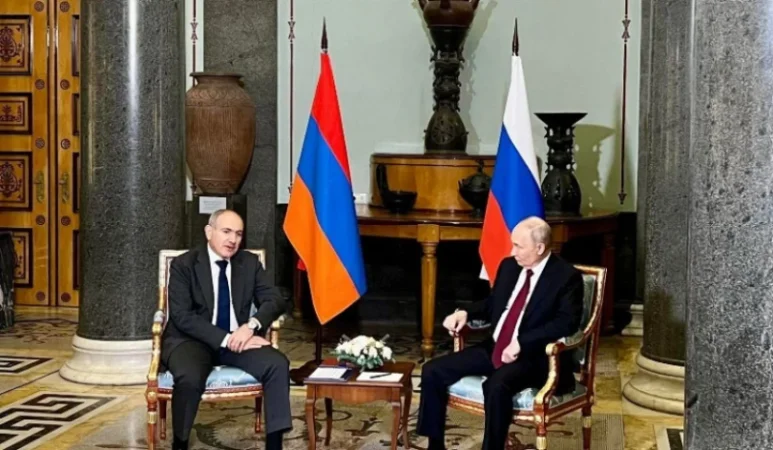
Following the elections, Russia did not lift the economic restrictions, while high-level political contacts—including Prime Minister Nikol Pashinyan’s visit to Yekaterinburg and his meeting with Russian Prime Minister Mikhail Mishustin, who has served as one of the principal channels of communication between Pashinyan and the Russian administration during the period of strained bilateral relations—have so far provided no grounds to expect that the restrictions will be removed in the near future.
Among the possible objectives behind the continuation of the sanctions policy, the following may be identified.
1. Creating socio-economic conditions for growing public dissatisfaction with the authorities ahead of Armenia’s local self-government elections scheduled for the autumn (from late September through late November). Following the completion of the municipal consolidation process, elections will be held in 44 of the country’s 64 municipalities, covering virtually all regions of Armenia, including major communities where pro-Russian political forces have relatively strong prospects. These include the country’s third-largest city, Vanadzor, where Samvel Karapetyan’s local connections could be activated; Abovyan, traditionally regarded as Gagik Tsarukyan’s sphere of influence; as well as Syunik Province’s two largest municipalities—Kapan and Goris—where, in previous elections, local self-government bodies were formed through the victory of local political forces. Creating socio-economic tensions ahead of the local elections and encouraging the consolidation of pro-Russian forces may therefore be viewed as one of Moscow’s principal objectives and as one of the reasons behind the continuation of its sanctions policy.
2. Delaying the process until the December meeting of the Supreme Eurasian Economic Council, in line with the declaration adopted in Astana on May 29. Maintaining pressure and preserving an unsettled situation in trade and economic relations could serve as a tactical instrument for compelling Armenia to comply with Russia’s demands. In this scenario, Moscow’s primary objective may be to obtain political guarantees or formal commitments that Armenia will abandon its further rapprochement with the European Union. Possible demands could include the withdrawal of the law on launching Armenia’s European Union accession process or another official commitment to refrain from further integration with the EU. Within the same context, Russia may also raise the issue of restoring Armenia’s full participation within the framework of the CSTO. This scenario may be provisionally described as a repetition of the “September 3, 2013 scenario.”
3. If the first two scenarios fail, Russia may resort to additional economic instruments, including raising the issue of increasing natural gas prices. Statements to this effect are likely to emerge as early as the autumn, on the eve of—or during—the local self-government elections. It can be assumed that even if the Russian side ultimately decides not to raise gas prices, it may nevertheless use the prospect of such an increase as an additional instrument of pressure on Armenia, particularly in the run-up to the winter months.