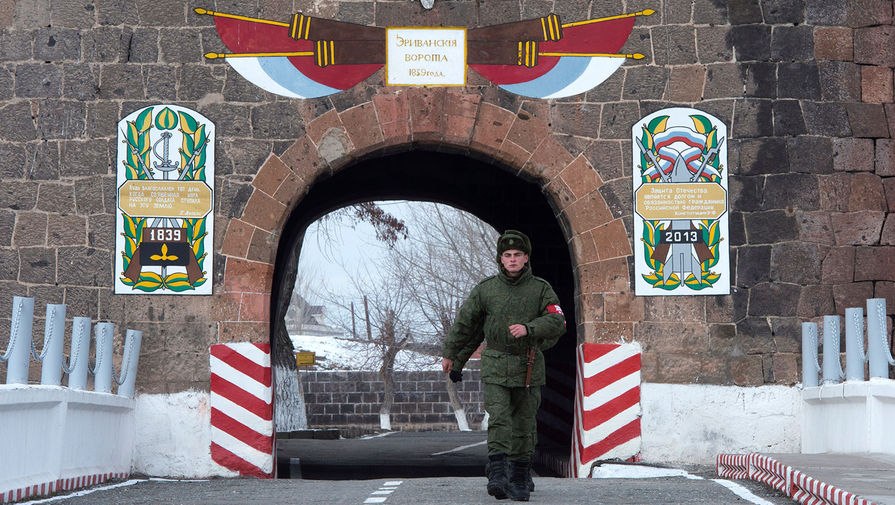

In recent days, discussions concerning Russia’s 102nd Military Base in Gyumri have intensified. At a press conference on 2 September, just hours after meeting with Armenia’s prime minister in Bishkek, Russia’s president stated that if Armenia believed it did not need the Russian military base, Russian forces could leave as soon as the following day. Putin also emphasised Moscow’s willingness to maintain its military presence if the Armenian people wished it to do so.
The Armenian side responded promptly. During a briefing, Armenia’s prime minister stated that no such discussion had taken place and that the Armenian side had not raised the issue of Russia’s 102nd Military Base at any point during this period. According to him, if Russia decided to withdraw the base from Armenia, the Armenian side would not object; if Russia wished to stay, however, Armenia was prepared to discuss that as well. He stated that Armenia did not consider the presence of the 102nd Military Base a vital necessity.
The Establishment of the Military Base and Its Legal Foundations
The 127th Motor Rifle Division had been stationed in Gyumri since the Soviet period. At the time of the Soviet Union’s collapse, it remained in Armenia as part of the Transcaucasian Military District, but its status was uncertain. In 1994, Russia’s 102nd Military Base was established on the basis of the 127th Motor Rifle Division. In March 1995, Armenia and Russia signed an agreement on the stationing of the military base, establishing its legal status.
The agreement had a term of 25 years. Under Article 3, the base was responsible for ensuring Armenia’s security along the former Soviet Union’s external borders—that is, the borders with Turkey and Iran.
Article 19 stipulated that Russia would finance the military base, while Armenia would bear part of its maintenance costs. The land and premises used to accommodate Russian military units were provided rent-free.
On 20 August 2010, Protocol No. 5 was signed in Yerevan, amending the 1995 agreement. The principal amendment revised Article 3. Whereas the original provision concerned ensuring Armenia’s security “along the former Soviet Union’s external borders,” the revised wording removed this geographical restriction. The base’s security responsibilities under the agreement were expanded: in addition to protecting Russia’s interests, the Russian military base would jointly ensure Armenia’s security with the Armenian armed forces.
Another amendment extended the agreement’s term from 25 to 49 years, prolonging Russia’s military presence until 2044. Russia, in turn, undertook to assist Armenia in obtaining modern and compatible weapons and military equipment.
Who Really Needs the Military Base?
For decades, the 102nd Military Base in Gyumri was widely regarded as a symbol of the Armenian–Russian strategic alliance and an important component of Armenia’s security system. Developments since 2020, however, have substantially changed public and political perceptions of the base in Armenia. This concerns, in particular, Azerbaijan’s incursions into Armenia’s sovereign territory in the spring of 2021 and the autumn of 2022. Armenia’s appeals to the Collective Security Treaty Organization (CSTO) and Russia went unanswered. Russian officials stated that they did not know where Armenia’s border lay because it had not been delimited. No troop movements took place at the 102nd Military Base, the joint Armenian–Russian air defence system failed to operate while Armenia’s border towns were being bombarded, and Russian border guards deployed along the border with Azerbaijan abandoned their positions hours before the attack.
These developments had significant implications for discussions of Armenia’s security architecture. In particular, they called into question the extent to which Russia’s military presence actually fulfils the role of ensuring Armenia’s security stipulated in the agreement on the stationing of the base.
Notably, some circles still portray the 102nd Military Base as a deterrent against Turkey. Although a scenario in which Turkey uses military force against Armenia is not realistic today, even in such an extreme situation it would be naive to assume that Russia would intervene. The inaction of Russian forces during Azerbaijan’s aggression has already demonstrated that their presence alone does not guarantee Armenia’s military protection. Turkey’s military capabilities and Russian–Turkish strategic relations further limit the deterrent value of that presence.
In light of all this, it is essential to assess Armenia’s security arrangements and the regional realignments soberly, and to avoid exaggerated expectations of the various actors so as to prevent further disappointment.
Official Yerevan’s assessment that the base’s presence is not a vital necessity can therefore be viewed as a reflection of Armenia’s changing security policy priorities. At the same time, it should not be overlooked that, despite Russia’s statements, the base serves an important military and political role for Moscow itself and is effectively its last remaining military foothold in the South Caucasus. It enables Russia to maintain a military presence and a rapid response capability in the region.
This raises a question: if the base is so important to Russia, why does Putin declare his willingness to withdraw it as soon as the following day? Two factors may explain this. First, Russia has yet to fully grasp the profound changes in public perceptions that have taken place in Armenia in recent years. Moscow continues to rely on old assumptions, including the stereotype that the 102nd Military Base is seen in Armenia as a cornerstone of security and can therefore be used as an instrument of blackmail.
Second, such a statement is a diplomatic manoeuvre ahead of the forthcoming negotiations in Moscow. Russia is well aware that, to counter its instruments of political and economic pressure against Armenia, the Armenian side will seek to play its own cards. One of these is the question of the terms of the base’s continued presence or compensation for hosting it. Recognising this, Russia is attempting to diminish the value of the “military base card” in advance, so that it cannot be used against Moscow during the negotiations.
Conclusion
New realities have thus emerged in the region, while Armenia’s security system is undergoing a transformation centred on armed forces of a higher standard, undergoing rearmament and becoming more professional, rather than on “saviours from abroad.” Armenian–Russian relations have likewise entered a period of transformation. The question of Russia’s military presence in Armenia will inevitably be an important bargaining element in the process of developing a new model for these relations.
https://uic.am/wp-content/uploads/2015/01/paym-razmabaza-1995.pdf
https://rus.azatutyun.am/a/2143248.html
Narek Minasyan
This article was produced by the Armenian Council Research Center with the support of the Yerevan Office of the Friedrich Naumann Foundation for Freedom’s South Caucasus regional programme.
The opinions and positions expressed in this article do not necessarily reflect the views of the Friedrich Naumann Foundation for Freedom or its staff.