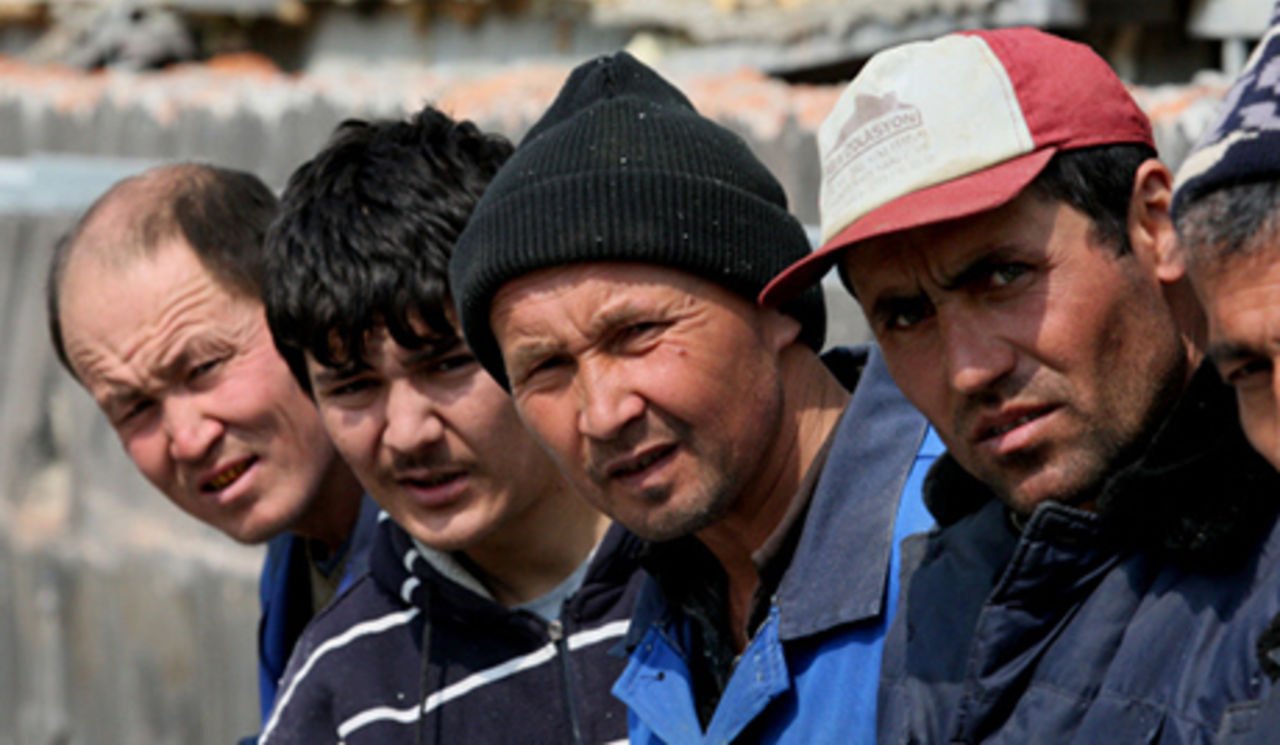

Russia has adopted new legislative requirements governing both labor migrants and foreign nationals residing in the country on a permanent basis. Under the new regulations, foreign citizens living in Russia with their families must first demonstrate a lawful income sufficient to cover the minimum subsistence basket for all members of their household in their place of residence. Every quarter, the tax authorities will submit financial information on each migrant to the Ministry of Internal Affairs, which will assess whether the declared income meets the required threshold. If, on a per-family-member basis, the income falls below the minimum subsistence level established for the respective region, the family will be deported from Russia within 15 days.
Given the vast scale of the shadow economy in Russia and the large number of people employed without formal registration, these requirements are likely to pose particular challenges for labor migrants from the South Caucasus and Central Asia. Most of these migrants travel to Russia for seasonal work and, in many cases, perform manual labor without formal employment registration before returning home after a period of time. Under the new legislation, they will be required not only to secure officially registered employment but also to declare their full income, a requirement that is unlikely to be attractive to many employers.
However, that is not the full extent of the new measures. The legislation also requires foreign nationals to obtain a special mobile phone immediately upon entering the country, equipped with a government-designated monitoring application. Under this system, a “digital migrant profile” is created for each individual, who must also register biometric data by submitting a facial image and fingerprints. Moreover, migrants are required to use this phone and keep it switched on throughout their entire stay in Russia. In effect, these measures enable the state to comprehensively monitor a foreign national’s movements, employment history, activities, and other aspects of daily life.
Nor do the new regulations end there. They also introduce tighter restrictions in a number of other areas, including higher fees for various public services and expanded supervisory powers for state authorities.
In essence, Russia—which is transitioning from a semi-authoritarian state to a fully totalitarian regime—is beginning to extend the same comprehensive system of control imposed on its own citizens to foreign nationals residing in the country. These new legislative measures not only reinforce the state’s apparatus of surveillance and control but also create enormous opportunities for corruption. In Russia, long regarded as a country plagued by corruption, bureaucratic officials are being granted additional opportunities to embezzle large sums of money through the manipulation of administrative assessments and procedures.
Be that as it may, Russia’s domestic affairs are ultimately its own concern. What should concern us, however, is the impact of these developments on Armenian citizens. Perhaps the time has come to devote serious attention to the diversification of labor migration, just as Armenia has sought to diversify its economic relations. Seasonal labor migration from Armenia to Russia has traditionally been substantial. Under these new conditions, the prospect of becoming a “digital migrant” may ultimately prompt not only seasonal workers but also Armenian citizens permanently employed in Russia to reconsider their future and return home. After all, Armenia is in growing need of a skilled workforce, and the number of employment opportunities continues to increase.