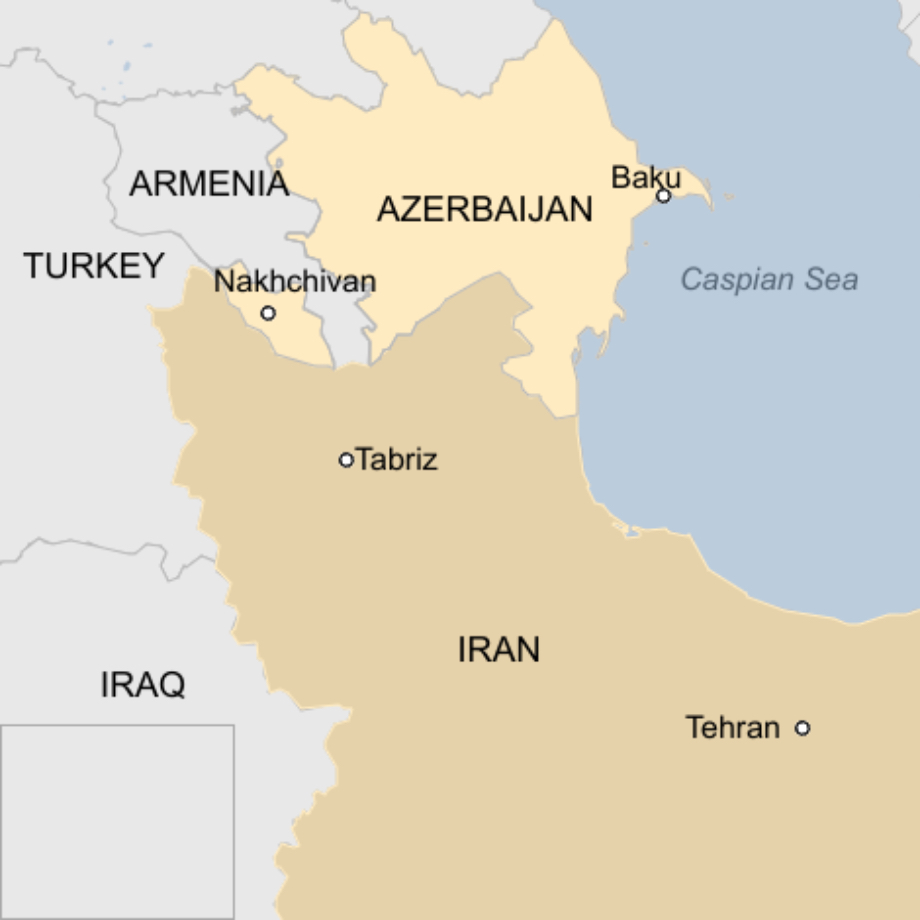

This study analyzes the dynamics of the information and political confrontation between Azerbaijan and Iran, with particular focus on the instrumentalization of the “South Azerbaijan” narrative by Azerbaijani state and pro-government media outlets. The article examines the foundations on which Azerbaijani ethno-irredentism is built, analyzes the rhetoric of Azerbaijani media outlets and Tehran’s countermeasures, and assesses the impact of this confrontation on the security environment of the South Caucasus, particularly Armenia.
Historical Background
Relations between the Republic of Azerbaijan and the Islamic Republic of Iran have historically been characterized by deep mistrust and structural contradictions. Despite their shared Shiite heritage, the two states have significant differences in their political systems—secular authoritarianism on the one hand and theocracy on the other—which are compounded by ethno-territorial disputes.
The historical roots of the “South Azerbaijan” narrative date back to the beginning of the 19th century, when the Gulistan (1813) and Turkmenchay (1828) treaties concluded between the Russian Empire and Qajar Iran established the Aras River as a dividing line. The territories north of the Aras came under Russian control, while the southern regions remained part of Iran.
The use of the name “Azerbaijan” for the new state established in Transcaucasia in 1918–1920 prompted diplomatic protests from Iran, as historically the name “Azerbaijan—Atropatene” referred to the Iranian province south of the Aras.
In 1945–1946, with Soviet support, the “Azerbaijan People’s Government” was established in northern Iran under the leadership of Jafar Pishevari. Following its collapse, the issue of ethnic separatism was frozen within the Soviet Union and retained as a latent instrument.
In the early 1990s, following Azerbaijan’s independence and during the presidency of Abulfaz Elchibey, the ideology of a “United Azerbaijan” became part of the state discourse, which Tehran perceived as a direct threat to Iran’s territorial integrity.
Baku’s Media Campaigns and the Instrumentalization of the “South Azerbaijan” Narrative
In recent years, particularly following the 44-day war, Azerbaijan’s state propaganda has adopted a strategy of aggressive information and psychological influence against Iran. Baku’s information policy is pursued through state and pro-government media outlets, among which AzTV, Baku TV, Caliber.az, and others play a central role. These platforms regularly broadcast programs in which Iran’s northwestern provinces—including Tabriz, Ardabil, Urmia, and Zanjan—are presented as “South Azerbaijan.” The propaganda narrative is built around portraying the territories south of the Aras as “occupied,” as well as
exploiting social and environmental problems. At the same time, these media outlets provide platforms to ethnic separatist groups, seeking to legitimize the idea of a “liberation struggle” by Azerbaijanis living in Iran.
In effect, the narrative was given legitimacy at the state level by Ilham Aliyev, who stated at a summit of the Organization of Turkic States: “The majority of the 40 million Azerbaijanis living outside Azerbaijan’s borders are deprived of the opportunity to receive education in their native language.” This statement was directed against Iran and served as a signal to the state media apparatus to intensify anti-Iranian propaganda.
Tehran’s Countermeasures
Iran perceives Baku’s policy as an existential threat. Iran is a multiethnic state, and encouraging ethnic separatism could have a domino effect, potentially affecting Kurds, Baloch, Arabs, and other groups.
Tehran’s first countermeasure is in the information sphere. The Iranian state broadcaster’s Sahar TV channel and its local Azerbaijani-language services target audiences inside Azerbaijan, criticizing the authoritarianism of Aliyev’s regime, its close relations with Israel, and its socioeconomic problems.
The second mechanism is the development of a historical and geographical counter-narrative. Iranian historiography and media discourse emphasize that the territory of the present-day Republic of Azerbaijan was historically part of Iran, encompassing areas known as Arran and Shirvan. Iranian experts often imply that if borders were to be revised, it would be Arran that should be reunified with Iran.
The third mechanism is military deterrence. Military exercises conducted by the Islamic Revolutionary Guard Corps along the Aras River have served as a direct message to Baku and Ankara, aimed at preventing any alteration of the regional balance of power through force.
The Limits and Risks of Encouraging Ethnic Separatism
The policy adopted by Azerbaijan contains a number of structural risks, where Baku’s calculations are sharply at odds with reality:
The risks surrounding the identity of Azerbaijanis in Iran: Baku claims that Azerbaijanis living south of the Aras dream of reunification. The reality, however, is that the majority of Azerbaijanis living in Iran possess a strong Iranian civic identity and are integrated into Iran’s political and economic elite.
The risks associated with the Israeli factor: Baku believes that its alliance with Israel provides it with military-technical and intelligence advantages vis-à-vis Iran. In reality, however, Azerbaijan is increasingly perceived by Iran as an “Israeli foothold,” which could provide the Iranian side with grounds to justify potential preventive military or hybrid strikes against Baku. The problem here is that the Azerbaijani
side has repeatedly stated that it has not and will not allow its territory to be used by Israel for an attack against Iran, while signals coming from Iran at times suggest otherwise.
Regional security threats: According to Baku’s calculations, a weakening of Iran would increase the influence of the Turkey-Azerbaijan tandem. In reality, however, Iran’s destabilization would lead to a security vacuum, a wave of refugees, and uncontrolled ethnic clashes, which could threaten Azerbaijan’s own stability.
The Complex Structure of the Identity of Azerbaijanis in Iran
The fundamental flaw in Baku’s calculations lies in its oversimplification of the identity of ethnic Azerbaijanis in Iran. Despite their linguistic particularities, the majority of Azerbaijanis living in Iran possess a well-established Iranian civic and cultural identity. They are currently represented at the highest levels of Iran’s political, religious, and economic elite. Baku’s “liberation” discourse therefore encounters significant rejection, as Iranian Azerbaijanis do not perceive themselves as a population in need of annexation to the state located north of the Aras.
Impact on the South Caucasus Security Environment
The Baku–Tehran information and political confrontation is directly reshaping the geopolitical landscape of the South Caucasus. Armenia’s security architecture is, in essence, part of this dynamic. For Iran, Armenia’s territorial integrity and the border along Syunik constitute a “red line.” Baku’s intensification of the “South Azerbaijan” narrative and its push for a “corridor” are perceived in Tehran as an attempt to strategically encircle Iran by NATO and Israel through Turkey. This compels Iran to adopt a firmer position on the inviolability of Armenia’s borders.
The Israeli Factor
Baku provides Israel with intelligence and other operational opportunities near Iran’s northern borders, in return for advanced weaponry and political support. This turns the South Caucasus into an active arena of the Iran–Israel “shadow war.”
How Azerbaijan Could Use the Issue After the Restoration of Diplomatic Relations
Following the armed attack on Azerbaijan’s embassy in Tehran in January 2023, bilateral relations reached a historic low. However, the resumption of the embassy’s activities and renewed attempts at diplomatic dialogue do not mean that Baku will abandon the “South Azerbaijan” narrative. On the contrary, in this new phase, Azerbaijan may use the issue along the following strategic lines:
Extracting concessions from Tehran
Baku continues to treat the embassy attack as an “outstanding security issue” for which Iran bears responsibility. During the restoration of diplomatic relations, Azerbaijan could
offer Tehran a temporary moderation of the “South Azerbaijan” narrative or a reduction in media attacks in exchange for concessions, such as a reduction in Iran’s opposition to the corridor logic, and, to some extent, limits on Iranian political and military support for Armenia.
Deepening cultural influence
If diplomatic ties with Tehran are fully restored and the media confrontation subsides, Baku may shift from hard-line separatist rhetoric toward “cultural diplomacy.” Through diplomatic channels, it could seek to deepen ties with Azerbaijan-populated regions of Iran under the guise of cultural, educational, and economic programs, while maintaining latent networks centered on the idea of “national unity.”
An instrument of escalation
Azerbaijan is likely to retain the “South Azerbaijan” issue as a “button at hand” that can be pushed when necessary. If Iran takes a firm stance against certain aspects of the Baku–Yerevan negotiating agenda—for example, issues related to TRIPP—Baku could immediately reactivate the anti-Iranian media campaign in an attempt to generate social and ethnic tensions within Iran.
Raising its leverage within the Israel–US–Azerbaijan axis
By restoring diplomatic relations while retaining this instrument, Baku can signal to Western countries and Israel that it is the only actor capable of exerting influence on Iran “from within” and leveraging ethnic factors. This allows the Aliyev regime to seek additional security guarantees and intelligence support from the West and Israel.
At the same time, the restoration of diplomatic relations between Iran and Azerbaijan and the easing of tensions are creating a new geopolitical reality for Armenia. The main security, transportation, and strategic risks directly affecting Armenia’s position are outlined below:
Growing pressure over Syunik: Tehran has so far openly opposed the opening of an extraterritorial corridor through Syunik—the so-called “Zangezur Corridor”—describing it as a “red line.” If relations between Tehran and Baku are normalized, there is a risk that Iran’s position could become more passive or accommodating, increasing pressure on Armenia from Azerbaijan and Turkey.
The “Aras Corridor” as an alternative and a means of bypassing Armenia: Baku and Tehran are developing a road and railway through Iranian territory connecting Azerbaijan with Nakhichevan, along the southern bank of the Aras River. Closer Iran–Azerbaijan relations are accelerating this project, and if the construction of TRIPP is delayed, this could increase the risk of Armenia’s regional isolation.
Weakening of the Armenia–Iran strategic axis: For Armenia, Iran is a reliable transit route and an important security counterweight. The deepening of economic and military-political cooperation between Tehran and Baku could
constrain Iran’s willingness to support Armenia, compelling Tehran either to prioritize its arrangements with Baku or simply to adopt a neutral position.
The predominance of the regional 3+3 format: The restoration of Iran–Azerbaijan dialogue strengthens the principle of “regional issues being addressed through regional actors,” which could reduce Western engagement in the South Caucasus and deprive Armenia of additional external deterrence mechanisms.
These developments require Armenia to pursue more active diplomacy with Tehran in order to preserve bilateral strategic interests and its communications independence.
Conclusion
The “South Azerbaijan” narrative and Baku’s media campaigns against Tehran constitute a high-risk instrument of Azerbaijan’s foreign policy. The formal normalization of relations following the embassy incident does not eliminate the underlying contradictions. Azerbaijan is likely to continue using this issue as a tool of diplomatic pressure, as leverage to distance Iran from Armenia, and as an instrument for advancing its maximalist objectives in the region.
Diana Karapetyan
This article was produced by the Armenian Council Research Center, with the support of the Yerevan office of the Friedrich Naumann Foundation for Freedom for the South Caucasus region.
The views and positions expressed in this article do not necessarily reflect those of the Friedrich Naumann Foundation for Freedom or its staff.
Sources
1. Ilham Aliyev’s Speech at the Summit of the Organization of Turkic States on the Rights of Azerbaijanis Living Abroad https://president.az/az/articles](https://www.google.com/search?q=https://president.az/az/articles
2. IRIB Sahar TV https://sahar.irib.ir](https://www.google.com/search?q=https://sahar.irib.ir
3. Analysis of Iran–Azerbaijan Relations and the Ethnic Factor https://carnegieendowment.org
4. Middle East Institute, “The Growing Baku–Tehran Rift: Media Wars, Geopolitics, and Regional Implications” https://www.mei.edu
5. Archive of Media Reports on “South Azerbaijan” https://caliber.az https://baku.tv/siyaset