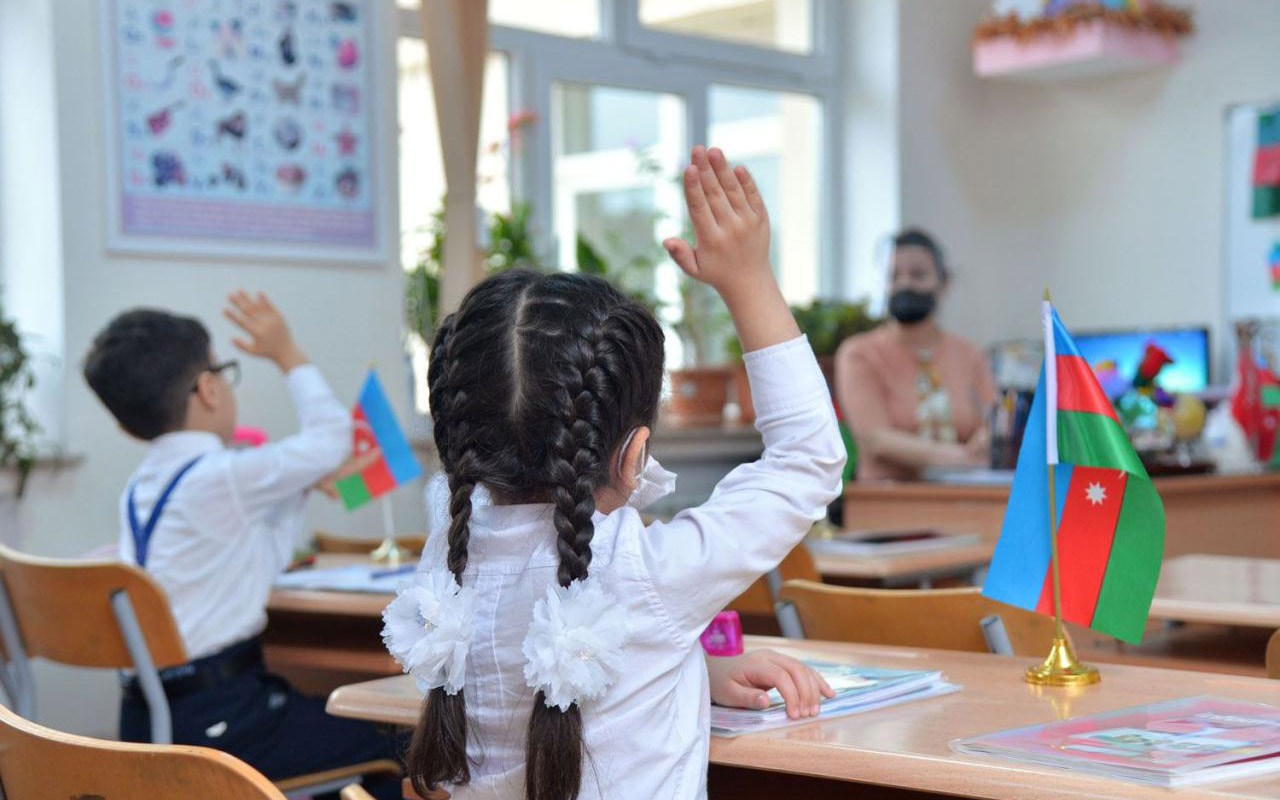

The process of establishing lasting and sustainable peace in the South Caucasus is often viewed exclusively through the prism of political, military, or economic pragmatism. However, as international experience in conflict transformation demonstrates, any legal or political agreement is ultimately destined to fail unless it is accompanied by changes in public perceptions, the process of dehumanizing the opposing side, and the mechanisms through which the image of the “enemy” is reproduced. In this context, the institutionalization of anti-Armenian hatred and hate speech in Azerbaijan—particularly within the school education system—constitutes perhaps the most serious challenge to regional security and the prospects for reconciliation.
1. Historical Overview: The Indoctrination of Generations
Over the past three decades, efforts to normalize Armenian-Azerbaijani relations have largely focused on preserving the status quo and addressing territorial and security-related issues. While diplomats sought compromise-based solutions, the conflict was not truly frozen within Azerbaijan; rather, it continued to be actively sustained through state-directed propaganda aimed at domestic audiences.
Beginning in the 1990s, and with increasing intensity following the consolidation of political power in the 2000s, Baku developed a comprehensive state doctrine in which Armenians were portrayed not merely as geopolitical adversaries, but as an embodiment of evil. Public education became the principal instrument of this policy. For decades, generations in Azerbaijan have grown up in an environment where the word “Armenian” has been presented as synonymous with every form of evil , treachery, and cruelty. The frozen phase of the conflict was exploited by the state to militarize society comprehensively and to prepare it psychologically for future confrontation—a process that reached its culmination during the 44-Day War and in the years that followed.
2. The Institutionalization of Hate Speech in Azerbaijani School Textbooks
For many years, textbooks used in Azerbaijan’s general education schools—particularly those for History, Literature, Native Language, and “The World and Us”—have served as a systematic vehicle for the transmission of ethnic hatred. Reports by international monitoring organizations have repeatedly documented the following patterns in Azerbaijan’s school curricula:
· Dehumanization: Armenians are portrayed as a “rootless” and “inferior” ethnic group.
· Falsification of historical geography: The entire territory of the Republic of Armenia—including Yerevan, Lake Sevan, and Syunik—is presented as “Western Azerbaijan,” thereby instilling in schoolchildren the notion of reclaiming a “lost homeland.”
· Romanticization of violence: Textbooks include stories and poems that glorify violence committed against Armenians.
One illustrative example is the short story collection “Hale,” published in Baku in 2011. Intended as a supplementary reader for middle school students, it continues to be used in schools to this day. The book’s foreword states:
“Armenians have made us innocent victims of ethnic cleansing. We have become victims of genocide. This unrestrained people, with the blood of Satan flowing through their veins, has committed countless acts of terrorism against us.”
Another example can be found in the seventh-grade Culture textbook used in Azerbaijan’s general education schools. The short story “The Last Bullet” portrays Armenians as “tormentors” and “murderers.”
3. Armenian Standards: The Asymmetry in School Textbooks
In contrast to the policy pursued by Baku, the Republic of Armenia has taken a principled step in recent years as part of its educational reforms and the introduction of new curriculum standards. References containing hate speech directed at Azerbaijanis or Turks, the promotion of ethnic stereotypes, and dehumanizing content have been systematically removed from Armenia’s general education textbooks.
Instead, the Armenian education system has focused on the factual presentation of history and the objective portrayal of regional realities, without fostering ethnic hatred among the younger generation. As a result, a profound asymmetry has emerged.
4. International Experience: The Franco-German Model of Reconciliation
The imperative of transforming education systems in the context of the Armenian-Azerbaijani conflict becomes even more evident when viewed through the lens of successful international historical experience. In this regard, the most influential example of textbook revision, the elimination of the “enemy image,” and the development of a shared historiographical framework is the experience of France and Germany following the Second World War.
After each war, school textbooks in both countries instilled hatred in successive generations, portraying the opposing side as barbaric and aggressive. However, after 1945, the political and academic elites of both countries came to recognize that, without a fundamental revision of their education systems, another war would be inevitable.
The reconciliation process included several key stages:
· The establishment of the Georg Eckert Institute (1951): Germany established the Georg Eckert Institute for International Textbook Research, which became the principal platform for cooperation between French and German historians and educators.
· The Élysée Treaty (1963): The historic treaty signed by Charles de Gaulle and Konrad Adenauer laid the institutional foundations for joint youth programs and educational cooperation between the two countries. It established the principle that education should serve the cause of peace.
· The Joint History Textbook (2006): The culmination of Franco-German cooperation was the publication of a joint history textbook for upper secondary schools. This marked the first instance in the world in which two former enemy states presented the same historical events in a single jointly agreed textbook, reflecting the perspectives of both sides.
The Franco-German model demonstrated that historical reconciliation is possible only when the parties abandon the use of history as an instrument of propaganda. It also illustrates that, unless Azerbaijan undertakes comparable institutional reforms and revises its own school textbooks, any discourse on peace will remain largely imitative rather than substantive.
5. The Limits of a Peace Agreement Without Educational Transformation
The ongoing negotiations and the possible signing of a peace agreement may provide a legal framework for the delimitation of borders, the reopening of infrastructure, or the establishment of diplomatic relations. However, such an agreement will remain little more than a declaration unless the socio-psychological dimension of the conflict is also taken into account.
Until anti-Armenian hatred is eradicated from Azerbaijan’s schools, no peace agreement will be capable of persuading an Azerbaijani child—conditioned from the classroom to regard Armenians as enemies, and who may one day become a soldier—not to kill an Armenian.
Hatred instilled through the education system functions as a time bomb. Ethnic stereotypes shaped at the state level and the institutionalization of hate are more powerful than any norm of international law. If, from the first grade onward, an Azerbaijani child is taught that Armenians have no right to exist and are occupiers of their “historical lands,” then any politically opportune moment or renewed escalation may find that generation prepared to act upon what it has been taught at school.
Conclusion
The removal of hate speech from Azerbaijani school textbooks and the reform of the country’s education system should be regarded not as a gesture of goodwill on the part of Baku, but as an essential condition—perhaps even a guarantee—for the Armenian-Azerbaijani peace process. Without greater convergence between the two countries’ educational systems and the dismantling of institutionalized mechanisms of hate, any peace agreement will amount to nothing more than a temporary pause.
Diana Karapetyan
This article was produced by the Armenian Council Research Center with the support of the Yerevan Office of the Friedrich Naumann Foundation for Freedom in the South Caucasus.
The views and opinions expressed in this article do not necessarily reflect those of the Friedrich Naumann Foundation for Freedom or its staff.
References
· IMPACT-se. Israel and Jews in Azerbaijani Education. https://www.impact-se.org/wp-content/uploads/Israel-and-Jews-in-Azerbaijani-Education.pdf
· European Commission against Racism and Intolerance (ECRI). Report on Azerbaijan. https://rm.coe.int/sixth-report-on-azerbaijan-translation-in-azeri-/1680ab9ed8
· Georg Eckert Institute for International Textbook Research. Textbooks and Post-Conflict Reconciliation.https://www.gei.de/en/research/publications Academic publications of the Georg Eckert Institute examining successful experiences in textbook revision following the Franco-German reconciliation process and other post-conflict contexts.
· Pingel, Falk. UNESCO Guidebook on Textbook Research and Textbook Revision. https://efrec.gei.de/fileadmin/Medien/News/Publications/Falk_Pingel__UNESCO_Guidebook_on_Textbook_Research_and_Textbook_Revision.pdf
· Franco-German Youth Office. The Élysée Treaty and Subsequent Educational Protocols. https://www.fgyo.org/the-institution/history-franco-german-youth-office/elysee-treaty
· Textbook and Information Communication Technologies Revolving Fund. Digital Textbooks Portal. https://dshh.am/am/digit_textbooks
· Ministry of Science and Education of the Republic of Azerbaijan. Electronic Textbook Portal. https://e-derslik.edu.az
· Erogul, A. Hale: A Collection of Short Stories. A Supplementary Reader for Middle School Students. Baku, 2011, p. 3. http://azerichild.info/HALE.pdf · Ədəbiyyat–7 (“The Last Bullet”). Grade 7 Literature Textbook. https://www.e-derslik.edu.az/player/index3.php?fsearch=ok&pageno=78&book_id=701#books/701/units/unit-1/page79.xhtml