
The ongoing peace process in the South Caucasus represents a classic example of a situation in which the diplomatic rationality of state elites and the mechanisms of societal socialization evolve along opposing vectors. According to constructivist theory, the construction of narratives, the formation of identity, and the reproduction of historical memory are often more decisive than official documents themselves. In 2025–2026, despite documented progress in the peace process, deep mistrust toward the peace process, negotiations, and expert-level exchanges persists in both societies. This is a normal phenomenon in a post-war context: in Armenia, mistrust is fueled by unresolved post-traumatic shocks, while in Azerbaijan it is reinforced by the euphoria of victory and by hatred reproduced at the state level.
Armenian Society: The Duality of Pragmatism and Distrust
Within Armenian society, the peace agenda is increasingly perceived as a choice between, on the one hand, economic stabilization, regional integration, and the diversification of security partnerships, and, on the other, existential concerns. Sociological data and public discourse indicate that a significant segment of society is prepared to accept normalization as a de facto reality that, at this stage, offers a way out of isolation. Yet this positive dynamic does not eliminate deep-rooted mistrust. Armenian society has not yet healed, and no systematic effort has been undertaken to address post-traumatic shock. The loss of Nagorno-Karabakh, the wars of 2020–2023, the destruction of cultural heritage, and the unresolved fate of missing persons continue to shape the collective consciousness.
Against this backdrop, the false narrative of “Western Azerbaijan,” territorial claims against Armenia’s sovereign territory, and the sentencing of prisoners of war — in some cases to life imprisonment — are perceived as serious indicators of the intentions of the opposing side.
Azerbaijani Society: Euphoria of Victory and Institutionalized Hostility
The situation in Azerbaijan is somewhat different. The post-war sense of victory and state-driven narratives provide a form of societal consolidation, reinforcing a discourse of absolute superiority of the winner. Public opinion surveys indicate a relatively low willingness toward coexistence with Armenians.
More problematic, however, is the role of the education system, where hate-related narratives appear to retain an institutional character and function as one of the key mechanisms of socialization. An incident staged in an Azerbaijani school some months ago — depicting the humiliation of an Armenian soldier — suggests that such narratives are not marginal phenomena but continue to be embedded, to varying degrees, within official or semi-official practices of
representation. Despite shifts in official rhetoric, such examples remain fundamentally at odds with the peace agenda and contribute, in effect, to the social reproduction of hostility.
In the long term, these practices risk reinforcing a trajectory shaped by negative historical framing, making processes of reconciliation more difficult and more complex.
Trade Relations and Expert Diplomacy as Tools of Confidence-Building
Trade relations launched in 2025 (including Azerbaijani fuel supplies, transit routes, and related exchanges) can be seen as an important component of so-called “low politics.” This process creates, or is expected to gradually create, elements of mutual dependence and trust, and may over time help ease patterns of confrontation.
In Armenia, public backlash against Azerbaijani goods is likely to soften gradually when Armenian products begin to appear reciprocally in Azerbaijani markets. In turn, similar waves of public resistance would likely emerge in Azerbaijan as well, followed by a gradual normalization process in which societies adapt not through reconciliation, but through pragmatic indifference. In other words, rather than fully accepting the presence of Armenian or Azerbaijani goods, societies may simply become indifferent to it. This dynamic suggests that economic interdependence can slowly reduce tensions, leading not to genuine reconciliation, but to a form of managed stability without resolving underlying issues.
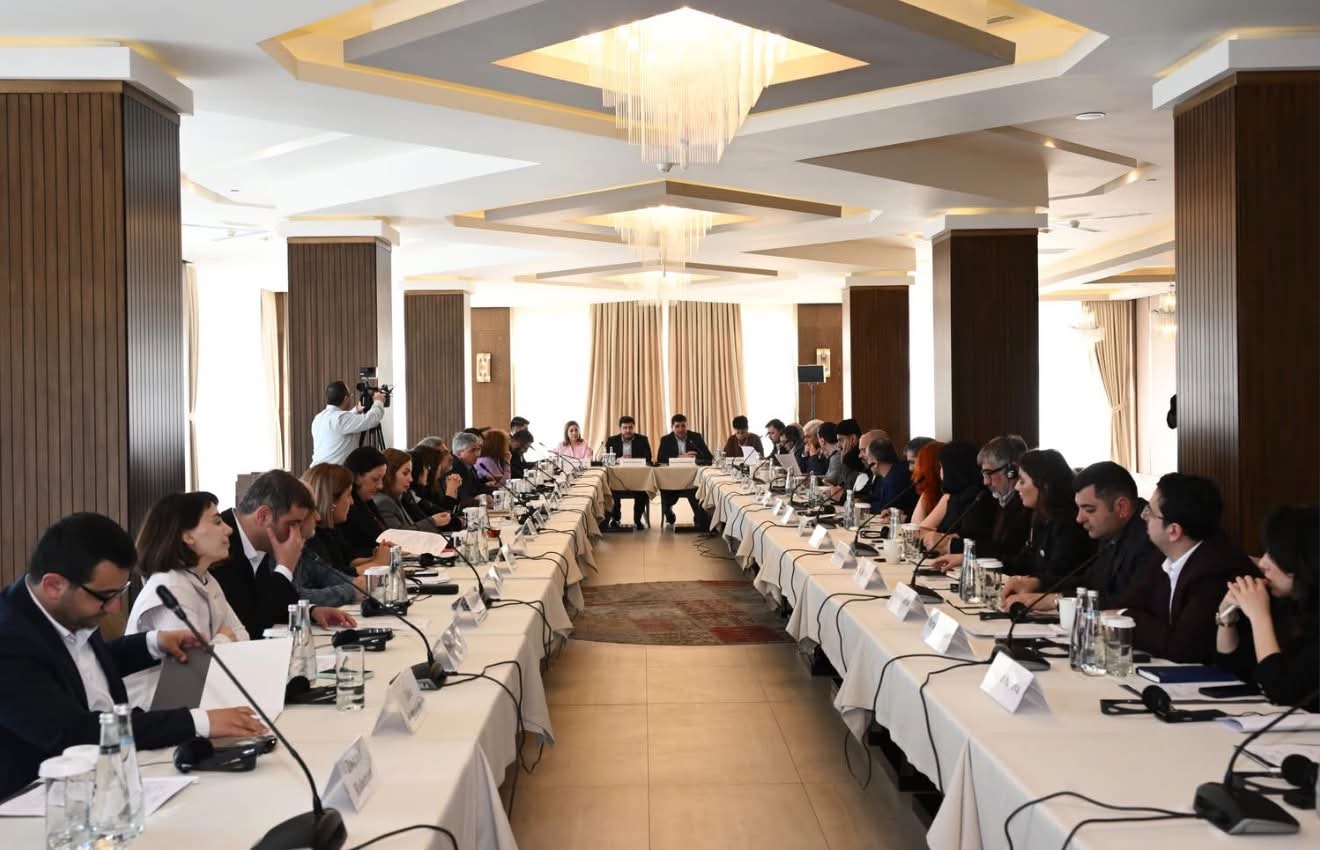
As for direct contacts, expert exchanges — often referred to by participants as Track 1.5 diplomacy — appear promising in terms of breaking the remaining ice and building working-level rapport. These meetings, which have recently involved up to 20 participants from each side, allow actors to move beyond official constraints and explore possible compromise solutions, at least at the expert level. At the same time, there remains a degree of mistrust toward such initiatives on both sides, which is a normal feature of the post-conflict environment.
Lessons of Peace
The experience of peacebuilding in the region clearly shows that sustainable settlement is possible only when agreements reached at the elite level are aligned with societal dynamics and institutional readiness.
A classic example is the resolution of the France–Germany conflict after the Second World War. Despite deep hostility, the two states did not limit themselves to formal treaties. They established the European Coal and Steel Community, which later evolved into the European Union, introduced joint educational programs, shared memorial initiatives, and developed a common approach to historical memory. This model of reconciliation was based not only on economic interdependence, but also on the gradual dismantling of hostile narratives. As a result, both societies underwent a long transformation from enemies to partners. While this model can, in
theory, be applied to Armenian–Azerbaijani societies, in practice they are not yet ready for such a transition.
The Egypt–Israel peace treaty (Camp David, 1979) represents another model. It was made possible through strong US mediation, security guarantees, and economic assistance. However, at the societal level, peace remained cold, without deep reconciliation. In both societies, mutual suspicion and stereotypes persisted, which, as we see today, continue to generate tensions.
Positive examples include Northern Ireland (Good Friday Agreement, 1998/Belfast Agreement,1998) and the Balkans. In these cases, key factors of success included transitional justice mechanisms, recognition of victims, educational reforms, and the long-term engagement of the international community. These models show that dealing with trauma and shaping younger generations are essential for long-term stability.
In the Armenia–Azerbaijan context, these lessons are particularly relevant. Unlike the France–Germany case, there is still no meaningful attempt at a joint reassessment of narratives or at removing the dehumanization of Armenians from educational systems, particularly in Azerbaijan.
The “cold peace” scenario seen in Egypt–Israel is risky for our region, as without societal reconciliation the process may remain confined to elites and fail to become sustainable. At the same time, the experience of Northern Ireland and the Balkans suggests that the South Caucasus requires joint or internationally supported mechanisms for addressing trauma and working with competing narratives. Without such tools, trade links and expert-level diplomacy may be useful, but cannot ensure long-term stability.
Conclusion: Prospects for Sustainable Peace
The Armenian–Azerbaijani peace process has a highly asymmetrical impact. In Armenia, a pragmatic approach prevails, combined with post-traumatic distrust. In Azerbaijan, state-driven aggressive rhetoric and the institutionalization of hostility in education continue to dominate.
Regional cases clearly show that without educational reform, trauma processing, and clearly defined and institutionalized foundations of mutual respect, peace will remain fragile. Trade connectivity and expert dialogue can serve as confidence-building measures, but without addressing humanitarian issues and conducting structured societal engagement, the process will remain volatile.
From a political science perspective, this confirms that genuine peace requires not only elite-level agreements, but also respect for sovereignty, territorial integrity, identity, and historical memory, alongside a realistic engagement with present conditions. Without these elements, the process risks renewed escalation at some point. Only through practical steps and a foundation of mutual
respect and human-centered approaches can a shift be made from formal peace to tangible stability.
Diana Karapetyan ·
The Armenia-Azerbaijan Peace Process Enters 2026 ·
Armenia and Azerbaijan open up to trade after years of strained ties ·
Armenia and Azerbaijan civil societies hold new round of broad talks to advance peace process ·
Armenian Foreign Intelligence Service report ·
Armenia and Azerbaijan: The Hard Road to a Lasting Peace · UNESCO Education Monitor.
Report on Hate Speech in School Textbooks: South Caucasus Focus
Expert Exchanges as a Confidence-Building Measure ·
Azerbaijan: events of 2025 · Symbolism, breaking taboos, and joint solutions in the Armenian-Azerbaijani dialogue ·
The Armenia–Azerbaijan peace process: next steps? ·
An event held in an Azerbaijani school featuring anti-Armenian propaganda, during which a participant identified as Armenian was allegedly coerced into stating: “Karabakh is Azerbaijan.”