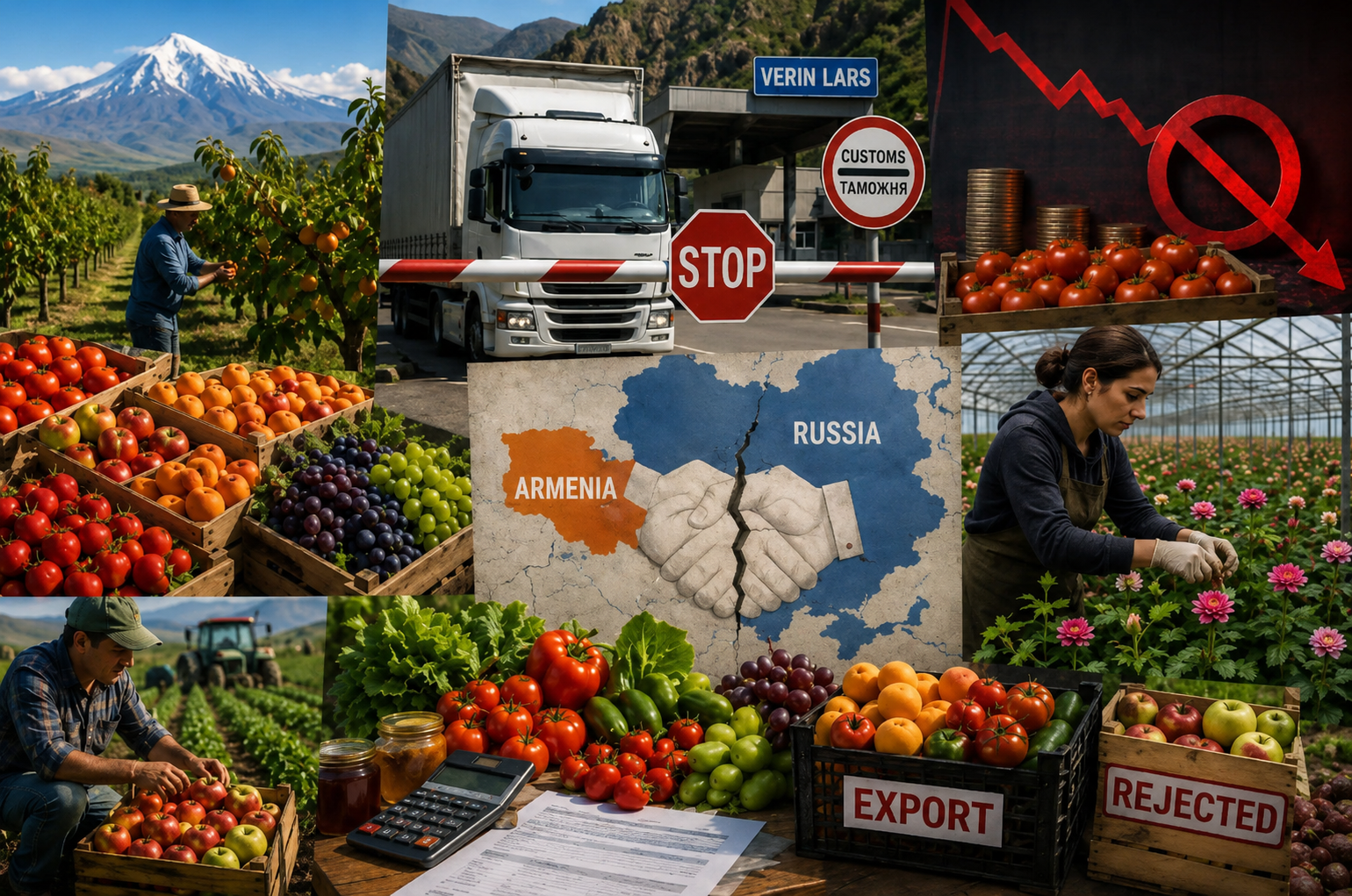

Armenia’s parliamentary elections have concluded, and the process of forming the new governing authorities is now underway. The country’s main opposition parties have come to terms with their role in the post-election political landscape: all parties that secured parliamentary representation have accepted their mandates and are preparing for the first session of the newly elected parliament. In essence, political life has returned to its normal course. Nevertheless, the “sanctions” imposed by Russia during the election campaign—in the form of import restrictions on certain Armenian products—remain in force.
It is evident that two of the political forces enjoying Russia’s support succeeded in surpassing the electoral threshold and will serve as the institutional opposition in parliament. At the same time, they failed to mount a genuine challenge to the victorious Civil Contract party. The latter not only retained power but also secured a constitutional majority, enabling it to make unilateral decisions on a range of issues.
Has the Kremlin been satisfied with this outcome? Judging by the barrage of attacks against Armenia launched by pro-Kremlin journalists and commentators, often employing inflammatory and derogatory language, one might conclude that Moscow remains dissatisfied. Even Prime Minister Nikol Pashinyan’s visit to Yekaterinburg, his address at the International Industrial Exhibition, and his meeting with Russian Prime Minister Mikhail Mishustin appear to have had little impact on the situation. Russia has continued its policy of economic pressure while simultaneously demanding that Armenia “make a prompt choice between the EAEU and the European Union.”
To assume that Russia’s objective is merely to ascertain Armenia’s position would be to underestimate those in the Kremlin. The continuation of these sanctions in the post-election period, together with the expansion of pressure tactics, is driven by different motives and serves broader objectives.
First, it is important to recognize the inertia underlying Russia’s current policy. In responding to Russia’s actions, Armenia has been receiving unequivocal support from the European Union. This is not merely a manifestation of the broader geopolitical rivalry between Russia and the EU, but a deliberate effort aimed at preserving and strengthening Armenia’s sovereignty. It is evident that strengthening Armenia’s statehood is in the European Union’s interest at this juncture. Conversely, such an outcome cannot be said to align with Russia’s interests. It therefore follows that Russia is unlikely to revert to unrestricted trade immediately after the elections.
Moreover, Armenia’s economic strengthening is likewise not in Russia’s interest. The criminal proceedings initiated against the leader of the Prosperous Armenia Party indicate that Iranian companies have shown active interest in the possibility of constructing an oil refinery in Armenia. Such a project would have a significant impact on reducing the country’s dependence on Russian energy supplies. Consequently, Russia’s economic pressure on Armenia may also contain an element of coercion aimed at discouraging Yerevan from pursuing Iranian proposals.
A number of other objectives behind Russia’s “post-election sanctions” can also be identified. Nevertheless, recent developments demonstrate that, both before and after the elections, this approach has proven ineffective. Thus far, Armenia has successfully withstood this challenge.