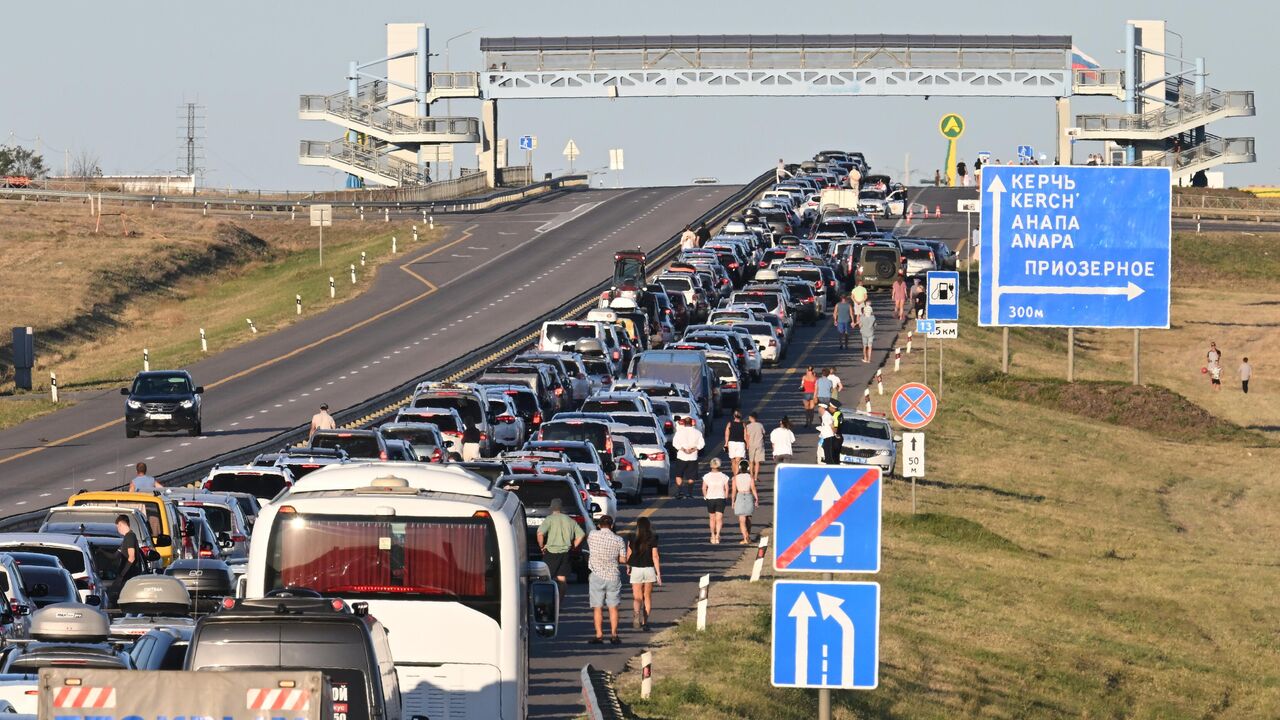

Following the annexation of the Crimean Peninsula in 2014, Crimea was for years regarded in Russia as one of the country’s leading tourist destinations. Particularly during the summer months, many affluent members of the generation shaped by the Soviet era—especially those who came of age in the 1960s and 1970s and remain nostalgic for the USSR—would gladly spend their holidays on Crimea’s beaches under the slogan “Krym Nash” (“Crimea Is Ours”).
Interestingly, this phenomenon is not limited to Russians alone. It can also be observed among broader segments of society across former Soviet states who continue to be affected by what may be described as an “imperial syndrome.”
In Armenia’s case, many will likely recall the statement made by former National Security Service Director Arthur Vanetsyan, who once referred to himself using the discrediting label of “Chekist” and declared that “Crimea is ours.” The remark was so unexpected that even the Russian television host appeared momentarily taken aback, seemingly wondering whether Vanetsyan was suggesting that Crimea should be incorporated into Armenia.
To complete the picture, however, it would probably be more accurate to say that Vanetsyan was, in essence, advocating the opposite—that Armenia should be attached to Crimea and, by extension, to Russia.
And thus, in the summer of 2026, the “carefree and cheerful holiday” of imperial-minded tourists in Crimea was disrupted for what initially appeared to be a minor reason. In the fifth year of Russia’s assault on Ukraine’s sovereign territories, the Ukrainian Armed Forces were able to carry out precision strikes that created significant disruptions in Russia’s oil refining sector, while at the same time supply routes to Crimea were gradually cut off one after another. These developments were compounded by Ukrainian advances in neighboring regions—Kherson and Zaporizhzhia, temporarily occupied by Russian forces. The peninsula soon found itself in the midst of an energy and food supply crisis, and on June 21, fuel sales were suspended altogether. Those spending their “well-earned vacation” in Crimea suddenly began to notice that something around them was not right.
At first, there were scattered reports of confusion and concern among individuals. On social media, people complained that their “holiday was being ruined,” that they “could not enjoy their time off with their children,” and later that they “could not find ways to get around,” or that they “did not know how they would return home at the end of their vacation,” and so on.
However, the situation changed dramatically in the second half of June. Complaints and dissatisfaction turned into a mass flight. People began leaving by any means available. Four and a half years into the Russo-Ukrainian war, it had finally reached Crimea as well, forcing both the
“tourists enjoying their holiday” and the merchants who, under Kremlin patronage, had turned the peninsula into an economic grey zone to flee in haste.
On the other hand, the “imperial tourists” have little reason to complain. This year, Crimea offered them not only passive seaside leisure, but also an additional form of extreme entertainment—namely, a “tourist flight” from the peninsula itself. And as long as the Kremlin’s rulers, driven by their pathological fixation on becoming a “geopolitical pole,” continue to squander Russia’s resources in both real and hybrid wars that yield no tangible results, those who cling to post-Soviet nostalgia may yet continue to hope for even more “extreme experiences” in the future.