
Although the European Union’s engagement in the South Caucasus dates back to the 1990s, Brussels has consistently pursued distinct agendas with each of the region’s three republics since they gained independence.
In its relations with Armenia, the European Union has traditionally placed particular emphasis on democratic reforms. The principal legal framework governing bilateral relations is the Comprehensive and Enhanced Partnership Agreement (CEPA), signed in 2017. In recent years, bilateral ties have deepened to an unprecedented degree. In 2025, the Partnership Agenda was approved, while the National Assembly of the Republic of Armenia passed a law launching the process of Armenia’s accession to the European Union.
Georgia, which signed its Association Agreement with the EU as early as 2014, formally launched its accession process in recent years. Despite the current political tensions, Tbilisi remains the only country in the South Caucasus to hold official European Union candidate status.
As for Azerbaijan, although negotiations on a new comprehensive agreement are still ongoing, relations with the European Union have already assumed a de facto strategic character, given the economic and energy dimensions of bilateral cooperation. In this context, issues related to democracy and human rights have largely been relegated to the background. Despite strong criticism from the European Parliament, the European Commission remains prepared to further deepen cooperation with Baku.
Von der Leyen’s Visit and a New Practical Agenda
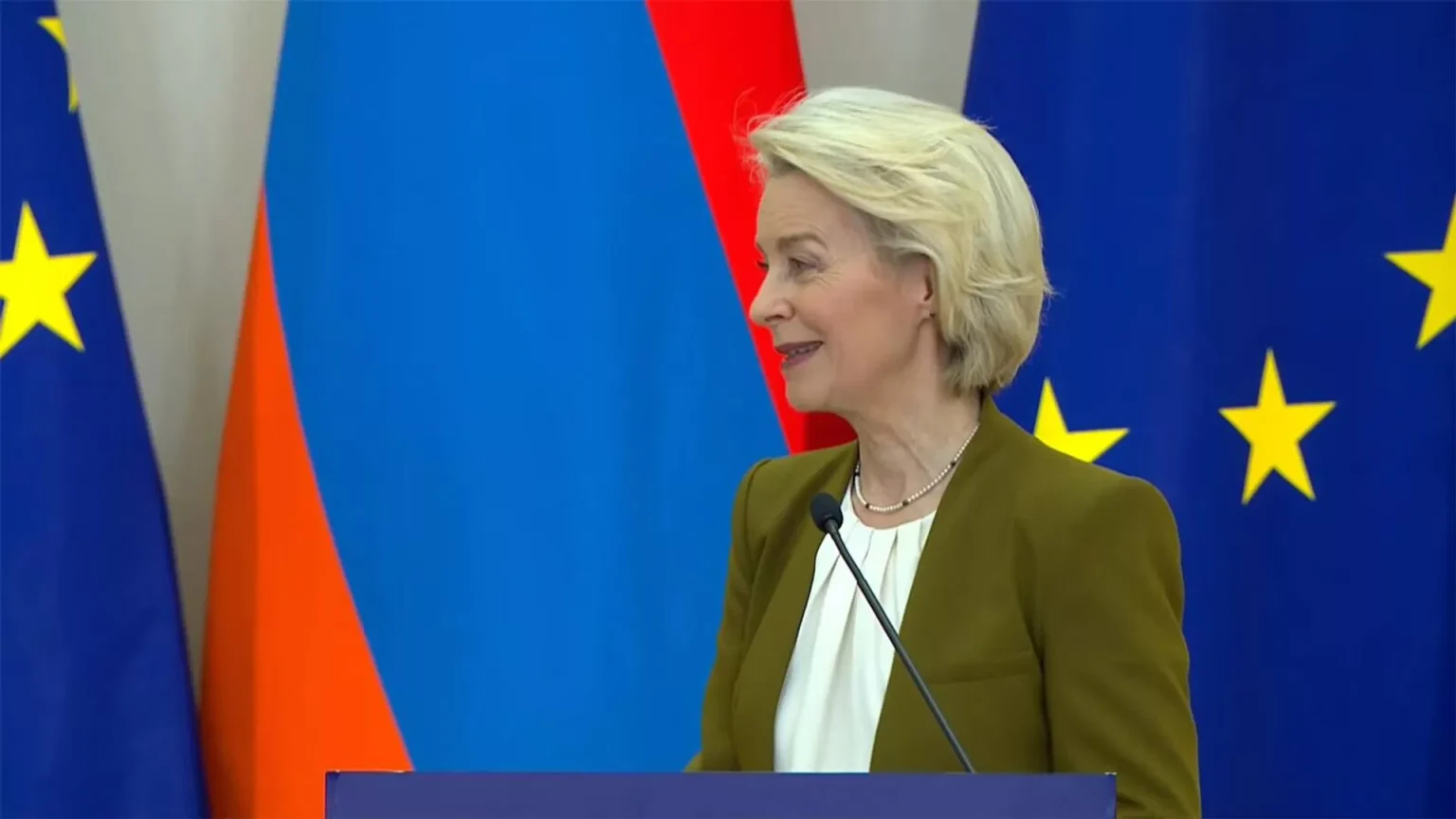
One of the clearest indications of the European Union’s growing interest in the South Caucasus is the increasing frequency and dynamic pace of high-level official visits. As recently as May, the EU leadership visited Armenia to participate in the 8th Summit of the European Political Community and the First Armenia–European Union Summit, after which the EU’s High Representative for Foreign Affairs and Security Policy, Kaja Kallas, traveled from Yerevan to Baku. Earlier, in March, President of the European Council António Costa had also visited Azerbaijan. Then, in July, President of the European Commission Ursula von der Leyen undertook a regional tour of the South Caucasus, visiting Baku first and then Yerevan.
Against the backdrop of President von der Leyen’s latest visit, a noticeable shift in the European Union’s approach to the region has become apparent. With a fragile peace now established, Brussels has an opportunity to view the South Caucasus as an integrated region and, in a broader context, as a strategic corridor linking Europe and Central Asia. At present, this evolving dynamic is manifested primarily through Armenia-Azerbaijan relations. However, should full-fledged cooperation with Georgia be restored, the European Union would be able to integrate the region more effectively into its broader economic and energy initiatives. The EU’s expanding engagement has also been facilitated by the decline of Russia’s political influence in the region, as well as by the growing competition among global and regional powers, including the United States, China, and Türkiye.
The central message of Ursula von der Leyen’s visit was that the European Union views lasting peace between Armenia and Azerbaijan through the prism of joint projects, connectivity, and interdependence. This approach is fully aligned with Yerevan’s vision, particularly the Crossroads of Peace initiative, demonstrating that the interests of Armenia and the European Union fully converge in this regard. To translate this vision from concept into practical implementation, the President of the European Commission announced a new investment package entitled “Peace through Connectivity.”[1] Under this regional initiative, the European Union plans to provide grants of up to €200 million, which are expected to leverage as much as €2 billion in investments for transport, energy, and digital connectivity across the South Caucasus, thereby fostering dialogue and helping build an atmosphere of mutual trust among the parties.
Another important regional initiative is aimed at supporting confidence-building measures, with a particular focus on communities located along the Armenia-Azerbaijan border. The announced €20 million package will support healthcare, humanitarian demining, vocational education and training, and local business development in communities across Armenia and Azerbaijan, enabling local residents to experience the tangible benefits of peace in their everyday lives.
While the European Union’s regional agenda is centered on peace and connectivity, its agenda with Baku is focused primarily on economic and energy interests. In this context, the newly announced EU–Azerbaijan Connectivity Partnership, together with the High-Level EU–Azerbaijan Connectivity Dialogue, will coordinate the financing and implementation of joint economic projects.[2] One practical manifestation of this partnership will be the investment forum scheduled to take place in Baku at the end of 2026. In the field of connectivity, particularly significant is the EU’s potential support for the development of the Nakhchivan railway project, for which the official feasibility study was launched in January 2026.[3]
Nevertheless, the strongest pillar of the bilateral partnership continues to be energy. The European Union regards the Southern Gas Corridor as a key component of its energy security. Cooperation in this area is now entering a new “green” phase, with Azerbaijan gaining the opportunity to export green electricity to the European Union through the Green Energy Corridor project, which will connect Azerbaijan with the EU. Particularly noteworthy was President von der Leyen’s statement that, by expanding its green energy capacity, Baku would be able to export larger volumes of natural gas to neighboring countries, thereby strengthening their energy security as well.[4] Looking ahead, it cannot be ruled out that Armenia may also purchase certain volumes of natural gas from Azerbaijan.
In Armenia’s case, Brussels’ current objective is to strengthen the country’s economic resilience and diversify its trade relations, particularly against the backdrop of economic pressure from Russia. One practical step in this direction is the additional €18 million in EU assistance allocated to Armenia, including support for the establishment of a dedicated export promotion agency and the enhancement of local business capacities.[5] An even more significant initiative is the European Union’s proposed Autonomous Trade Measures, which envisage the temporary elimination of customs duties on approximately 80 percent of Armenian exports to the EU. This would enable Yerevan to reduce Armenian exports’ dependence on the Russian market and redirect them toward the European Union’s single market of 450 million consumers.[6] It is essential that Armenia make the most of these temporary measures by establishing close dialogue with producers and exporters, doing its “homework,” and creating the necessary conditions for Armenian exports to meet EU standards, thereby facilitating trade diversification and laying the groundwork for the eventual possibility of free trade. To support this process, the European Union will also dispatch a dedicated team of experts to Armenia to work directly with local producers and exporters.
It should be emphasized that whereas the European Union’s engagement in Armenia was previously focused primarily on promoting democratic reforms and European values, as well as strengthening state institutions and civil society, Brussels’ agenda has now evolved to include clear strategic, security, and economic priorities.
Conclusion
For decades, the European Union pursued separate bilateral agendas with each of the South Caucasus countries, largely viewing the region through the prism of the influence of other major powers, particularly Russia. Today, it is evident that this approach is undergoing a fundamental transformation.
Although the Armenia-Azerbaijan peace process itself remains inherently bilateral, the political and economic engagement of the European Union and the United States is increasingly taking on a pragmatic, transactional character. This new model promises tangible economic benefits for all parties. For the West, it presents an opportunity to strengthen its position in a strategically important region, while for Yerevan and Baku it offers access to substantial investment in infrastructure and the energy sector.
Ultimately, the European Union’s active participation in major regional economic and connectivity projects also carries an important security dimension. By fostering a network of shared economic interests, the EU can not only consolidate its presence in the region but also raise the cost of renewed conflict to an unacceptably high level for all parties. In doing so, it helps create practical foundations for a lasting peace by transforming it into a genuinely viable and sustainable mechanism.
Varduhi Harutyunyan, Expert in International Relations
This article was produced by the Armenian Council Research Center with the support of the Yerevan Office of the Friedrich Naumann Foundation for Freedom in the South Caucasus.
The views and opinions expressed in this article do not necessarily reflect those of the Friedrich Naumann Foundation for Freedom or its staff.
[1]https://ec.europa.eu/commission/presscorner/detail/en/ip_26_1494
[2]https://ec.europa.eu/commission/presscorner/detail/en/statement_26_1503
[5]https://ec.europa.eu/commission/presscorner/detail/en/statement_26_1504