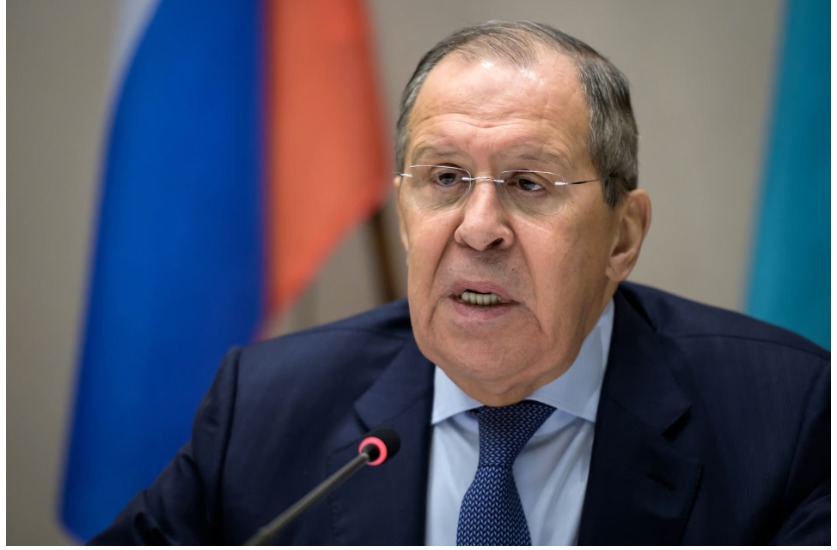

Russian Foreign Minister Sergey Lavrov has stated that he “gets emotional” when he hears statements by Armenian officials about returning the railway or paying USD 2 billion. According to him, it would be more appropriate for Armenian officials to discuss these issues in private meetings rather than bring them into the public domain.
This is not the first time Russian officials have accused their Armenian counterparts of failing to keep discussions behind closed doors. Since 2018, Moscow has repeatedly sought to prevent problematic issues with Armenia from being discussed publicly. Until 2021–2022, Armenian authorities, for their part, largely avoided discussing contentious issues with Russia in the public domain. However, Azerbaijan’s September 2022 aggression and Moscow’s and the CSTO’s failure to fulfill their obligations in response significantly changed the situation. In November of the same year, at the CSTO summit held in Yerevan, the Armenian Prime Minister publicly refused to sign the final document, after which Armenian officials began expressing their concerns regarding Russia more frequently in the public sphere. With certain reservations, Armenian diplomacy overcame its centuries-old complex of reaching agreements with Russia “behind closed doors.” This is also evidenced by the Pashinyan–Putin conversation in Moscow on April 1, 2026, during which the Russian president publicly raised questions concerning issues that troubled him. Against this backdrop, it is not entirely clear why the emotionally charged Foreign Minister is “reminding” Armenia that such issues could have been discussed privately. Nevertheless, Moscow perceives Armenia’s clear position on the issue of the concession management of the South Caucasus Railway and the straightforward manner in which Yerevan presents it publicly as “a new act of audacity.”
For Armenia, the rapid resolution of the railway issue is a matter of vital importance. If Armenian officials were only hinting at the return of the concession months ago, today it has become an explicit demand. Russia cannot refuse to return Armenia’s property; otherwise, as stipulated by the concession agreement, Armenia may initiate arbitration proceedings, with Paris designated as the seat of arbitration. Under the agreement, the arbitration is to be conducted by three arbitrators, two of whom are appointed by the parties, while the third, who presides over the arbitration, is selected either jointly by the two arbitrators or by the International Chamber of Commerce in Paris.
Given how the South Caucasus Railway has “fulfilled” its contractual obligations, it is not difficult to anticipate what the outcome of the arbitration would be. Thus, Armenia’s proposal to sell the concession in effect demonstrates Yerevan’s goodwill toward Moscow and its willingness to provide the latter with an honorable way out of the situation. But if Armenia’s goodwill is perceived as weakness, there is a strong possibility that the emotionally charged Lavrov will have more serious reasons to speak about his feelings.