
Introduction
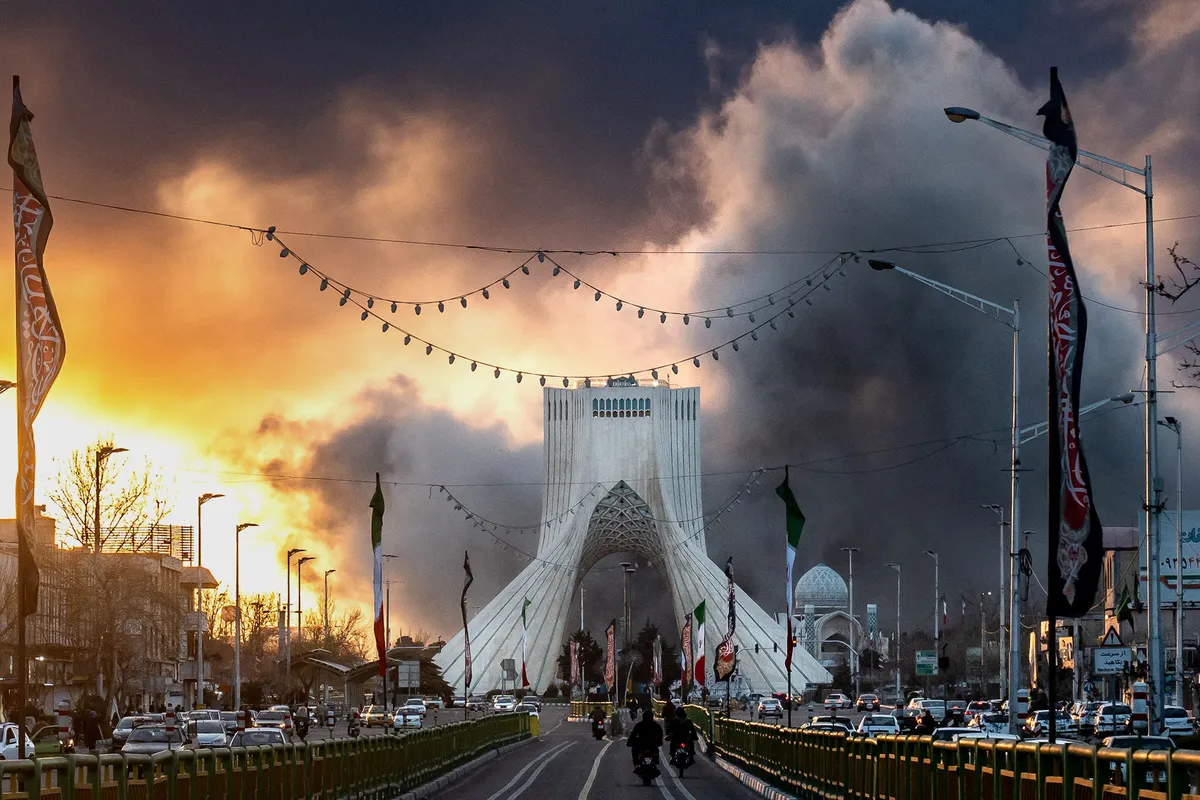
Military operations launched by the United States and Israel against Iran on February 28 are ongoing. Air and missile strikes are being carried out against Iran’s strategic targets, including nuclear facilities, military infrastructure, government buildings, and the country’s military-political leadership. On the first day of the fighting, the Supreme Leader of the Islamic Republic, Ayatollah Ali Khamenei, was also reported killed.
In response, Iran has launched strikes not only against Israel but also against American forces stationed in other countries across the region.
So far, there are no signs that the war is subsiding, and the crisis continues to escalate: strikes are intensifying, while the geographical scope of military operations is expanding. Iran has already conducted strikes in ten countries across the region — Iraq, Saudi Arabia, Bahrain, Kuwait, the UAE, Oman, Jordan, Syria, Lebanon, and Cyprus. Notably, these attacks are not limited to American military facilities; American diplomatic missions, strategic and energy infrastructure in regional countries, and even civilian facilities have also been targeted.
There are also unconfirmed and conflicting reports that the Islamic Revolutionary Guard Corps has partially closed the Strait of Hormuz “to vessels and warships belonging to hostile countries.” Approximately 20 percent of the world’s oil and liquefied natural gas exports from Persian Gulf countries pass through this vital maritime corridor.
In solidarity with Iran, several Shiite groups and proxy forces across the region have also become more active, targeting Israel and American facilities.
Risks for Armenia
It is difficult to predict how long the military operations will continue or what changes they may bring to Iran and the broader region. What is already clear, however, is that the Middle East will no longer be the same. The situation unfolding in the region also creates a number of challenges and risks for Armenia, which borders Iran. Some of the most significant of these are outlined below.
Security Risks
In the developments surrounding Iran, Armenia has adopted a neutral stance. Moreover, the Armenian side has repeatedly stated that its territory will never be used for hostile actions against neighboring Iran. The visit of Armenia’s Minister of Defense to Iran on February 23 — before the start of hostilities, when the threat of war was already in the air — was likely intended to reaffirm this approach.
Another important factor is that Armenia does not host American or Israeli military infrastructure that could be viewed by Iran as legitimate military targets.
Nevertheless, in the context of large-scale military operations and the intensity of ongoing strikes, military risks remain present even for neutral neighboring states. These risks may arise, for example, from malfunctions in the control systems of drones or missiles, or simply from operational miscalculations.
Turkey provides a relevant example. Although it has also adopted a neutral position and has consistently called for a rapid resolution of the crisis, on March 4 Ankara announced that it had intercepted an Iranian missile approaching its borders via Iraqi and Syrian territory.
Another example could be the reported strikes carried out on March 5 by two Iranian drones against Nakhchivan Airport.
Under an extremely negative scenario, another potential risk could arise from radioactive emissions in the event of strikes on Iran’s nuclear facilities, which would pose dangers for the entire region.
Economic Risks
Trade and economic relations with Iran do not constitute a large share of Armenia’s overall foreign trade structure; however, they have grown dynamically in recent years. According to 2025 data, bilateral trade exceeded $768 million, representing a 4.2 percent increase compared with the previous year. At the same time, Iran’s share in Armenia’s foreign trade rose from 2.4 percent in 2024 to 3.6 percent in 2025.
The structure of trade is also noteworthy, as Armenia imports significantly more from Iran than it exports. Imports primarily include gas, construction materials, food products, agricultural goods, and petrochemical products, while exports consist mainly of electricity, aluminum foil, semi-finished copper and other metal products, as well as canned goods. In 2025 the trade deficit reached approximately $600 million, compared with $532 million in 2024.
The continuation of military operations may create problems for bilateral trade, particularly for the supply of Iranian goods. The Iranian government has already imposed a ban on the export of food and agricultural products from the country, and it is possible that the list of restricted goods will expand.
Damage to Iran’s energy infrastructure could also jeopardize the “gas-for-electricity” barter arrangement between Armenia and Iran, which has been in operation since 2009 and has been extended until 2030. Under this arrangement, Armenia supplies 3 kWh of electricity in exchange for every cubic meter of Iranian gas. According to 2024 data, Armenia imported more than 440 million cubic meters of Iranian gas.
Disruptions in trade and supply chains with Iran could lead to inflation in Armenia and shortages of certain goods in the domestic market.
Logistical Risks
The situation in Iran is also affecting transit opportunities through the country. Since the closure of the borders with Azerbaijan and Turkey, Iran and Georgia have effectively served as Armenia’s “lifeline” to the outside world. Today, up to 25 percent of Armenia’s foreign trade passes through Iranian territory.
As a result of the ongoing military operations in Iran and across the region, transit routes have already been disrupted, and problems have been reported at the Armenia–Iran border crossing. If the crisis continues, it will inevitably have consequences for Armenia’s foreign trade.
It is also noteworthy that weapons and ammunition purchased from India are primarily transported to Armenia via Iranian territory, a route that may become temporarily unavailable and could create additional logistical complications in the short term.
Migration Risks
Against the backdrop of the ongoing war in Iran, another potential challenge for Armenia could be the emergence of large-scale migration flows. So far, the pattern of entries and exits between Iran and Armenia has not shown major deviations. However, if the situation in Iran deteriorates further and socio-economic problems intensify, migration risks could increase.
Large inflows would place additional pressure on Armenia’s economy, housing market, and public services, while also potentially contributing to social tensions. A similar situation was observed in 2022 after the outbreak of the war in Ukraine, when tens of thousands of Russian citizens relocated to Armenia.
Within this context, a particularly sensitive scenario could involve the relocation of large groups of Turkic-speaking Iranian citizens to the Syunik region. Such developments could be perceived as highly sensitive in Armenia and could also create potential security concerns.
The Challenge of Diplomatic Balance
Armenia currently finds itself in a highly sensitive diplomatic situation. Official Yerevan has so far maintained a balanced position and rhetoric. However, if the conflict drags on, Armenia’s room for maneuver may shrink, while external pressure to align more clearly with one side or another could increase.
Risks for Armenian Communities
U.S. military actions, ongoing exchanges of strikes between Israel and Iran, and the expanding geography of hostilities create security risks for Armenian communities in Iran, Israel, and other countries across the region.
In the event of further escalation, the evacuation of Armenians from several countries in the region could become necessary.
Even if the situation stabilizes, there remains a high likelihood that emigration from Armenian communities could begin, not only toward Armenia but also toward third countries.
Military operations also pose direct risks to the centuries-old Armenian historical and cultural heritage across the Middle East.
Conclusion
Thus, the military crisis surrounding Iran, regardless of its ultimate outcome, has already created a complex set of challenges for Armenia. Depending on how the situation develops, these risks may either intensify or gradually diminish.
Under these circumstances, Armenia’s priority is to maintain a cautious and balanced policy, while at the same time remaining prepared to respond quickly to potential security, economic, and humanitarian developments.
Narek Minasyan