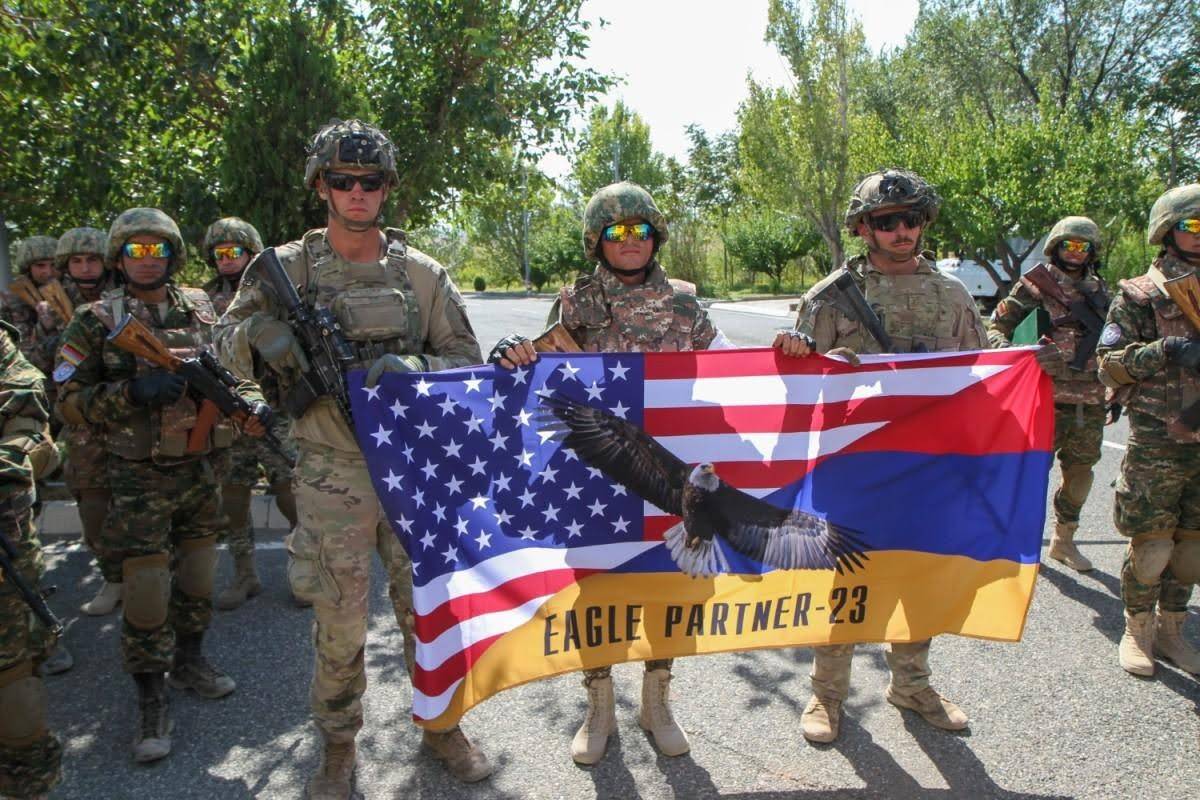

For much of the period before the shocks of 2020–2023, Armenia’s security thinking was too often reduced to one central pillar: the Armed Forces. In practice, national security was understood mainly through the logic of frontline defense, alliance obligations, and the belief that military power alone could compensate for diplomatic isolation, economic vulnerability, demographic constraints and weak institutional resilience. The 2020 war, Azerbaijan’s attacks on Armenia’s sovereign territory in 2021–2022, and the collapse of older assumptions about external security guarantees forced a painful but necessary reassessment. Armenia learned that an army cannot substitute for a full security architecture. But the opposite mistake would be just as dangerous. Armenia must not move from over-reliance on the Armed Forces to neglecting them.
A modern state’s security is not built only with tanks, artillery, drones and soldiers. It is also built with diplomacy, economic resilience, energy security, technological capacity, food security, infrastructure, intelligence, border management, social cohesion and international partnerships. Armenia’s recent turn toward a broader concept of security is therefore correct. The April 2024 EU-US-Armenia meeting, for example, placed sovereignty, democracy, socio-economic resilience, trade diversification, energy, technology and connectivity at the center of support for Armenia’s future. The EU’s proposed €270 million Resilience and Growth Plan for 2024–2027 is one example of this wider understanding of national strength.
Yet comprehensive security does not mean post-military security. A country located in the South Caucasus, facing unresolved border risks, coercive rhetoric and an increasingly unstable international environment, cannot treat defense capability as an optional sector. In fact, the more complex the security environment becomes, the more important it is for military power to be integrated into a larger national strategy.
The world around Armenia is not becoming calmer. The war in Ukraine has demonstrated that conventional warfare in Europe and Eurasia is not a relic of the past. The Middle East remains unstable. Great-power competition is reshaping logistics, energy routes and alliance systems. International organizations often react slowly, selectively or symbolically. Small states, especially those in contested regions, cannot assume that legal arguments or diplomatic sympathy alone will prevent escalation. They need deterrence.
Deterrence does not mean aggression. It means convincing a potential adversary that the cost of attack will be too high, the military result too uncertain, and the political outcome too risky. For Armenia, this is not about pursuing maximalist military ambitions. It is about making peace more realistic by reducing the temptation to use force. A weak army invites pressure; a capable, modern, disciplined and well-integrated army supports diplomacy.
Armenia’s current transformation is therefore not simply a procurement program. It must be a state-building project. The Ministry of Defense’s Armed Forces Transformation Concept, published in November 2024 with an implementation horizon through 2035, reflects the scale of the challenge: professionalization, a stronger NCO corps, improved military education, better training for conscripts, higher standards for officers and sergeants, and a gradual shift toward a more capable force structure. These reforms matter as much as weapons purchases. Modern systems are useless without trained operators, logistics, maintenance, doctrine, communications, command-and-control, intelligence, and a culture of responsibility.
The early signs of reform point in the right direction. Armenia has emphasized military education, digitalization, combat readiness, structural changes, territorial defense, special forces and UAV capabilities. The establishment of the Vazgen Sargsyan Military Academy as a consolidated military education institution, expanded international study opportunities in Greece, the United States and France, and new incentives for professional service all show that reform is not limited to hardware. But the challenge is implementation. Armenia needs speed, seriousness and continuity. Concepts must become programs; programs must become units; units must become real capability.
Defense diversification is one of the most important changes of the past three years. Armenia’s older model depended heavily on Russia for weapons, training, spare parts and political guarantees. That model was shaken by the 2020 war, by the failure of the CSTO to respond effectively to Armenia’s security concerns, and by Russia’s own strategic distraction and changing regional priorities. Armenia has since frozen or distanced itself from parts of the CSTO framework, while seeking new security relationships.
France and India have become the most visible new defense partners. With France, cooperation now includes armored vehicles, GM200 air-surveillance radars, CAESAR 155 mm self-propelled artillery, training, advisory support and military education links. With India, Armenia has pursued systems including Pinaka multiple rocket launchers, artillery, anti-drone capabilities and air defense, while also opening the possibility of deeper industrial and technical cooperation. This is strategically significant. Diversification reduces dependence, creates alternative logistics channels, exposes the Armenian Armed Forces to different standards, and helps Armenia move away from a purely post-Soviet military model.
But diversification also creates its own problems. A mixed arsenal is harder to maintain. New calibers require new ammunition supply chains. Western, Indian and legacy Russian systems must be integrated into coherent command, logistics and training structures. Officers and soldiers must learn not only how to operate new weapons, but how to fight differently. This requires planning discipline, procurement transparency, lifecycle budgeting and domestic technical capacity.
That is why Armenia’s defense industry must become part of the transformation. The country cannot produce everything, and it should not pretend otherwise. But it can build niche strengths: drones, robotics, surveillance systems, communications, software, battlefield management tools, electronic warfare support, optics, ammunition, maintenance and integration. Local industry is not only an economic sector; it is a resilience mechanism. A state that can repair, adapt, upgrade and integrate systems during crisis is less vulnerable than a state that must wait for every spare part to cross a blocked border.
The Armed Forces should also be understood as part of national cohesion. A professional, respected, accountable army can strengthen state legitimacy. Poorly managed armed forces do the opposite: they waste money, damage trust and produce only the illusion of security. Transformation therefore requires civilian oversight, merit-based promotion, anti-corruption safeguards, protection of servicemen’s rights, and a serious personnel policy. Armenia does not merely need more soldiers; it needs better-trained commanders, empowered NCOs, motivated specialists, resilient units and a society that understands why defense matters.
The central lesson is balance. Before 2020, Armenia often expected the army and inherited alliances to carry the entire burden of national security. Today, Armenia is rightly trying to build a wider architecture: diplomacy, economy, connectivity, democratic legitimacy, border control, technology, energy and diversified partnerships. But this architecture will be incomplete if the Armed Forces are weak. Comprehensive security is not a substitute for military capability; it is the framework that makes military capability sustainable, purposeful and politically responsible.
Armenia should seek peace, normalize relations where possible, diversify partnerships and invest in development. But it should do so while building a modern deterrent force. In a more unstable world, the countries most likely to preserve peace are not those that simply declare peaceful intentions, but those that combine restraint with resilience and diplomacy with credible defense. For Armenia, armed forces transformation is not nostalgia for an older security model. It is one of the foundations of a new one.
Nerses Levonyan