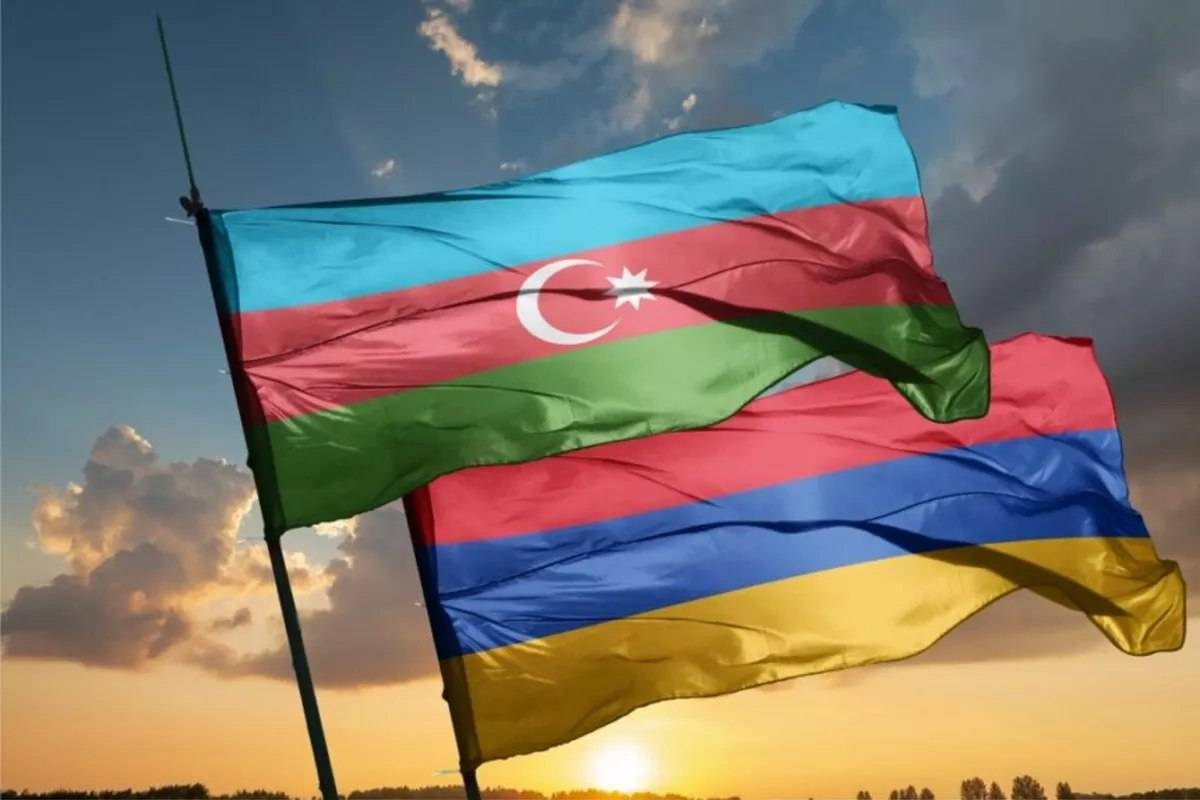

Pre-election political competition in Armenia is already underway. Unsurprisingly, one of the central issues shaping these debates has become the Armenia–Azerbaijan peace process. In this context, an active discussion has emerged within political and expert communities over the issue of peace guarantees and the prospect of a guaranteed peace.
Guarantees Are Being Sought
Notably, the question of international guarantees within the framework of the Armenia–Azerbaijan peace process is not new. As early as 2022, alongside the launch of negotiations on a peace treaty between Armenia and Azerbaijan, the Armenian government repeatedly emphasized the need for “international support” for the agreement, “international legitimacy,” and the involvement of an “international guarantor” or “guarantors.” At the time, negotiations were being facilitated by the European Union, Russia, and the United States, while Nagorno-Karabakh had not yet been emptied of its Armenian population.
Following the ethnic cleansing of Nagorno-Karabakh’s Armenian population amid the inaction of Russian peacekeepers, as well as the inadequate international response to those events, official Yerevan revised its approach. The idea of “international guarantors” came to be viewed as unrealistic, and the negotiation process shifted to a bilateral format.
Today, the ruling Civil Contract party maintains that peace has, in essence, already been achieved and is now entering a phase of institutional consolidation. At the same time, it argues that the durability of peace depends not on external guarantees, but on the establishment of a mutually beneficial framework between the parties.
For their part, the main opposition forces polling above the electoral threshold according to IRI surveys argue that peace with Azerbaijan must be more than a formal agreement on paper, and that “international guarantors,” “security guarantees,” or “guaranteed peace” remain essential.
A Few Quotations
The leader of the “Armenia” Alliance, former President of the Republic of Armenia Robert Kocharyan, believes that the initialed peace agreement between Armenia and Azerbaijan is a “bubble.” (not real/not grounded) “Peace does not depend on Nikol Pashinyan, on members of the Civil Contract party, on Robert Kocharyan, on Trump, or on anyone else. Guaranteed peace means the application of international mechanisms, beyond Aliyev’s will,” Kocharyan stated.
According to Narek Karapetyan, coordinator of the “Strong Armenia” party, the document will have no value if there is more than one guarantor: “Our peace agreement must have more than one guarantor. Having more than one guarantor is the only serious guarantee of long-term peace. Paper is a highly variable factor in negotiations with the Turks, whereas guarantors are constant,” Karapetyan said.
In the view of Gagik Tsarukyan, leader of the Prosperous Armenia party, peace cannot be merely formal: “All the preconditions are there; an agreement must be reached with three to five powerful states. There must be connections, familiarity, relationships so that guaranteed peace is ensured, so that not even a fly can pass through our territory,” Tsarukyan emphasized.
It is notable that these actors present the thesis of “international guarantees” without providing detailed substantiation. To date, no “roadmap” for achieving such guarantees has been presented, and the feasibility of these guarantees is justified by political figures solely through their own “negotiation skills.”
The Problem of the Feasibility of Guarantees
Without any intention of being drawn into an electoral debate, let us turn to the issue of “international guarantors,” taking into account the imperative of a sober assessment of the peace process. It is, of course, indisputable that in various crises and conflicts (Cyprus, Bosnia and Herzegovina, the Korean Peninsula, etc.), international guarantees have played an important role in terms of stabilizing situations, building trust, ensuring legal oversight, and facilitating the implementation of commitments. At the same time, there are also numerous cases where international guarantees have failed (Srebrenica, Syria, etc.). One of the most striking examples is the 1994 Budapest Memorandum, under which Ukraine relinquished its nuclear weapons, while Russia, the United States, and the United Kingdom assured it that they would respect its territorial integrity and refrain from the use of force. However, two decades later, Russia—one of the guarantors of those security assurances—launched an attack on Ukraine, and the war continues to this day.
Any arrangement related to peace and security does not operate in a vacuum; it depends on the dynamics of international relations and the balance of power. Therefore, the central question is not whether “international guarantees” are good or bad, but rather their realism under current geopolitical conditions.
In discussions on peace guarantees between Armenia and Azerbaijan, several factors need to be taken into account.
Erosion of the International System
The world order formed after the Second World War, based on international law and principles, is collapsing before our eyes, while the process of forming a new world order is not yet visible. In recent years, principles such as territorial integrity and the non-use of force have been repeatedly violated without facing an effective collective response (Armenia, Ukraine, Syria, Lebanon, Iran, etc.). International law has given way to power, while international norms are simply ignored, very often without consequence. Under such conditions, reliance on international guarantees of peace may have severely limited effectiveness.
The Need for a Detailed Vision
Political forces advocating for peace guarantees must present clear programs on how they envision these guarantees and the pathways to achieving them. Those who demand “concrete” guarantees instead of paper-based ones should, at a minimum, be able to answer the following questions:
— Under what mandate will the guarantor operate: a trilateral agreement or within the framework of an international organization?
— For how long is the guarantor’s involvement envisaged?
— Will it include monitoring mechanisms (satellite-based, technical, or ground presence)?
— What will the nature of ground presence be: observation or peacekeeping?
— How will the neutrality of the guarantor be ensured?
— What is foreseen in the event of a violation of the agreement: warning, sanctions, or use of force?
— What levers (political pressure, economic instruments, military components) should the guarantor have to compel compliance from the violating party?
— Which body will record violations, and through what procedures?
— Will there be rapid response mechanisms in case of escalation?
— What is envisaged if the guarantor fails to fulfill its obligations?
— In the case of multiple guarantors, how will responsibility be distributed?
— How will this mechanism be linked to the broader regional security architecture?
This list could be extended further. It is desirable that, during the electoral campaign, Armenian voters receive answers to these questions; otherwise, statements about guarantees will not differ from appealing populism.
The Ambiguity of the Guarantor
In discussions on peace guarantees, reference is often made to power centers such as Russia, the United States, the EU, and even China. In the current geopolitical climate, it is difficult—even theoretically—to imagine the involvement of multiple guarantors. Even in such a scenario, there is a high likelihood of a repetition of the OSCE Minsk Group co-chairmanship experience, when co-chairing countries, for example, avoided explicit statements, often acted according to their own interests, and at some point, contradictions between them paralyzed the format and made joint action impossible.
Over the past two years, apart from Russia, no other country has publicly expressed willingness to assume a clearly defined role in the Armenia–Azerbaijan peace process. For Moscow, for decades, the Nagorno-Karabakh conflict served as an effective instrument for strengthening its influence and advancing its interests in the region. Therefore, assuming a role in the current peace process could potentially contribute to restoring Russia’s weakened position in the region.
The question of Russia’s impartiality as a guarantor is highly debatable. At the very least, recent developments have shown that, in a choice between Armenia and Azerbaijan, the Russian side tends to prioritize Baku, a tendency driven by Azerbaijan’s significant economic and geopolitical importance for Russia.
The Need for Consensus
In discussions taking place in Armenia on the issue of guarantors, there is often an impression that the matter depends solely on the political will of the Armenian side. The role of Azerbaijan is largely overlooked.
The peace agreement is a bilateral document. If one of the parties—Azerbaijan in this case—does not wish to accept any form of external oversight or involvement, such arrangements simply cannot become a reality.
Based on Azerbaijan’s foreign policy in recent years and its discourse regarding the format of negotiations, it can be concluded that Baku is firmly opposed to the involvement of any third party. In this context, there is also a risk that if, after June 7, the Armenian side attempts to raise the issue of international guarantors, Azerbaijan may interpret it as an attempt to renegotiate already reached agreements and as an effort to derail the peace process, with all the ensuing consequences.
Conclusion
In conclusion, it can be stated that within the current international order, the institution of “international guarantees” is barely functional in its classical sense. It is more realistic to speak about mechanisms of confidence-building, monitoring, and direct obligations between the parties, rather than peace guaranteed by an external actor.
Narek Minasyan