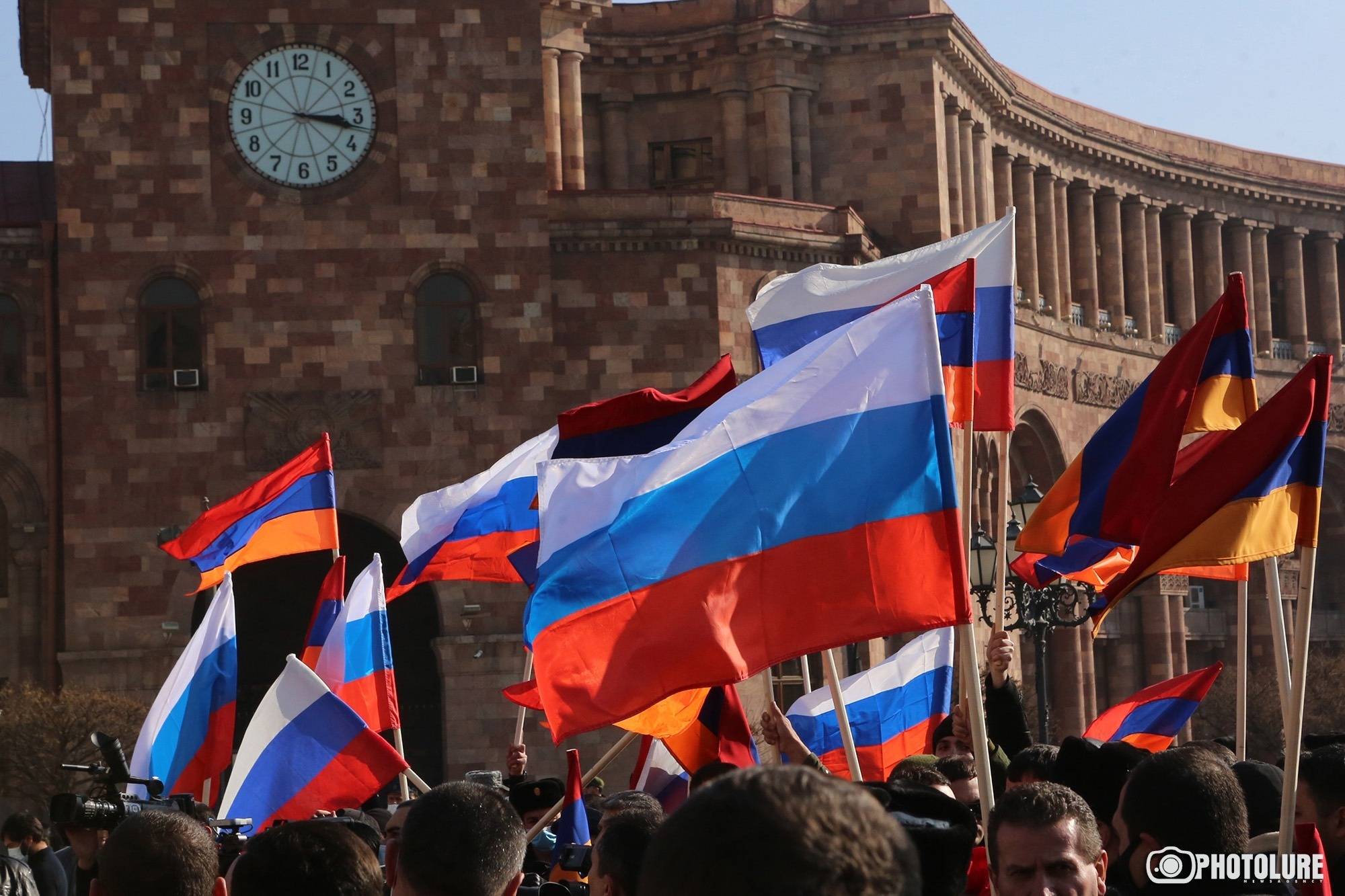

Since the collapse of the Soviet Union in 1991, Armenia has maintained one of the closest relationships with Russia among the former Soviet republics. This bond was rooted in security needs, economic dependence, and shared institutional frameworks. Over the years, Armenia relied heavily on Russia for military protection, energy, trade, and diplomatic backing. In return, Russia gained a loyal partner in the South Caucasus.
However, this dynamic has begun to shift. Triggered by Russia’s limited support during Armenia’s recent conflicts with Azerbaijan and exacerbated by the Ukraine war, Armenia has started questioning the reliability of its long-standing ally. This report outlines the evolution of Armenia–Russia ties across political, economic, and security dimensions, with a special focus on major treaties and Russia’s responses when Armenia reoriented itself.
Political Relations
Early Alignment and Institutional Ties
In the early 1990s, Armenia quickly aligned with Russia, joining the Commonwealth of Independent States (CIS) in 1991 and signing the Collective Security Treaty in 1992 [1]. In 1997, Armenia and Russia signed a Treaty on Friendship and Cooperation, pledging mutual support in the event of a security threat [2]. Armenia later became a founding member of the Collective Security Treaty Organization (CSTO) in 2002 and joined the Russia-led Eurasian Economic Union (EAEU) in 2013 , which, according to EU officials, rendered the signing of the negotiated Association Agreement impossible [1].
These moves cemented Armenia’s place in Russia’s political orbit [3]. Leaders like Robert Kocharyan and Serzh Sargsyan pursued a “complementarity” strategy: staying loyal to Russia while cultivating limited ties with the West [1].
Fractures Post-2018
The 2018 “Velvet Revolution” brought reformist Nikol Pashinyan to power. Armenia reaffirmed its commitment to the CSTO and EAEU [1], and in 2019 became the only member to deploy a demining and medical contingent to Syria at Russia’s request [4]. Over time, however, relations with Moscow have cooled significantly. Tensions grew in 2019 when Armenia prosecuted the CSTO’s Armenian Secretary-General, causing friction with other members [1].
More serious ruptures followed the Second Nagorno-Karabakh War in 2020. Russia brokered a ceasefire but did not intervene militarily, leading to public disappointment in Armenia [1] [3]. Armenian public opinion worsened after Azerbaijan’s border incursions in 2021–2022, when the CSTO failed to assist despite formal requests [5]. The decline continued, and by 2023 sentiment toward Russia had sharply deteriorated. Polls showed two-thirds of Armenians viewed relations negatively, with many questioning the value of Russia’s military and diplomatic support [6]. Armenia declined to host CSTO drills, withdrew its representative from CSTO headquarters, and began reviewing its membership [7].
In early 2024, Pashinyan confirmed that Armenia had frozen its CSTO participation, citing unmet security expectations [7]. Russia responded with criticism, warning of potential diplomatic fallout [3].
Economic Ties
A Longstanding Dependency
Russia has been Armenia’s largest trading partner and investor for decades. Armenia imports the majority of its natural gas and nuclear fuel from Russia, and key infrastructure sectors such as gas distribution and telecommunications are either owned or heavily influenced by Russian firms [8]. Armenia’s only all-weather road to Russia runs through the Upper Lars crossing, which, even after a 2023 capacity upgrade, remains a chronic chokepoint where “repairs,” weather, and ad-hoc procedures can snarl Armenian cargo while disproportionately facilitating Turkey–Russia flows [9]. Beyond the border, informal barriers recur: Russian distributors and retailers have at times refused Armenian goods or invoked sanitary claims (e.g., the 2024 strawberry case; Food City/Tvoy Dom’s 2020 refusals) [9]. Food security is exposed as well: in 2022–2023, roughly 99.9% of Armenia’s wheat imports came from Russia, leaving prices and volumes highly sensitive to Moscow’s choices [9]. Transport fuels are similarly concentrated, with Russia supplying the overwhelming share of petrol, diesel, and LPG in 2022–2023 [9]. Ownership and contracts magnify leverage. Most notably the 2013 intergovernmental agreement that entrenched Gazprom’s position, while the Metsamor Nuclear Power Plant remains under Russian concession management and fueled with Russian-specific fuel, even as alternatives are technically feasible [9].
Armenia’s 2015 accession to the EAEU deepened these ties. By 2024, trade turnover between the two countries reached $12 billion, making up over 40% of Armenia’s foreign trade [10]. Russia also hosts a large Armenian diaspora, though remittances in 2023 accounted for only 7.2 percent of Armenia’s GDP [10]. Notably, remittances spiked in 2022 before easing again in 2023, underscoring that transient surges can mask a longer-term decline in structural dependence [9].
This dependency gives Moscow leverage by threatening economic consequences [12], stopping the export of individual goods to Russia [13], impeding the flow of goods [14], and hiking up gas prices up to 50% and at will [15]. In 2013, for instance, Armenia joined the EAEU under pressure from Russia, which warned of economic consequences [16]. Recent, concrete illustrations include selective refusals by major wholesalers and episodic “technical” slowdowns at Upper Lars: pressure points that can be activated without formal embargoes [9].
Emerging Diversification
Despite strong economic ties, Armenia has begun diversifying its trade and investment partners. In 2017, it signed the CEPA agreement with the European Union [17]. In 2023, it received pledges from the EU and the United States to help reduce economic dependence on Russia [12]. The policy track now prioritizes opening a second overland outlet via Turkey normalization, accelerating standards and quality upgrades to unlock EU and Gulf markets, and leveraging future use of the Chabahar (Iran) route as it matures [9]. Energy hedges include re-balancing transport fuels, preparing for non-Russian nuclear fuel at Metsamor, and scenario-planning around the 2013 gas agreement [9].
France and the U.S. have supported new infrastructure and technology projects in Armenia [18] [19]. Trade ties with India are also being explored [1] [20], though geography limits options as Armenia’s land routes are largely reliant on Russia or Azerbaijan-controlled corridors [12]. To reduce logistics risk, some recommend shifting the South Caucasus Railway concession to a time-bound international operator and integrating with the Middle Corridor to attract capital and build redundancy [9]. Taken together, these measures aim to turn diversification from intent into capacity, even as Russia continues to account for a significant share of Armenia’s trade and energy needs.
Security and Military Engagement
Deep Integration
Armenia and Russia built a dense web of military ties following independence. The Russian 102nd military base, stationed in Gyumri since 1995, serves as a deterrent against threats, particularly from Turkey [3]. Russian border guards have also monitored Armenia’s frontiers with Turkey and Iran [3].
Armenia received Russian arms at discounted rates or on credit [21]. Nearly all major weaponry delivered between 2011 and 2020 came from Russia [21]. A 2010 agreement extended Russia’s base lease through 2044 and mandated Russian help in defending Armenia’s borders [3].
In 2017, the two countries established a Joint Group of Forces as well as entering into force of the air defense force agreement of the Collective Security in the Caucasus region, formalizing their joint defense structure [22] [23].
Cracks in the Alliance
The 2020 war with Azerbaijan exposed the limits of Russia’s security commitments. Russia declined to intervene directly, stating that the conflict occurred outside Armenia’s recognized borders [1] [3]. Although it later deployed peacekeepers, many Armenians questioned Russia’s motives [12].
Events in 2021–2023 further eroded trust. Russian peacekeepers failed to stop Azerbaijani incursions and ultimately did not prevent the fall of Nagorno-Karabakh in 2023 [3]. Prime Minister Pashinyan openly criticized the base’s role, calling the security partnership a “strategic mistake [3].”
Armenia has since sought new security partnerships. In 2023, it held joint exercises with U.S. troops and received arms from India and France [12]. France has offered training and technical support too [12]. Armenian officials have also expressed interest in modernizing their forces using NATO standards [11] and are eyeing development of air-defence capabilities using Israeli–Indian systems [24].
In a symbolic move, Armenia removed Russian guards from Yerevan’s airport in 2023 [12] and took control over all the checkpoints of the Armenian border [25]. While the Russian base remains under treaty until 2044 and still maintains a presence along the border with Turkey and Iran, Armenia is clearly asserting greater control over its own security infrastructure.
Overview: Memberships and Treaties
Armenia’s alignment with Russia was institutionalized through several major treaties:
- CST (1992): Foundation of collective security cooperation [26].
- Friendship Treaty (1997): Bilateral agreement pledging mutual defence [2].
- CSTO (2002): Armenia becomes a founding member [27].
- EAEU (2015): Armenia joins Russia’s economic union, curtailing EU options [16].
- Joint Forces Agreement (2017): Integrated military command structure [23].
Key turning points include Armenia freezing CSTO membership in 2024 [7] and ratifying the Rome Statute of the International Criminal Court in late 2023 [26], a move Russia viewed as hostile, since it could theoretically require Armenia to arrest President Putin [12].
Russia’s reaction has been restrained but disapproving. Kremlin officials have warned Armenia against “unfriendly steps” and hinted at possible economic or military consequences [3]. Nonetheless, Armenia has continued to withdraw from CSTO activities and deepen ties with Western institutions.
Conclusion
For over two decades, Armenia relied on Russia as a strategic guarantor militarily, economically, and diplomatically. But repeated disappointments, especially in times of crisis, have led Yerevan to rethink that relationship.
Politically, trust has eroded. Economically, dependency remains, but efforts to diversify are underway. In security matters, Armenia is exploring new alliances while still hosting a major Russian base. Institutionally, its suspension of CSTO participation marks a historic shift.
Whether this pivot continues depends on Armenia’s success in securing new partnerships and maintaining its sovereignty amid regional tensions. It also depends on how Russia responds: with accommodation, coercion, or disengagement.
For now, Armenia’s future lies in balancing caution with ambition and preserving stability while gradually redefining its place between East and West.
Literature
- de Waal, T. ‘Armenia Navigates a Path Away From Russia’ (Carnegie Endowment for International Peace 2024) <https://carnegieendowment.org/research/2024/07/armenia-navigates-a-path-away-from-russia> accessed 21 July 2025
- UN Doc A/52/331, Letter dated 9 September 1997 from the representatives of Armenia and the Russian Federation to the United Nations addressed to the Secretary‑General (9 September 1997) <https://digitallibrary.un.org/record/243780> accessed 21 July 2025
- Kucera, J. ‘The Russian Military Base In Armenia At The Eye Of A Geopolitical Storm’ (Radio Free Europe/Radio Liberty 2024) <https://www.rferl.org/a/armenia-russian-base-gyumri-alliance-weakening-geopolitical-storm/32874563.html> accessed 21 July 2025
- Kucera, J. ‘Armenia sends military deminers and medics to support Russian mission in Syria’ (Eurasianet 2019) <https://eurasianet.org/armenia-sends-military-deminers-and-medics-to-support-russian-mission-in-syria> accessed 19 August 2025
- Barseghyan, A. ‘Russia says Armenia will not be kicked out of the CSTO’ (OC Media, 2025) <https://oc‑media.org/russia‑says‑armenia‑will‑not‑be‑kicked‑out‑of‑the‑ctso/> accessed 23 July 2025
- International Republican Institute ‘IRI Armenia Poll: Increasing Negative Views of Russia, Strong Support for Nagorno‑Karabakh Refugee Response’ (Center for Insights in Survey Research 2024) <https://www.iri.org/news/iri-armenia-poll-increasing-negative-views-of-russia/> accessed 21 July 2025
- Osborn, A. ‘Armenia freezes participation in Russia-led security bloc – Prime Minister’ (Reuters 2024) <https://www.reuters.com/world/asia-pacific/armenia-freezes-participation-russia-led-security-bloc-prime-minister-2024-02-23/> accessed 23 July 2025.
- Kochinyan, A. ‘Armenia Should Use This Window of Opportunity to Leave Russia’s Orbit’ (Carnegie Endowment for International Peace 2024) <https://carnegieendowment.org/russia-eurasia/politika/2024/06/armenia-leaves-russian-orbit> accessed 23 July 2025
- Kochinyan, A. & Ghevondyan, R. ‘Main Dependencies of the Republic of Armenia on the Russian Federation: Threats and Solutions’ (Research Center on Security Policy and Union of Informed Citizens, 2025) <https://council.am/wp-content/uploads/2025/05/%D5%8C%D4%B4-Eng.pdf> accessed 25 August 2025.
- Mgdesyan, A. ‘Trade Turnover Between Russia and Armenia Reaches $12 Billion – Lavrov’ (BM.GE 2025) <https://bm.ge/en/news/trade-turnover-between-russia-and-armenia-reaches-12-billion-lavrov> accessed 23 July 2025
- Kochinyan A and Ghevondyan R, The Republic of Armenia’s Principal Dependencies on the Russian Federation: Threats and Solutions (Research Center on Security Policy 2025) < https://council.am/wp-content/uploads/2025/05/%D5%8C%D4%B4-Eng.pdf> accessed 18 August 2025
- Chukhuran, N., Minasyan, N. and Muradyan, V. ‘A Shift Away From Russia’ (German Marshall Fund of the United States 2024) <https://www.gmfus.org/news/shift-away-russia> accessed 23 July 2025
- Lomsadze, G. ‘Russia Bans Armenian Dairy as Relations Continue to Sour’ (Eurasianet 2023) <https://eurasianet.org/russia-bans-armenian-dairy-as-relations-continue-to-sour> accessed 23 Jul 2025
- ‘Armenia Economy Minister: Situation at Upper Lars Checkpoint is Strange’ (News.am 2023) <https://news.am/eng/news/795086.html> accessed 23 July 2025
- Aram Terzyan, “The Anatomy of Russia’s Grip on Armenia: Bound to Persist?” CES Working Papers 10, no. 2 (2018), 234–250, <https://www.econstor.eu/bitstream/10419/198543/1/ceswp-v10-i2-p234-250.pdf> accessed 24 July 2025
- de Waal, T. ‘An Offer Sargsyan Could not Refuse’ (Carnegie Endowment for International Peace 2013) <https://carnegieendowment.org/posts/2013/09/an-offer-sargsyan-could-not-refuse> accessed 24 July 2025
- Agreement establishing a Comprehensive and Enhanced Partnership between the European Union and the European Atomic Energy Community and their Member States and Armenia (Agreement No 2018/104 OJ L 1) (Official Journal L, 2018) <https://eur-lex.europa.eu/eli/agree_internation/2018/104/oj/eng> accessed 24 July 2025
- ‘Russia, USA and France to help Armenia expand Metsamor NPP’ (News.az, 2024) <https://news.az/news/-russia-usa-and-france-to-help-armenia-expand-metsamor-npp> accessed 24 July 2025
- Charter on Strategic Partnership between the Republic of Armenia and the United States of America (U.S. Embassy in Armenia 2025) <https://am.usembassy.gov/charter-on-strategic-partnership-between-the-united-states-of-america-and-the-republic-of-armenia/> accessed 24 July 2025
- ‘Armenia and India Forge Stronger Ties in Trade and Strategic Cooperation’ (Caspian Post 2025) <https://caspianpost.com/armenia/armenia-and-india-forge-stronger-ties-in-trade-and-strategic-cooperation> accessed 24 July 2025
- Wezeman, P. D., Kuimova, A., and Smith, J. ‘Arms Transfers to Conflict Zones: The Case of Nagorno-Karabakh’ (SIPRI 2021) <https://www.sipri.org/commentary/topical-backgrounder/2021/arms-transfers-conflict-zones-case-nagorno-karabakh> accessed 28 July 2025
- ‘Presidents of Armenia and Russia recapped the results of negotiations’ (Press Release, Office of the President of the Republic of Armenia 2017) <https://www.president.am/en/press-release/item/2017/03/15/President-Serzh-Sargsyan-met-with-representatives-of-Mass-Media-with-Vladimir-Putin/> accessed 28 July 2025
- ‘Armenia To Ratify New Defense Agreement With Russia on “The United Group of Troops of the Two Countries” ‘ (Aravot Daily 2017) <https://en.aravot.am/2017/07/21/197161/> accessed 28 July 2025
- ARMENPRESS, ‘Armenia eyes cutting-edge Indo-Israeli MR-SAM defense system – Bulgarian Military’ (2024) <https://armenpress.am/en/article/1194255> accessed 19 August 2025
- Barseghyan, A. ‘Armenia to “increasingly add” border guards, Pashinyan says’ (OC-Media 2025) <https://oc-media.org/armenia-to-increasingly-add-border-guards-pashinyan-says/> accessed 29 July 2025
- The Republic of Armenia (Collective Security Treaty Organization) <https://en.odkb‑csto.org/countries/armeniya/> accessed 29 July 2025
- Armenia in CSTO (Permanent Mission of the Republic of Armenia to the Collective Security Treaty Organization) <https://csto.mfa.am/en/shortoverview/> accessed 29 July 2025
- Balasanyan, G. ‘Armenia Ratifies International Criminal Court Rome Statute’ (Hetq 2023) <https://hetq.am/en/article/160834/> accessed 29 July 2025
Article written by Felix Klein and Louan Renard, Intern Research Assistants at the Research Center on Security Policy