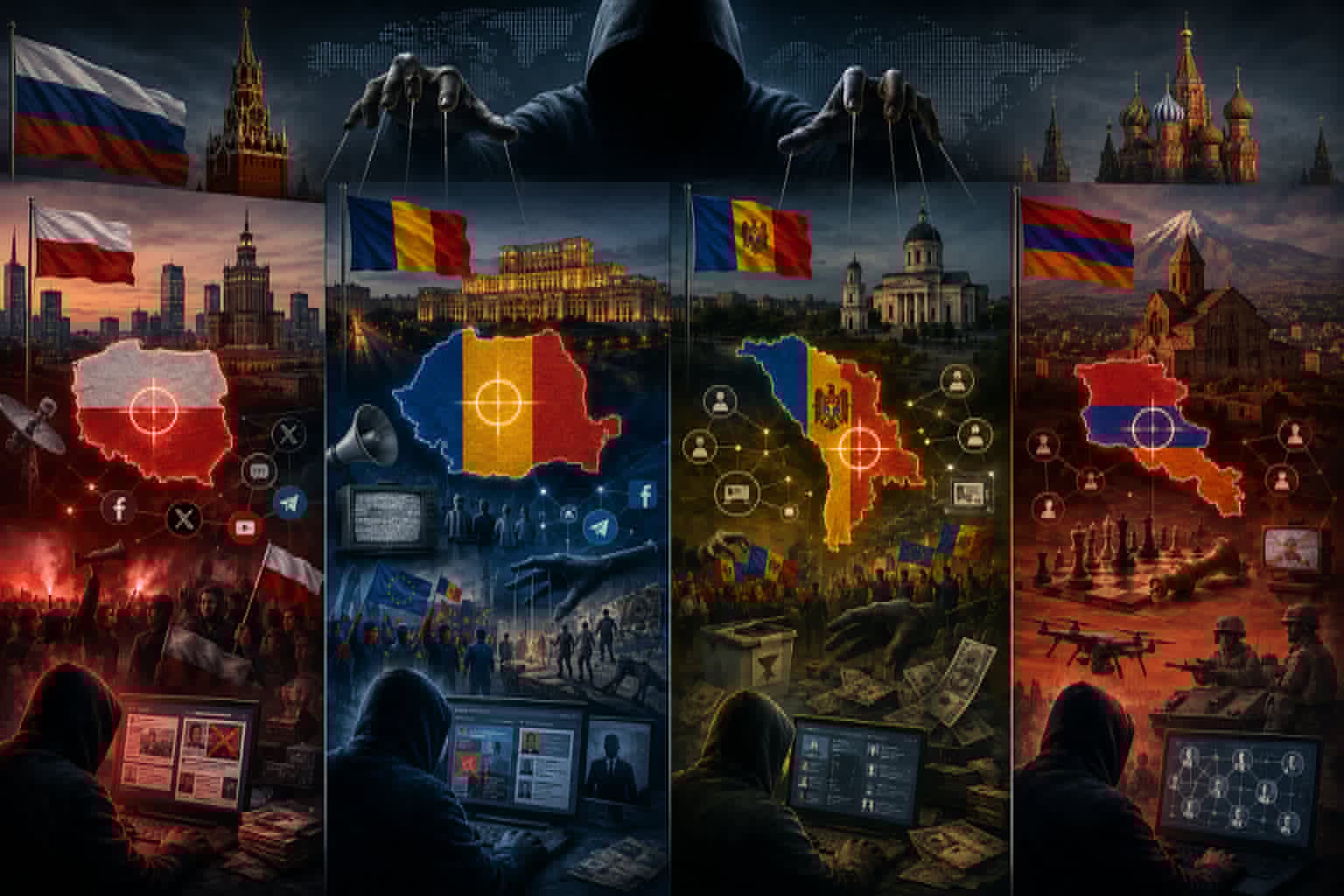

COMPARATIVE ANALYSIS OF RUSSIAN METHODS
POLAND, ROMANIA, MOLDOVA AND ARMENIA
ADAM Robin, GWYNNE Milo, MAZURAIS-PROD’HOMME Joseph, ZWICKERT Greg
29th of April 2026
CONTENTS:
INTRODUCTION: WHAT IS RUSSIAN HYBRID WARFARE? 1

PART I – RUSSIAN HYBRID WARFARE AND ELECTORAL PROCESSES: HOW DOES RUSSIA TRY TO UNDERMINE OR INTERFERE IN DECISIVE CAMPAIGNS? 2
A. Targeting Eastern Europe: pro-Russian candidates strategy to maintaining post-soviet influence 2
B. Historic elections in Armenia and fears of significant Russian interference 7

PART II – FOREIGN INFORMATION MANIPULATIONS AND INTERFERENCES: HOW DOES RUSSIA MAINTAIN ITS REGIONAL INFLUENCE? 9
A. Destabilising enemies and pro-Ukraine countries 9
B. Keeping Armenia under control: disinformation among society through Russian medias 12

PART III – ECONOMY, ENERGY AND MIGRATION AS WEAPONS 13
A. Weaponisation of economic dependence and migration in Eastern Europe 14
B. Russia as the main economic partner of Armenia 16

A. Drones overflights, sabotage and support for separatist groups as a pressure tool for Russia 18
B. Supporting the violent opposition and destabilising Armenia 21

CONCLUSION: INCREASING RUSSIAN HYBRID WARFARE ACTS AGAINST ARMENIA? 24
ARMENIAN COUNCIL
INTRODUCTION: WHAT IS RUSSIAN HYBRID WARFARE?
Since the start of the Russian-Ukrainian war in February 2014, the Russian Federation has been waging what is commonly referred to as a “hybrid war” against the countries in its immediate neighbourhood. This term is used in numerous articles and can sometimes encompass very different definitions. How can the concept of “hybrid warfare” be defined? In its broadest sense, “hybrid warfare” is a military strategy that combines conventional warfare, asymmetric warfare and cyber warfare with a wide range of both conventional and unconventional tools and practices, such as electoral interference, disinformation and economic pressure. Thus, “hybrid warfare” is fought on several fronts: on the one hand, the conventional battlefield, namely the conflict zone. In the context of Russian hybrid warfare, this may, for example, be its theatre of operations in Eastern Europe and, more specifically, on the territory of the Republic of Ukraine. Furthermore, it is also being deployed on societies directly affected by conventional conflict, as well as on societies over which Russia wishes to exert influence or create instability that serves either its interests or its war effort. Finally, hybrid warfare is also waged at the international level, taking into account the balance of power at global or regional level, for example by legitimising its actions within the context of the confrontation between major rival powers or through the manipulation of international law. The concept of hybrid warfare also implies modern forms of waging war in the 21st century, notably through the use of mass communication tools or advanced military technology systems. It may also involve exploiting the current configuration and vulnerabilities of the modern world, particularly the economic and energy interdependencies established by globalisation and world trade.
According to Nicolas Tenzer1, the term “hybrid warfare” encompasses a broad and varied range of practices and actions carried out by an entity – in this case, Russia – against societies as a whole. In his view, it is important to emphasise that these practices can occur both alongside a conventional conflict and in the run-up to one. Indeed, it is difficult to consider that the societies we will be discussing here are engaged in open direct and conventional warfare against Russia. However, they are very much affected by the so-called “hybrid warfare” actions carried out by Russia. Electoral interference, propaganda and disinformation, cyber-attacks and sabotage, drone overflights, economic, energy and migration pressures… These actions serve both as a means of testing these societies’ military response capabilities and as a means of destabilisation, weakening the resilience of their populations. It thus serves Russia’s foreign policy in achieving multiple objectives: maintaining its influence over these societies, all of which emerged from either the USSR or the Communist bloc; supporting its war effort in Ukraine; serving its economic interests; and maintaining Russia’s status as a major power in the global arena.
In this report, we will present a comparative analysis of the methods employed by the Russian Federation against three different countries – namely Poland, Romania and Moldova – whilst drawing parallels with the specific situation in the Republic of Armenia. We will outline the three main categories of Russian actions that could be classified as part of its hybrid warfare strategy. It is important to note here that Russian hybrid warfare does not pursue the same objectives or employ exactly the same methods for each of the societies we are going to examine. Indeed, it draws on the specific characteristics of each of these societies—that is, their political, cultural, religious and social particularities—to maximise its impact and thus ensure its effectiveness. It also manifests itself differently depending on the relationship between the targeted country and Russia. It will therefore differ in nature between societies that Russia considers part of the Western bloc, namely Poland and Romania, both members of the EU and NATO; those considered part of Russia’s sphere of influence, such as Moldova; and those regarded as both allies and subjects of Russian influence, such as Armenia.
However, having made these distinctions, we can hypothesise that there is a pattern to Russian hybrid warfare, characterised by similar actions and practices, whilst taking into account the specific characteristics of these societies. We will therefore begin by examining disinformation practices, propaganda and the nature of Russian discourse, as well as interference in the democratic processes of the four societies under study. Secondly, we will analyse the extent to which Russia exploits the varying degrees of energy and economic dependence of these societies to serve its own interests. Finally, in the third and final section, we will examine Russia’s practices that most closely resemble conventional warfare, namely acts of sabotage, drone overflights and support for separatist groups within the targeted societies.
PART I – RUSSIAN HYBRID WARFARE AND ELECTORAL PROCESSES:
HOW DOES RUSSIA TRY TO UNDERMINE OR INTERFERE
IN DECISIVE CAMPAIGNS?
One of the most striking aspects of the hybrid warfare waged by the Russian Federation is its massive electoral interference. This revolves around two key elements: on the one hand, financial, political and media support for candidates chosen by Russia, sent by Russia, or candidates who share Russia’s positions and interests. Secondly, it backs this support with propaganda or disinformation campaigns, targeting in particular the political opponents of the chosen candidate. In this section, we will therefore explore how this type of political interference can unfold, detailing in particular the profile of the candidates supported by Russia and the narratives put forward. We will try to define an ideal-typical method of Russian interference in political democratic processes and to underline what are the specificities of each country studied. We will analyse disinformation and its channels of dissemination in more detail in the second part of this document.
- Targeting Eastern Europe: pro-Russian candidates strategy to maintaining post-soviet influence
Moldovan case: Moldova has undergone three major votes since the start of the Ukraine War. Presidential elections in October 2024 were won by pro-European incumbent Maia Sandu against a pro-Russian opponent. Sandu’s victory, however, was narrower than expected given her status as a clear favourite. The set of elections was more notable for the national referendum on EU membership, which asked Moldovans “Do you support the amendment of the Constitution with a view to the accession of the Republic of Moldova to the European Union?” This referendum proved particularly divisive. The “Yes” side achieved 50.35%, a winning margin of 10,000 votes. The referendum was particularly tumultuous as Gaugazia and neighbouring Taraclia voted heavily against the proposal, recording support for “No” of 95% and 92% against the idea respectively, although allegations over voter fraud and purchasing centre on those regions2.
Ultimately, the referendum was rejected by a majority of voters in Moldova itself,3 but narrowly passed due to the overwhelming support of the Moldovan diaspora, which represented 17% of all votes and supported “Yes” by a margin of 76%. During and after the vote, the EU recorded that the amount of Russian interference had been “unprecedented”. Sandu, supported by investigations from the Moldovan Security Services, has claimed that Russia bought up to 300,000 votes in Moldova, typically by offering cash incentives in return for proof of votes against Sandu and the “Yes” campaign. Both the EU and Moldovan government identified significant patterns of voter fraud. Moldovan security services calculated that Russia spent €100M on swaying the result of the EU referendum – €67 per voter. Moldovan authorities in October 2024 identified a vote-buying scheme whereby €15M was transferred to 130,000 voters by Ilan Shor, a pro-Russian Moldovan oligarch who was the former mayor of Orhei and leader of the populist pro-Russian Șor Party until it was banned in 2023. Moldova fined 25,000 individuals who were convicted of selling their votes. The OSCE found that the result and process of the election as conducted by Moldovan authorities was largely fair – calling it “well-managed”. Nonetheless, Russian interference in the vote did not end at bribing voters- it paid Moldovans through sanctioned Russian banks to attend manufactured anti-government protests, to conduct public polling that overrepresented the “No” vote to cast doubt on the results of the elections and spread disinformation narratives about the implications of the referendum, for instance spreading the idea that joining the EU would result in a loss of Moldovan sovereignty or be disadvantageous to Moldovan agricultural exporters4.
Russian interference was repeated in the 2025 Parliamentary elections, which were critical to the continuation of Moldova’s EU integration. This promise was the most important pledge of the incumbent PAS party – the party founded by President Sandu – which was defending its Parliamentary majority. Moscow paid for Moldovan priests to visit Moscow5, and engaged call centers and online bot farms to spread the same narratives about PAS and EU integration, and once again engaged in vote buying6. The Moldovan ambassador to Romania claimed that Russian agents were offering Moldovans in the diaspora €100 per vote, and estimated that Russia spent €300M to influence the outcome7 – although other estimates tend to fall in the range of €150M8. Serbian police made arrests of agents who they claimed were helping to train participants for “physical resistance to police officers in case of riots during election day in that country [Moldova], scheduled for September 28th”9. PAS’s result – losing seats but retaining its majority, was widely seen as a victory for Moldova’s European camp and a blow to Russia’s hybrid warfare. Russian Foreign Ministry spokeswoman Maria Zakharova called the elections “unprecedentedly dirty and politicised”10 OSCE’s election observation mission concluded that the elections “were competitive and offered voters a clear choice between political alternatives, but the process was undermined by foreign interference, illicit financing, cyber-attacks and widespread disinformation”11.
Ultimately, Russia utilises three separate types of political actors in Moldova. There are “hard-line” candidates that are vocally in favour of Moldova’s return to the Russian political sphere, and often Moldovan “reunification” with Russia. The views and political movements generated by Ilan Shor are the primary example of this within Moldova. Other Russian assets include “conventional” supporters – in this case the Socialist and Communist parties which are far closer to power – Alexandr Stoianoglo, a socialist, was Sandu’s opponent in the 2024 Presidential Election and achieved just under 45% of the vote in the Presidential runoff, whilst advocating Euroscepticism and anti-NATO sentiment and campaigning for the preservation of the status quo in Transnistria – a frozen state with Russian troops retaining a presence. Finally, Russia can often use “flexible” centrist parties with soft foreign policy stances which champion neutrality on West-East matters and can as a result be expected to defer to pro-Russian groups on foreign policy matters12.
Romanian case: In this regard, the Romanian case could be the laboratory of the Russian modern doctrine regarding information warfare. Indeed, Romania, as a member of the European Union, located on the Eastern flank of NATO13, which also has a multinational battle group under French command comprising 5,000 soldiers, Romania is a preferred target for Russia. It considers Romania both as part of its lost sphere of influence since the collapse of the USSR and as a key element of the Western support towards Ukraine. Targeting Romania thus fulfills the Russian war effort against Ukraine, by destabilising one of the neighbouring countries through which military and economic aids come to Ukraine, but also which is perfectly aligned with the EU sanctions policy towards Russia.
The Russian Federation is accused of having orchestrated a huge electoral interference attempt in 2024 and 2025 during the Romanian presidential elections. For the EU and numerous experts, this is a textbook case of Russian interference with major consequences. Indeed, the Romanian presidential election was due to take place on the 24th November and on the 9th December 2024, following the end of the second term of Klaus Iohannis from the National Liberal Party. With barely a few percentage points to its credit few days before the vote, the independent far-right candidate Călin Georgescu has succeeded to qualify for the second round of the election, with 22,95% of voters14. Elena Lasconi, from a pro-EU liberal party, comes second with 19,17% of the vote before Marcel Ciolacu, from the social-democrats party, with 19,15%15. Even though he did not run a traditional campaign on mainstream media, Georgescu will achieve an incredible turnaround in just a few weeks, thanks to a massive social media campaign. Using a 3,4 million followers TikTok account, the candidate pictured himself in traditional outfits, practising combat sports or even praying in a church. His rhetoric is then relayed at the same time by micro-influencers’ accounts who are directly urging people to vote for him, but also by addressing the same themes as him without mentioning him by name, in a more subtle way. An advocate of ending military aid to Ukraine, of a sovereigntist stance and of strong social and religious conservatism, he is a hardline nationalist, pro-Russian and Eurosceptic, and has on several occasions praised fascist figures such as Ion Antonescu, founder of the Iron Guard16.
His qualification will create an unprecedented event in European electoral campaigns. Indeed, since the 26th November 2024, Romanian electoral authorities have taken up the allegations of a fraudulent and manipulatory campaign led by Georgescu. According to experts, the viral reach achieved by Georgescu’s posts would not have been possible without financial backing, even though the law sets a spending limit that must not be exceeded, and Georgescu claims not to have spent any money. After having asked the European Commission to start investigating on the suspicion of inappropriate use of TikTok, the Romanian electoral authorities have referred the matter to the public prosecutor regarding the source of the funds used to campaign for the far-right independent candidate. Meanwhile, the Supreme Council of National Defence (CSAT) has denounced a spate of cyberattacks led by Russian or pro-Russian hackers groups – such as “Killnet” or “NoName057(16)” – against electoral authorities and governmental websites, intended to disrupt the electoral monitoring. It has estimated the number of cyberattacks during the electoral campaign around 85.00017. On the 4th December 2024, with the agreement of president Klaus Iohannis, the CSAT declassified documents showing the involvement of Russia in manipulating the election in favour of Georgescu. At last, on the 6th December 2024, the day before the second round of the vote, the Romanian Constitutional Court ordered the election to be annulled and reported in May 2025. According to political scientist Costin Ciobanu, this “historic and unprecedented” annulment will “further polarise” society and “raise serious questions about the strength of the institutions”, whilst analyst Cristian Pirvulescu told the Agence France-Presse (AFP) that the court had taken “a common-sense decision” in the face of “a coup at the ballot box”. Following the annulment of the election, the Constitutional Court also decided to disqualify Călin Georgescu’s candidacy for the reported election, on the grounds that he had allegedly breached “the democratic principles of a fair and impartial election”, with the Romanian Electoral Commission highlighting that he had reportedly received support from Russia via the TikTok platform18. He has since been charged with making false statements and inciting a breach of the constitutional order19.
In this case, what is therefore the operating mode of Russia ? A report sent in March 2026 to the European Community by newly elected Romanian president Nicușor Dan, describes precisely the method of large scale manipulation led by Russia during the 2024 campaign20. Through the Chinese social media TikTok, Călin Georgescu was supported by several hundred micro-influencers, suspected to have been paid to directly promote the candidate or sometime, to relay his rhetoric without jamming. The report also underlines the use of fake and spam accounts, heavily used at this end of the campaign, as well as bots. This practice could be related to “astroturfing”: it is a disinformation technique using feigned citizen mobilization aimed at counterfeiting a movement of opinion in favor of a candidate. This aims to give a false impression of spontaneous behavior or a massive citizen opinion, in particular via the massive use of hashtags, such as #calingeorgescu or #revoluție – revolution in Romanian – associated with the candidate. Two weeks before the ballots, at least 25 000 TikTok accounts hard to identify have actively participated in support of Călin Georgescu. Coordinated on others social media – Discord or Telegram – in order to escape the monitoring of the Romanian audiovisual authorities and platform moderation, they played a major role in amplifying an electoral dynamic rigged in favor of the candidate. Vote buying was also revealed, as well as a wave of cyberattacks carried out against Romanian electoral monitoring authorities, for example broadcasting the identifiers and passwords of officials on Telegram loops21.
Polish case: Poland has emerged as a frontline state in Russia’s hybrid campaign against Europe. From cyberattacks and sabotage operations to disinformation and attempts at border destabilisation, the country has been the target of a wide range of activities attributed to Russian actors, aimed at weakening it from within. Poland has increasingly been described as a frontline state in Europe’s “shadow war,” where attacks on reputation are used as strategic tools to erode public trust, weaken institutions, and destabilise societies. The growing use of artificial intelligence is likely to further amplify these threats, enhancing the scale and sophistication of disinformation and influence operations. Russia’s hybrid warfare strategy towards Poland appears aimed at undermining public and political support for Ukraine. It seeks to weaken the cohesion of the European Union and, ultimately, to challenge the integrity of the European security order by fostering division and discord within European societies. Cyberattacks and disinformation campaigns have played a central role in recent attempts to destabilize Poland’s political environment, particularly in the context of elections. Authorities have identified new information operations specifically aimed at undermining the integrity of the electoral process. According to official assessments, these activities included the coordinated use of hundreds of fake accounts on X, which systematically disseminated messages aligned with Russian propaganda narratives. Poland’s research institute NASK also detected similar content circulating on Telegram, originating from accounts previously linked to Russian disinformation efforts. These messages primarily focused on highly polarising issues among Polish voters including security, foreign policy, migration, and socio-economic conditions. Since the beginning of the year, NASK has identified more than 10,000 accounts operating in both English and Polish that sought to influence the election, notably by spreading false claims about potential “terrorist attacks” on the day of the vote.
During the 2025 Polish presidential election, officials and experts reported an “unprecedented” level of Russian interference, characterized by a multi-layered hybrid warfare strategy combining disinformation, cyberattacks, and influence operations. However, despite the scale of these efforts, analysts noted that their overall impact was more limited than initially feared. It was largely due to a relatively high level of public resilience to Kremlin-backed narratives. According to Digital Affairs Minister Krzysztof Gawkowski, who also serves as deputy prime minister, the situation is more serious than ever before. As highlighted at a security conference in Warsaw, these operations do not target a single political camp. Instead, all electoral committees have been affected, alongside broader disinformation campaigns. Cyberattacks on critical infrastructure were recorded, suggesting a broader objective of disrupting the normal functioning of the state. These concerns follow earlier incidents. Prime Minister Donald Tusk recently attributed a cyberattack on his party’s IT system to foreign interference. Assessments remain nuanced. While NASK confirms the presence of Russian disinformation, it suggests that these campaigns have not escalated as dramatically as initially feared. Although misleading content has increased as the election approaches, analysts have not observed a sharp surge in activity. According to Polish authorities, this multi-layered approach included attempts to influence voters through fabricated threats such as false warnings of terrorist attacks alongside persistent cyber threats, averaging over 2,000 incidents per day in the lead-up to the election. Beyond the electoral context, experts emphasise that hybrid warfare is inherently cumulative. Individual incidents whether cyberattacks, sabotage, or drone incursions may appear limited in isolation, but together they generate sustained pressure on institutions and societies. Their objective is not necessarily immediate disruption, but the gradual erosion of trust, stability, and political cohesion.
- Historic elections in Armenia and fears of significant Russian interference
The Armenian parliamentary elections of June 2026 represent a very decisive moment for Armenia’s future, especially regarding its international inclinations. With rising contestations addressed to Nikol Pashinyan, Russia capitalizes on opposing candidates strongly linked to Moscow to propagate a more positive narrative and bring back the government of Armenia into its influence.
Candidates like Robert Kocharyan, former president and prime minister of Armenia and NKR, can be suspected of having ties with the Kremlin. Kocharyan has stated during campaigning speeches his determination to reinstate strong cooperation between Armenia and Russia, especially in the military field, even dismissing Russia’s responsibility in the Armenian defeat in 2023 against Azerbaijan. He accused the current government of spreading false and manipulatory anti-Russian narratives, and labelled Pashinyan’s EU-inclination as “childish” and “naïve”22. Given that he has served for many years on the board of directors of public Russian investment company Sistema PJSFC, notably shareholder of MTS, the biggest telecommunication company of Russia, the links between Kocharyan and Russia appear strong. He was also linked to the coup d’état attempt of June 2025, as his name appeared in an article published by Civic.am unveiling the opposition’s project to overthrow the government23. This coup is suspected to also be a Russian interference in Armenian politics, supporting the hypothesis of Kocharyan’s Russian backing.
The most evident case of Russian support for an opponent to Pashinyan is the one of Samvel Karapetyan, leading figure of the Strong Armenia party, which happens to be the most popular opposition force in Armenia according to recent polls24. Holding both Armenian and Russian nationalities, Karapetyan has for a long time been a subcontractor of Gazprom, the public Russian energy producer. He is the founder of the Tashir Group conglomerate, one of Russia’s leading groups in real estate construction and energy – mainly owning the Electric Networks of Armenia. The businessman has recently slowly tried to enter the Armenian political scene, promoting technocratic, pro-business and pro-Russian views, as well as becoming very vocal against Pashinyan’s governmental orientations25. However, two obstacles stand in the way of his political ambitions. First, in accordance with articles 48.2, 98.1 and 148 of the Armenian constitution Karapetyan cannot become prime minister as he holds the Russian and Cyprian nationality as well as the Armenian one. Second, following the alleged coup attempt conducted by the Armenian clergy, the tycoon was sentenced to house arrest. Indeed, Karapetyan commented that the government’s backlash against the Church’s high-ranking men was unacceptable and that if tensions continued to grow between governmental and religious institutions, “we will have to intervene in our own way in the campaign against the Church”. “In our own way” was interpreted as a threat of armed action, leading the authorities to arrest him26. In these conditions, accessing an electoral term seems unlikely.
Karapetyan has nonetheless found a way to go around these limitations. The party supporting him, Strong Armenia27 – previously known as the movement “Our own way” – is publicly managed by his nephew Narek Karapetyan, who meets the conditions to be elected. Also, a member of Tashir Group as vice-president, Narek Karapetyan has been very active on social media, acting as the public spokesman of his imprisoned uncle and expressing the same pro-Russian views and political projects. For example, he raised strong disagreement with the government’s agreement on nuclear energy with the United States28. He is also the one leading the negotiations with other opposition parties to maximize the chances of beating Pashinyan’s Civil Contract party, having signed an alliance memorandum with the “New Era” and “United Armenians” parties on March 31st. However, it is still Samvel Karapetyan who is designated publicly as the political leader of this opposition group, despite his ineligibility. This has never been clearer as the alliance previously mentioned has been constituted under the name “A strong Armenia with Samvel Karapetyan”. Narek Karapetyan has announced that he would repeal the constitutional dispositions preventing a bi-national to become Prime minister to allow his uncle to reach this term29, even though it would be challenging to reach the two-thirds majority required to change the Constitution according to article 202-2 of this same Constitution.
The links between Samvel Karapetyan and Russia are multiple. Adding to his pro-Russian views and his nationalities, Karapetyan has mainly done his business activities and made his fortune in Russia. He has been listed as one of the oligarchs close to Moscow by the US Treasury Department in its “Putin list” of 2018, which mentioned every politician or oligarch who rose to prominence under Putin’s time as the leader of the Russian Federation, meaning he had developed ties with the Russian government through his business. Moreover, in the context of his judiciary problems following his support of the Church after the attempted coup, the Kremlin has repeatedly publicly expressed concerns about Karapetyan’s situation. Right after his arrest in June 2025, Dmitry Peskov, the Kremlin’s spokesperson, stated that Russia was “watching everything related to a Russian national with utmost attention”; Foreign Ministry spokesperson Maria Zakharova added that assistance would be provided to Karapetyan if he requested30. Lately, during Nikol Pashinyan’s visit in Moscow in early April 2026, Vladimir Putin inexplicitly mentioned Karapetyan’s case, claiming that they would prefer holders of a Russian passport being free and able to participate in democratic processes31. The references to Karapetyan, sometimes covered, sometimes completely explicit, show that Moscow is not afraid of publicly supporting a candidate favorable to a re-warming of Russian-Armenian relations, hoping he gets elected to get influence on Armenian politics back again.
This process has been previously used in Georgia through Bidzina Ivanishvili32. Born in Georgia, this oligarch became Prime minister of Georgia between 2012 and 2013, aiming to counterbalance the country’s shift towards Western countries and securing the ties with Russia. Despite being out of office since, Ivanishvili is widely regarded as the “shadow leader” of Georgia, as the Honorary Chairman of the ruling Georgian Dream Party. Given that he made his fortune through businesses in Russia, that he gets public approval from Kremlin affiliated personalities and politicians, and that his party relays Moscow’s anti-Western narrative, it is highly credible that Ivanishvili also benefits from a Russian backing to a certain degree. The tactic with Samvel Karapetyan appears similar: Moscow supports and praises an Armenian born oligarch who holds anti-Russian discourses to keep its influence over Armenian politics. It is therefore likely that Russia will try to repeat the Ivanishvili operation, now in Armenia, to prevent cooperations with Western powers going further.
PART II – FOREIGN INFORMATION MANIPULATIONS AND INTERFERENCES:
HOW DOES RUSSIA MAINTAIN ITS REGIONAL INFLUENCE?
Disinformation and propaganda can be categorised as practices of hybrid warfare, and more specifically, of information warfare waged by Russia in the four societies studied. Also called “foreign information manipulations and interference” (FIMI), this information warfare now complements traditional warfare practices: the information environment – i.e. the space in which information is disseminated, particularly in the digital sphere – would constitute a fifth operational domain of hybrid warfare, alongside air, land, sea and cyber domains. The distinctive nature of this information warfare is multifaceted: On the one hand, it renders traditional methods of detecting thresholds of conflict escalation obsolete. Indeed, as this phenomenon is persistent, cognitive and hybrid in nature – involving a mix of actors, narratives, platforms, cognitive biases and technical interfaces – it can unfold over time, with varying degrees of intensity and density. In this sense, it is comparable to an information fog, maintained by Russia, with the aim not of promoting a particular worldview or narrative, as Soviet propaganda might have sought to do, but rather of creating confusion and disorientation. The ultimate goal is therefore to destabilise societies, playing on the specific debates and tensions within each one, in order to fuel a lack of trust in the information being disseminated. Sometimes operating quietly in the background, sometimes reignited during election cycles by exploiting the virality of trending content – particularly via TikTok or X – this information weapon nevertheless operates full-time, and is all the more effective for cultivating disinformation over the long term. Furthermore, it also operates across three layers:
- “cognitive layer“: this refers to the perceptions, opinions, values and emotions targeted by Russia’s operations.
- “informational layer”: this refers to the content, discourse, narratives, messages and data that circulate and which may be subject to manipulation or disinformation
- “physical layer”: this refers to the technical infrastructure required to transmit messages within the information space – cables, servers, satellites, routers, etc…33
We will try to underline which specific rhetoric Russia relies on to undermine information quality in every society, in order to create confusion and better facilitate its interference.
- Destabilising enemies and pro-Ukraine countries
Moldovan case: Russia uses a combination of traditional media and online messaging through TikTok and Telegram to promote its narratives in Moldova. Since the advent of the Ukraine War, Russia has begun actively distributing information linking EU membership or European alignment with future Moldovan participation in the war34. The shift to promoting outright anti-European misinformation has resulted in a huge shift in media consumption habits in Moldova. Before the conflict in 2021, 42.9% of respondents polled by civil society group WatchDog expressed trust in Russian or Russian-language information sources, but this number had collapsed to 27.5% by 202335. Russian-language media dominated the Moldovan media climate – Prime TV frequently replayed broadcasts from Russian TV channel Pervyi Kanal (Channel 1). Prime TV and a plethora of other Russian-language outlets were prohibited in 2023 Rather than eliminating Russian influence through media, it has simply re-directed it to TikTok, Telegram and Facebook where anonymous Russian-based accounts are able to post extreme, unverifiable and anonymous content. Given the disappearance of many prominent television outlets, it is no surprise that Moldovans are now more likely to get their information from the internet than any other source. In 2025, 55.3% of Moldovans highlighted the internet or social networks as their primary sources of research – up from 36.7% in 2024. Television, meanwhile, represents 26.3% of the share – a decrease from 36.6% in 202436. This benefits Russia’s disinformation campaigns which now centre on social media, where there are far fewer methods of fact control or enforceable regulations. A 2025 BBC report found a network of 90 TikTok accounts dedicated to spreading biased or false news ahead of the election37.
Romanian case: The schema is perfectly related to the Russian method declined above: Romania is being targeted, especially since 2022, by an information war, transiting through social media, aiming to promote a muted rhetoric against Ukraine military aid, welcoming refugees, or arguing that sanctions against Russia are both ineffective and damaging to the Romanian economy. Russia also plays, in an underlying way, on major societal debates in Romania, particularly regarding the rights of sexual minorities, immigration or the place of traditional pattern of family and religion in the society. Thereby, Russian propaganda and disinformation are quietly and deeply infused in Romanian society. During events with a major impact – electoral campaign, major political decisions, referendums, etc. – Russia then activates more intensively the disinformation networks that it has been able to build over several months, in particular via a network of small influencers already partially won over to the Russian discourse or sufficiently influenceable for small sums of money. Such narratives are mainly disseminated via social media, which is subject to less stringent moderation than traditional media – radio, newspapers, television, etc. – Banned throughout the European Union, the broadcasting of Russian media channels such as Sputnik or Russia Today on public channels is enforced in Romania. However, Russian media websites remain easily accessible, even if they do not reach a wide audience. Moscow’s rhetoric thus circulates mainly on social media platforms such as X, Facebook, TikTok and Instagram. There are also numerous Telegram channels run by pro-Russian figures or based directly in Russia. Occasionally, certain local Romanian media outlets may relay the manipulative or distorted narratives circulating online that align with their often conservative political stance. Furthermore, the funding of certain local media outlets may raise questions: an investigation by Intelligence Online38 revealed that some online influencers or journalists are approached by fake companies and advertising agencies to facilitate the dissemination of pro-Russian, anti-Covid-19 vaccination or anti-EU narratives. One of Romania’s most-watched television channels, Romania TV, has thus developed links since 2016 with AdNow, a subsidiary of an advertising company based in Moscow. Another method employed by Russia involves creating fake websites for reputable Romanian media outlets, impersonating them. This method is commonplace in Europe: Operation Doppelgänger – from the German: “evil double” – for example, was carried out across Europe – primarily in Germany, France, the United Kingdom and Italy – by Social Design Agency (SDA), a Russian company that disseminates fake content and acts as a service provider for the Russian government. This involves the practice of “typosquatting” – when the typosquatter purchases certain domain names whose spelling or pronunciation is similar to that of a high-traffic website or a well-known brand, so that users who make a spelling mistake or an unintentional typo are directed to the site owned by the hacker – and thereby impersonate reputable media outlets. This type of method thus allows certain pro-Kremlin narratives to become deeply ingrained in society.
Polish case: Prime Minister Donald Tusk reported that his party’s IT systems had been targeted by a cyberattack, which he described as “foreign interference”. Meanwhile, Digital Affairs Minister Krzysztof Gawkowski stated that Poland is “definitely in a state of digital war with Russia”, warning of an “unprecedented attempt” to interfere in the presidential election. According to him, Russia’s military intelligence agency (GRU) has significantly intensified its activities, roughly doubling its efforts compared to the previous year39. Poland is now considered one of the most targeted countries in the European Union in terms of cyberattacks. In 2024 alone, more than 600,000 incidents were recorded, with approximately 100,000 requiring intervention by security services. In response, the government introduced an Election Protection Plan aimed at safeguarding the electoral process. Measures included monitoring social media platforms, training journalists and civil society actors, strengthening cybersecurity systems, and launching public tools such as the “Safe Elections” platform to provide reliable information. Institutional coordination has also been reinforced, bringing together key actors such as the Internal Security Agency, the Government Security Centre, NASK, and the State Election Commission. Poland also conducted its largest-ever cybersecurity exercise, involving around 60 public and private entities, to simulate attacks on electoral infrastructure. Despite these extensive preparations, expert assessments remain nuanced. While acknowledging improvements in threat detection and resilience, some analysts have questioned the novelty and effectiveness of certain measures, noting that several tools were already in place prior to the election. Disinformation was present but did not reach the scale initially feared. As one expert observed, existing mechanisms appeared well suited to handle a “light drizzle”, though their effectiveness in the face of a more intense campaign remains uncertain. Indeed, large-scale interference did not fully materialise. Compared to previous elections, including the 2024 European Parliament vote, disinformation activity appeared more limited, with no evidence of highly coordinated operations such as large-scale data leaks or systematic manipulation of online content. Instead, familiar narratives questioning electoral integrity circulated without significantly shaping the outcome. Several factors may explain this relatively contained impact. Poland’s fragmented social media landscape makes it more difficult for coordinated campaigns to gain traction. Additionally, the comparatively limited executive powers of the Polish presidency may reduce the strategic value of the election for external actors. Timing also played a role, as earlier elections in countries such as Germany and Romania had already raised awareness of Russian interference, allowing Polish authorities to better prepare.
- Keeping Armenia under control: disinformation among society through Russian medias
Russia’s hybrid warfare strategy partly relies on mass information tools in order to propagate pro-Russian and anti-Western narratives40. Armenia, as a country formerly under strong Russian influence but now shifting more and more towards both the United States and the European Union, is targeted especially by this kind of operations, in order to keep the national minds supportive of Russian influence.
Armenia has been particularly subject to a large diffusion of propaganda and fake-news, aiming at discrediting the government’s pro-Western inclinations in the eyes of the Armenian population. The use, for example, of fake news sites known as “clone sites” designed to resemble reputable Western media outlets, has been very popular. For example, a French-language website imitating the France 24 website falsely claimed that France was shipping its nuclear waste to Armenia41; another clone site, a copy of the French journal “infodujour” reported that Prime Minister Pashinyan had bought a luxury mansion in France42. According to Gegham Vardanyan, the aim of this disinformation is to cast aspersions on Armenia’s sought-after cooperation with the West, described as “anti-Russian” and “dangerous and ineffective for Armenia”. The use of AI generated contents has also been a key tool to spread fake news widely. For example, a deepfake video accusing Nikol Pashinyan of pedophilia was widespreaded in 2025 to discredit the Prime minister, also based on fake evidences43. All these phenomena are currently aimed not directly at supporting a candidate, as in the Romanian case, but rather at creating division within Armenian society, contributing to a loss of trust and bearings in the flow of information and, ultimately, playing into the hands of pro-Russian factions in Armenia. The Armenian government has attempted to respond: “The enemies of freedom never sleep. We must recognise that they can be very creative, that they are prepared to pour millions of dollars into propaganda machines and illegal schemes of interference,” Foreign Minister Ararat Mirzoyan railed44, without ever directly mentioning Russia in the interests of diplomatic protocol.
Moreover, as a large proportion of the Armenian population is Russian-speaking, it is important to consider the accessibility and dissemination of disinformation and propaganda via Russian social media. On the one hand, platforms such as Instagram and TikTok, where moderation is limited, are seeing a surge in content promoting Russian narratives. This rising number of users sharing pro-Russian contents consists mainly in coordinated bot networks – such as Matryoshka, Storm or DragonBridge – according to Nazeli Baghdasaryan, to artificially multiply occurrences of popular support for narratives promoted by Russia. On the other hand, it is worth noting the growing importance of dissemination channels via Telegram, particularly Russian-language ones managed by Armenians in the diaspora in Russia. Through this type of private messaging service, where current regulations allow for only extremely limited oversight, instances of disinformation can be observed. Consequently, and particularly in the run-up to the upcoming parliamentary elections in Armenia, it will be necessary to redouble vigilance regarding disinformation originating from Russia. As this disinformation does not necessarily pass through coordinated agents – it may in fact be disseminated by the Russian population or the Armenian diaspora in Russia who subscribe to the Kremlin’s narrative), it could have an impact on the quality of information. We observed the use of these numerous channels in the case of the 2024 Romanian election, for example. This phenomenon was noted in January 2026 by the Armenian intelligence services: a report referred to “large-scale malign information operations carried out by external actors […] aimed at influencing the vote”. These operations, carried out by foreign state or government bodies, including special services, were not explicitly attributed to Russia. For Gegham Vardanyan, with the current deterioration in relations between Moscow and Yerevan, “the hybrid information war has intensified”45.
The report also notes that Russian state television channels are accessible to the Armenian public in Armenia, and that these channels openly echo the Kremlin’s line46. These Russian-language channels are not among the most watched in the Armenian media landscape, but specifically target the most dissident sections of the Armenian electorate. These groups, already permeated by disinformation and doubt, thus find in these channels an “alternative source of information”. Therefore, among the Russian television channels available in Armenia are RTR-Planeta, Pervy Kanal and Russia-Kultura. In July 2025, the Armenian TV and Radio Broadcasting Commission published a report highlighting the broadcasting of hate speech and disinformation by these channels, in complete violation of Armenian legislation and the bilateral media cooperation agreement between Russia and Armenia47. For example, the Russian channel Sputnik, now suspended in Armenia, falsely claimed that secret NATO bases were being created in Armenia. In 2022, these same channels were accused of relaying Azerbaijani propaganda and lobbying on behalf of Azerbaijani interests. We can also mention the direct threats made by the Russian propagandist Solovyov, whose programme was broadcast in Armenia until 2024, who claimed that “The loss of Armenia is a gigantic problem. […] International law be damned. If we launched a special military operation in Ukraine for national security reasons, why can’t we launch it in other parts of our zone of influence for the same reasons?”48.
PART III – ECONOMY, ENERGY AND MIGRATION AS WEAPONS
Another aspect of Russia’s hybrid warfare is the use of unconventional means as weapons of war. Among the tools at its disposal are the energy and economic dependencies that have been built up over decades, whether through the former Soviet networks established under COMECON or more recent developments, notably the construction of gas pipelines such as Nord Stream. The dependence of Eastern European economies on fossil fuels, which has been partially alleviated since 2022, provided Moscow with a powerful lever for action and negotiation. Armenia’s current dependence thus constitutes, as we shall see, a powerful tool of influence for Russia and a potential weapon in its hybrid warfare. Furthermore, it should be noted that the extensive trade routes established in the Black Sea, particularly those supplying foodstuffs to the South Caucasus and part of Eastern Europe, have been subject to numerous destabilising factors since 2022. Thus, the economic dependence created by the growth of global trade and the political decision to make Moscow a preferred partner places Russia in a position of strength that may prove disadvantageous for the four countries studied here.
- Weaponisation of economic dependence and migration in Eastern Europe
Romanian case: The economic and energy dependence of European countries on Russia was very high before the implementation of sanctions, which profoundly reconfigured imports. Regarding Romania, in 2021, the share of Russian gas in total gas imports amounted to more than 75%. Romania has increased its domestic production to fill the gap following the implementation of sanctions, compensating for the remainder of its domestic consumption through other partners. Gas represents a significant portion of Romania’s consumption – 30% of its primary resource consumption and 16% of its electricity production in 2017. In just a few years, Romania has managed to completely eliminate its direct dependence on Russia. However, Romania remains vulnerable for several reasons: firstly, the volatility of gas prices in Europe, largely due to the ongoing conflict in Ukraine, and secondly, the high tensions in the Black Sea. Military actions in the Black Sea – blockades and bombardments of ports, mining, naval battles, etc. – create indirect and permanent instability not only for gas infrastructure in the Black Sea but also for international trade transiting through Romanian ports. Russia is therefore not directly conducting actions against Romania in this regard, but its actions against Ukraine do have repercussions in Romania.
Moldovan case: Moldova has been severely impacted by energy pressure exerted by Russia in 2025 and 2026, especially following the result of the 2024 Presidential Election and EU Referendum which indicated that Moldova’s immediate future would be closer alignment with Europe. After Ukraine refused to renew a gas transit deal with Russia at the end of 2024, Russia halted the supply of gas to Transnistria, the de facto state which acts as a Russian proxy on the left bank of the river Dniester, bordering Moldova and Ukraine. Transnistria has relied on free or heavily subsidised Russian gas since its inception in 1990 to manage its economy and retain public support for leadership by providing extremely cheap utility costs to its population and businesses. Transnistria also sold the electricity generated by its Cuciurgan Power Plant to Moldova at a rate well below international market prices, in a win–win deal that provided Transnistria extra revenue and Moldova discounted energy imports. This power plant was responsible for both the creation of electricity and acting as a conduit for Moldovan gas imports from Russia – which passed through Ukraine. Since the start of the Ukraine War, Cuciurgan has been responsible for nearly 100% of Moldova’s energy supply49.
Moldova had a contract with Gazprom to provide Russian gas to Moldova until October 2026, but after Ukraine did not agree to renew agreements enabling the transit of Russian gas across its territory in December 2024, Gazprom defaulted on its agreements with Moldova. This decision came despite a number of other ways that Russian gas could reach Moldova – i.e. the Trans-Balkan Pipeline – and was widely interpreted as a purposeful attempt to sabotage Moldovan energy supplies following the failure of the pro-Russian coalition to win the 2024 Moldovan elections50. It triggered an energy crisis in both Transnistria and Moldova. Moldova responded by utilising all of its domestic power stations to produce electricity for rationed use, and importing the rest of the gas from the Romanian electricity supply, whose exports reached a record level in January 2025. These purchases were subsidised by the European Union, who stepped in to prevent the development of a full crisis in Moldova. Transnistria, meanwhile, suffered far more intense blackouts and issued edicts preventing the use of gas for heating in cities, and banned the use of gas for all purposes in rural areas. It relied on its gas and coal reserves to maintain basic necessities such as hospitals and government buildings before reaching an agreement with Moldovagaz – half owned by Gazprom, one third by Moldova – to supply gas on January 27th – the EU financed the purchase of gas from Ukraine and Romania by Transnistria, which passed through Moldova to reach it. Ultimately, this had the effect of driving Moldova and Transnistria away from the Russian sphere, and the current Moldovan government has pledged not to return to Russian gas even at favourable rates51․
Moldova’s issues with energy security have not disappeared since the 2025 crisis was resolved. On March 24th 2026, the Isaccea-Vulcanesti pipeline, responsible for the transport of energy from Romania to Moldova, was knocked out by Russian attacks on the section of the pipeline running through Ukraine. It was responsible for transporting gas that was used for 70% of Moldova’s energy consumption. Moldovan parliamentarians, including the Speaker of the House, described the attacks as an intentional war crime52․ It followed an alleged Russian attack on a Ukrainian hydroelectric dam the week before, which disrupted Moldovan water supplies. The Moldovan Parliament voted in favour of a 60-day state of emergency, and the functionality of the line was restored on March 28th. The state of emergency was lifted on April 25th.
Direct economic sanctions were relevant only when Moldova signed the EU association agreement in 2014 as Russia dramatically reduced its imports from the Moldovan agricultural sector as a form of economic punishment. Since then, exports to Russia make up less than 4% of Moldova’s total, meaning that Russia exerts negligible economic pressure on Moldova53․
Polish case: Prior to Russia’s full-scale invasion of Ukraine in February 2022, Poland was heavily reliant on Russian gas, importing approximately 78.3% of its natural gas from Russia in 2021. However, Warsaw had already begun efforts to diversify its energy supply and had long opposed the Nord Stream pipelines, viewing them not as instruments of energy security but as geopolitical tools designed to expand Russian influence in Europe. Since 2022, Russia has continued to exert pressure on the Polish economy in more indirect ways. While Poland’s direct trade and energy dependence on Russia has significantly declined, Moscow’s strategy has shifted towards hybrid methods aimed at imposing economic costs and generating instability. Energy remains a central vector. Although Poland has diversified its supply sources, the war in Ukraine triggered sharp fluctuations in global energy prices, with significant repercussions for Polish households and businesses. Earlier Russian practices such as restricting supply and manipulating gas prices had already been designed to create structural vulnerabilities. Ongoing geopolitical tensions have contributed to a more uncertain investment climate. Concerns over security, particularly regarding infrastructure and transport corridors, have increased risks for logistics and economic activity in the region. More broadly, the war has had a tangible macroeconomic impact on Poland. Ukraine, as both a neighbouring country and an important economic partner, plays a significant role in regional trade dynamics. The conflict has therefore necessitated economic adjustment, contributing to slower GDP growth and placing additional strain on public finances, particularly due to increased defence spending. Despite these challenges, Poland has demonstrated notable economic resilience. It has substantially reduced its dependence on Russian energy while maintaining relatively strong economic performance, with GDP growth ranking among the higher levels in the European Union in 2025. Nevertheless, economic pressures are likely to persist as long as Poland maintains its firm stance against Russian expansionism and remains exposed to broader regional instability.
- Russia as the main economic partner of Armenia
Russia is Armenia’s main economic and trade partner, especially given the geographical, geopolitical and historical ties between the two countries. In 2025, bilateral trade between Russia and Armenia was worth 6,7 billion dollars. As a member of the Eurasian Economic Union (EAEU), Armenia finds itself in a beneficial situation for its exports, which have multiplied by 10 since 2015 towards EAEU member countries, on one hand; on the other hand, Armenia is thus in a highly dependent position towards Russia. This situation offers Moscow a major leverage to pressurize Armenia: in 2025, for example, 54% of Armenian imports were from Russia, and 24% of Armenian exports are going to Russia. Armenia’s dependence on Russia is therefore total: it is by far its main gas supplier, as 88% of imported gas in 2021 was Russian. In 2020, 60% of Armenia’s natural energy supply was gas, which was also used in the production process of 44% of the total electric consumption of the country. Moreover, gas distribution in Armenia is a monopoly of Russian company Gazprom. Finally, Armenia’s import of food supplies significantly comes from Russia – in 2024, 25% of the food imports in Armenia were Russian. Most strikingly, 99% of imported cereals in Armenia come from Russia.
However, Nikol Pashinyan and his government have tried to turn the tide and reduce Armenia’s economic dependence on Russia, mainly by developing trades with other states – mainly Western countries – to create multiple dependencies, allowing for more commercial flexibility.
The US has recently become a main strategic partner for Armenia. Besides the supervision of the peace treaty between Yerevan and Baku in August 2025 and the TRIPP project, agreements were signed to increase the economic collaboration with Washington. On August 8th 2025, one of the agreement protocols signed between the two countries initiated a deep partnership regarding the development and investments in Armenia in the fields of AI and semiconductors54. More recently, in February 2026, American vice-president JD Vance and Armenian Prime minister Nikol Pashinyan concluded a 9 billion dollars deal of US furniture in new generation nuclear power plants – including both construction and maintenance of the new infrastructures and education to this new plant’s technologies55.
Armenia has also developed its economic relations with the European Union. The Strategic Agenda “For The EU-Armenia Partnership” signed between the EU and Armenia in December 2025 lays down the grounds for more enhanced cooperations, such as tariff reductions or increased tourism. The bilateral relationship with France is particularly strong, especially regarding defense and military supplies. France indeed provides Armenia with air defense systems and radar technologies for example. Nonetheless, the Armenian trade diversification does not only concern Western countries: indeed, economic relationships have recently grown with Asian partners, such as China, India and Kazakhstan.
In this economic multi-alignment strategy Russia still holds an important place, both theoretically and concretely. As we have said, Russia remains Armenia’s main trade partner, and Nikol Pashinyan himself does not wish to completely turn Yerevan’s back on Russian-Armenian cooperation56. But for the Kremlin, the situation is viewed from a different angle. As a former soviet socialist republic, Armenia is considered by Moscow as part of its area of influence, including economic wise, and should not open itself to new trade partners. Especially, losing ground in Armenia in the benefit of Europe – with which Russia holds a strong rivalry in the context of the war in Ukraine – or the US – with which bilateral relations are quite inconsistent – is seen as a significant loss of hard power. To answer Armenia’s diversification policy and pressurize Yerevan to abandon this orientation, Moscow has already conducted a few actions. In 2023, Russian gas supplies in Armenia were suspended for two months, causing huge disruptions on the Armenian markets57. In September 2025, gas supplies were cut again for 10 days, as a reminder of Russia’s huge leverages to put Armenia in a difficult situation in case it drifted too far off Moscow’s interests58. Even more recently, in April 2026, Russia announced restrictions in the imports of Armenian brandy. Officially, the reason for these restrictions is the recent failure of laboratory tests of Armenian brandy to meet Russian spirits standards, but given the strained exchanges between Vladimir Putin and Nikol Pashinyan on Armenia’s economic diversification one week prior, where Putin denied the compatibility of partnerships with both EU and the Eurasian Economic Union against a determined Pashinyan59, such measures could be more than a coincidence. The extension of import restrictions to potatoes, strawberries, grapes or apricots in May-June 2026 confirms these suspicions. These examples show that Russia has already sent signals to warn Yerevan about the possible consequences if it goes too far in its inclination towards cooperation with the West. Although the economic dimension of Russia’s hybrid warfare in Armenia has for now been sporadic, it could become a regular threat and exercise even bigger pressures on the Armenian economy. It is worth reminding that Russia manages most of Armenia’s energy infrastructures, and holds the concessions for Armenian railways: if it wants, it could completely block these crucial sectors from working in Yerevan. Foreign transfers from Russia to Armenia are also “very significant” according to the Armenian Ministry of Internal affairs, and could be a huge loss of earnings for the country in case Russia suspended the possibility of such transfers.
PART IV – SABOTAGE, VIOLATIONS OF TERRITORIAL SOVEREIGNTY AND SUPPORT FOR PROTEST, SEPARATIST OR TERRORIST GROUPS
In the wake of full-scale invasion of Ukraine, the Russian Federation also modified its hybrid warfare doctrine and accentuated its actions against non-belligerent countries. That’s why Romania, Moldova and Poland are targets of repeated violations of their sovereignty, especially of the airspace. Since 2022, dozens of incidents involving drones, cruise missiles or aircrafts have been recorded on the territory of the Member States of NATO and in Moldova. While it can sometimes be accidents – due to piloting system failures – the preferred hypothesis most of the time by NATO is the one of repeated and intentional provocations from Russia. The North Atlantic Council has therefore lambasted the behavior of Russia: “This incursion is part of a wider pattern of increasingly irresponsible Russian behaviour” recalling the risk of escalation, and warning, “Russia should be in no doubt: NATO and Allies will employ, in accordance with international law, all necessary military and non-military tools to defend ourselves and deter all threats from all directions”60.
- Drones overflights, sabotage and support for separatist groups as a pressure tool for Russia
The first proven case of airspace violation of a Member State of NATO or the EU since the start of the full-scale invasion in Ukraine has been recorded in Sweden on 22th March 2022. Four Russian aircrafts Su-24 and Su-27 have violated Swedish airspace above the Baltic Sea, to the East of the Gotland island. Since then, estimations made have recorded between 35 and 38 incidents attributed to Russia, to which must be added between 25 and 35 incidents suspected to be due to Moscow. These provocations are targeting mostly the Eastern flank of NATO, countries with powerful military complexes or those who provide or facilitate the transit of military support to Ukraine. These include:
- In Poland: about 9 confirmed Russian incidents and 1 unknown perpetrator incident;
- In Romania: about 18 confirmed Russian incidents, 1 undisclosed incident and 3 unknown perpetrator incidents;
- In Moldova: about 5 confirmed Russian incidents.
These violations could have several significations: on the one hand, it could be a political message targeting Eastern NATO’s flank countries, especially during the preparation of sanctions against Russia, and on the other hand, it could also be a provocation towards NATO reinforced military devices. Finally, it could be a test of the air defense systems of Poland, Romania, and Moldova, aimed at assessing the response of the air forces and NATO to this type of territorial violation.
Romanian case: In Romania, NATO has a force of 5,000 troops, including 3,000 French soldiers, which was scheduled to begin live-fire training, Operation Dacian Fall, a few days later61. It is then a prime target for Russia. Due to its borders with Ukraine and its Black Sea coasts, Romania is one of the most targeted non-belligerent countries among the Baltic states, Poland and Moldova62. For example, on September 13, 2025, a Russian drone was detected in Romanian airspace, flying over Chilia Veche to Pardina, before crossing into Ukraine. The drone was tracked for 50 minutes by two Romanian F-16 fighter jets, which had orders to shoot it down. These orders were ultimately rescinded due to potential collateral damage within Romanian territory. In another example, on November 25, 2025, coinciding with a Moldovan airspace violation, two drones flew deep into Romanian airspace. The first was spotted over Chilia Veche, pursued by several German Eurofighter jets before flying over Ukraine. A few minutes later, a second drone was seen crossing Moldovan airspace before flying over Galați County, then over Tecuci, and finally over Vrancea County. This incursion, followed by two Romanian F-16 fighter jets, was the deepest into Romanian territory since the 2022 invasion of Ukraine. The drone ultimately crashed in Vaslui County, in the yard of a resident of the village of Puiești. While the violations caused little damage – no casualties – they nonetheless created a sense of insecurity, particularly among the most vulnerable populations, and thus fell under the umbrella of Russian hybrid warfare tactic: cognitive warfare.
According to the Dan administration’s report, “cases have been recorded of foreign citizens, primarily from Latin America, who, under the coordination of individuals from the Russian Federation, entered Romania with the aim of documenting various sites for future acts of sabotage.” A Colombian citizen was arrested by the Directorate for Investigating Organized Crime and Terrorism (DIICOT) in July 2024 and sentenced to six years in prison. He entered Romania with the intention of carrying out acts of sabotage under the coordination of Russian agents and allegedly planned to detonate several infrastructures, including a recycling depot, two oil wells, and a natural gas measuring station.
Russia is also accused of supporting criminal projects as well as separatist or protest groups. In Romania, following the cancellation of the first round of the presidential election, Russia allowed Horațiu Potra63, a supporter of candidate Călin Georgescu, to prepare an attempted coup. Potra, a French-Romanian who served in the French Foreign Legion and became a mercenary in Africa, allegedly organized an armed attempt at destabilization, or even, according to Romanian prosecutors, a coup attempt, with Russian support. Arrested in Dubai in September 2025, he reportedly contacted Russian diplomats to obtain political asylum and thus escape prosecution in Romania. At the head of a veritable paramilitary network, he supports Călin Georgescu by delivering a pro-Russian speech. The various searches carried out at his home reportedly uncovered a large quantity of weapons as well as nearly one million euros in cash, intended, according to the Public Prosecutor’s Office, for an insurrectionary action following the cancellation of the campaign.
Moldova case: This is the most relevant segment of hybrid warfare for Moldova. Since 1990, “the Pridnestrovian Moldavian Republic”, or Transnistria, has remained an active separatist region, and the conflict between Moldova and Transnistria remains frozen. Transnistrian popular support is profoundly in favour of annexation by Russia, and this was made clear in a referendum in 2006 which saw 98% of voters cast their ballot for reunification with Russia. The referendum lacked international legitimacy, but there is little doubt that a strong majority of Transnistrians continue to support Russian integration64. Russian generals considered opening a flank in Transnistria at the start of the Ukraine War – with the goal of annexing it and establishing a Russian-Moldovan border65 – but this was prevented by the failure of Russian troops to make enough progress through Southern Ukraine to enable this. Presently, Transnistria is closer to Moldova and the EU than it has ever been in its history, and increasingly benefits from the frequent trade of goods with the EU and Moldova66.
Russia is presently focusing its efforts on another region: Gagauzia. Gagauzia is an autonomous region that is ethnically separate from Moldova. Gagauzia was an independent state after Moldovan independence from 1990-1995, but unlike Transnistria it was reintegrated into Moldova as an autonomous region, largely because Gagauzia was far less economically viable than Transnistria, which was a historic centre of industry. Nonetheless, Gagauzia’s population was and remains extremely pro-Russia and strongly favoured secession or union with Russia in the 1990s. This goal has not shifted as time has passed, and Russia has prompted Gagauzia to remind Moldova of its influence in the region frequently. In 2014 – the year of Moldovan – EU association agreement – Gagauzia held its own illegal referendum, in which 98.4% of voters demonstrated their support for closer ties with the CIS Customs Union – Armenia, Belarus, Kyrgyzstan, Kazakhstan, Russia. 97.2% of voters voted against EU integration, whilst 98.9% of voters supported independence in the event that Moldova would ‘lose its sovereignty’ – a byword for Moldovan EU accession. Gagauzia has since been used as a base by Ilan Shor67, the Moldovan oligarch who is wanted in Moldova for fraud and is a refugee in Moscow. Shor’s Victory party, the successor to his now banned Shor party, controls the Gagauzia governorship. Evgenia Gutul, former governor of Gagauzia, was sentenced to seven years in prison for using undeclared Russian funds to finance the Shor party68.
Polish case: In November 2025, an alleged act of rail sabotage targeting a section of the Warsaw–Ukraine train line on Polish territory was attributed by Polish authorities to two Ukrainian nationals, reportedly recruited by the Russian government. The suspects fled to neighbouring Belarus immediately after the attack, while the Kremlin has denied any involvement. Polish authorities report dozens of daily attempts linked to Russia to probe and disrupt the country’s electrical, transport, and digital infrastructure. While, prior to the war in Ukraine, such operations were typically carried out by trained agents, recent years have seen a shift in tactics. According to NPR, these activities are now often conducted by “disposable agents” recruited via the messaging app Telegram, who are paid modest sums to carry out hybrid attacks across Europe69. In one such case, Polish Internal Security Agency spokesperson Jacek Dobrzyński reported the arrest of a 27-year-old Colombian national accused of carrying out arson attacks on construction supply depots. The individual was allegedly trained to assemble incendiary devices and instructed to film the fires. These images were subsequently disseminated by Russian state media, falsely portraying the sites as military depots supplying aid to Ukraine. According to Ulrike Franke of the European Council on Foreign Relations, Russia is “trying to influence the general population in European countries.” The broader objective of such actions appears to be the creation of fear and uncertainty, while undermining public trust in national security institutions. By fostering the perception that authorities are unable to effectively counter these threats, these operations may contribute to a more conciliatory attitude toward Russia and weaken public support for Ukraine’s defence efforts.
Migration has become a highly sensitive socio-political issue in Poland. The country’s historical experience of foreign partitions and invasions has contributed to making its borders deeply symbolic and emotionally charged for many citizens. Russia has proven adept at exploiting these sensitivities by using migration in a cynical effort to weaken Poland’s social cohesion and democratic stability. In the Polish town of Zgorzelec, near the German border, hundreds of protesters recently gathered to oppose the return of migrants and asylum seekers from Germany to Poland. The organiser of the demonstration highlighted that the protest took place in the run-up to presidential elections, at a time when support for the far-right party Konfederacja has been rising significantly. This illustrates how migration-related tensions are increasingly intersecting with domestic political dynamics. Russia’s instrumentalisation of migration also risks undermining Poland’s efforts to rebuild relations with the European Union following years of tension over rule-of-law issues under the Law and Justice government. Renewed divisions between Poland and the EU over migration ultimately serve Russian geostrategic interests, diverting attention from the need to maintain unity at a time of profound crisis in the European security order. The Kremlin has the aim to intensify its hybrid activities to fracture the Western alliance as far-right movements gain traction across Europe70․
In 2025, a Russian drone entered Polish airspace during a large-scale wave of strikes targeting western Ukraine. The unmanned aerial vehicle was likely part of a broader operation involving long-range drones commonly used by Russian forces. According to Polish authorities, the drone briefly crossed into national airspace before exiting shortly thereafter. In response, Poland scrambled fighter jets, placed its air defence systems on alert, and informed NATO, which monitored the situation. No damage or casualties were reported. The incident was assessed as potentially unintentional, possibly the result of navigational error or the complex operational environment near NATO’s borders. Similar incidents have occurred in neighbouring countries such as Romania. Rather than relying solely on conventional military force, Moscow has developed a toolkit of ambiguous, deniable, and indirect methods designed to destabilise its adversaries while avoiding open confrontation. Since the full-scale invasion of Ukraine, this approach has intensified, giving rise to what analysts describe as a sustained campaign operating in the “grey zone” between war and peace. Within this space, attribution is often difficult, responses uncertain, and escalation carefully managed. Russia is thus able to probe vulnerabilities, generate disruption, and influence political dynamics across Europe without triggering NATO’s collective defence mechanisms. The drone incursion into Poland illustrates this logic. The drones were reportedly unarmed and may have functioned as decoys rather than strike weapons. Their purpose was less about destruction than signalling testing response times, surveillance capabilities, and allied coordination, while maintaining plausible deniability71․ The drone incident in Poland is not an isolated event but is part of a wider transformation in the nature of conflict. Russia’s strategy reflects a world in which power is exercised as much through ambiguity, disruption, and psychological pressure as through conventional force. For Europe, the key challenge lies in responding to a threat deliberately designed to remain below the threshold of war, a challenge that is likely to shape the continent’s security landscape for years to come.
- Supporting the violent opposition and destabilising Armenia
As a trading partner of Russia, Armenia is not affected by acts of sabotage carried out by Russian actors on its territory and against its infrastructure. It therefore does not face the same types of hybrid actions as those carried out in Eastern Europe in support of Russia’s war effort in Ukraine. However, cyberattacks have been conducted against Armenia, with responsibility for these attacks claimed by Kremlin supporters. Indeed, in June 2024, the “People’s Cyber Army of Russia” claimed a series of cyberattacks conducted against Armenian official websites, such as the National Security Service, the Police, the Armenian Embassy in Ukraine, and the official websites of the Prime Minister and the President72. The People’s Cyber Army of Russia is a hacker group known for conducting cyberattacks motivated by helping the Kremlin in its geopolitical tensions, by directing its attacks at Russia’s rivals. Here, the attacks aimed at pressurizing Armenia and its drift away from its historical ties with Moscow. Although the ties between this hacker group and Russian official bodies is not clearly established, the “patriotic” motivation of their action makes them a significant support of Russia’s hybrid warfare to extend and maintain its influence, for example, in Armenia.
One of Russia’s main channels of influence in Armenia has historically centred on the Armenian Apostolic Church, a central institution of Armenian national identity and a long-standing political actor. Under the Soviet Union, the Armenian Church experienced an ambivalent trajectory. It was initially persecuted, due to the atheistic communist ideology and its moral authority, which rivalled that of the Party. Many places of worship were closed, the clergy repressed and church property confiscated. However, from the Second World War onwards, the Soviet authorities made a pragmatic U-turn: the Church was partially rehabilitated as a tool for patriotic mobilisation, both to support the war effort and to serve as a foundation of moral authority among the population. In Soviet Armenia, as elsewhere in the USSR, the Church thus became a controlled extension of state authority, under the close surveillance of the KGB, whilst retaining strong symbolic prestige amongst the population. Following the collapse of the USSR in 1991, the newly independent Republic of Armenia explicitly reaffirmed the Church’s role as a central institution in national life, culture and identity. This recognition stemmed both from the collapse of Soviet state structures and from the need to rebuild national legitimacy. In 1995, for the first time in decades, a Catholicos was elected within a fully sovereign framework, strengthening the institution’s authority. The Church thus became a pillar of the regime, whilst the prelates actively supported the political authorities. This partnership also took place against a backdrop of conflict: as in the Second World War, the Church facilitated, organised and legitimised the mobilisation of the Armenian population during the Nagorno-Karabakh wars, presenting them as struggles for survival and identity.
Nikol Pashinyan’s rise to power marks a structural break. Emerging from the 2018 Velvet Revolution, Pashinyan is pursuing a programme to modernise the Armenian state, inspired by Western models: strengthening civilian power, combating post-Soviet oligarchies and curbing the Church’s political role in public affairs. The military defeat at the hands of Azerbaijan – in 2020 and, more significantly, in 2023 with the definitive loss of Nagorno-Karabakh – has exacerbated these tensions. For a large section of the clergy, and in particular for Catholicos Karekin II, the government’s peace policy constitutes a renunciation of national aspirations. He explicitly defends the Armenian identity of Nagorno-Karabakh, in connection with the Armenian diaspora – for whom the Church is the main institutional link with Armenia – and the Church’s right to express its views on national issues, by virtue of its historical legitimacy73.
Opposition to the peace process and Pashinyan’s policies thus became a major political platform for the Church, which gradually established itself as the moral leader of the opposition, alongside political figures such as former Prime minister and president Robert Kocharyan and businessman Samvel Karapetyan, both of whom were associated with the former regime and perceived as more favourable towards Moscow as we discussed earlier. In 2025, the arrest of senior clergy, notably Archbishop Mikael Ajapahyan, on charges of ‘conspiracy’ or attempted coup d’état, sparked violent clashes between security forces and worshippers in Etchmiadzin, the Church’s historic seat. Several prelates, including Ajapahyan, are accused of participating in an attempt to destabilise the government. Against this backdrop, Pashinyan goes so far as to publicly call for the Catholicos’s removal, accusing the institution of corruption and immorality, notably by relaying allegations of breaches of the vow of celibacy. The Church then denounced this as an unprecedented attack on religious freedom and Armenian national identity74.
Doubts remain as to whether Russia is directly or indirectly involved in these attempts at destabilisation. However, it must be noted that links between the Kremlin and Catholicos Karekin II – openly critical of Pashinyan’s policies – are well known, especially since 2022. In that year, Karekin II received a Russian state honor from Vladimir Putin himself. His brother Yezras Nersisyan, head of the Russian diocese of the Armenian Church, has clearly shown his pro-Russian orientation, publicly blessing the Arbat Battalion, a military unit involved in the war in Ukraine on the Russian side including Armenian soldiers, in 2023. With such close ties, the hypothesis of Russian interference through the Armenian Apostolic Church is realistic75. The comments of Russia’s Foreign Affairs Minister Sergei Lavrov, who called the government’s wave of arrest of Church officials as “unjustified attacks” and a “grave concern“, support this hypothesis even more76. Openly hostile to Pashinyan’s policy of reducing Armenia’s dependence on Moscow, Russia may have a strategic interest in fostering division within society: polarising the country and pitting reform-minded urban elites against a conservative, nationalist and ecclesiastical bloc. Through its strong influence on conservative and nationalists minds, the Church serves as a very powerful proxy to fuel this cleavage. These suspicions form part of a broader context of Moscow’s explicit support of close structural links between the Russian Orthodox clergy, the oligarchy and the Putin regime, and of strong historical, ideological and personal ties between these networks and the Armenian Apostolic Church. Moreover, it is noteworthy that this triptych can be seen as well into the anti-Pashinyan coalition in Armenia: Kocharyan for the political, Karapetyan for the oligarchy, Catholicos Karekin II for the clergy. It is therefore not impossible that this attempted coup in June 2025, or even the current protests supported by the Church, are either orchestrated by Moscow or prove to be to Russia’s advantage, as it supports this division. This could therefore serve as an example of the adaptability of Russia’s hybrid warfare doctrine, which relies on specific intermediaries in each targeted country to serve its agenda. Indeed, the disinformation and ensuing confusion could damage Prime Minister Pashinyan’s reputation, as he is accused by his critics of having orchestrated a fake coup to justify the arrest of his political opponents and church leaders, despite the abundance of evidence proving that such a plot actually existed. By supporting the political and religious opposition, Russia could further interfere in the electoral process and attempt to assist Pashinyan’s opponents.
Furthermore, it should be noted that this is not the first time that an attempted coup has been foiled by the Armenian authorities. Russia has actively supported and continues to support dissident groups, such as the nationalist politician Albert Bazeyan – a critic of Pashinyan – who was arrested in September 2023 along with seven other members of the Khachakirner group77. They are accused of attempting to organise a coup in 2023 during the mass protests following the 2023 Azerbaijani offensive in Nagorno-Karabakh. In September 2024, the Armenian government announced that the National Security Service (NSS) had foiled a coup organised by a pro-Russian Armenian group accused of having been armed, trained and financed by the Russian Federation. According to the investigation, seven people – five Armenians and two former citizens of Artsakh – were recruited by Russia to be trained in Rostov-on-Don by the Russian Arbat battalion, composed of ethnic Armenian fighters in Ukraine78. The plot failed when some of the recruited members ultimately refused to take part in violent action. Several members of the plot were arrested, including Serob Gasparian – leader of the Sev Hovaz militia in Nagorno-Karabakh79. This attempt comes against the backdrop of the gradual deterioration of relations between Russia and Armenia, notably following Prime Minister Pashinyan’s announcement of his intention to withdraw from the CSTO80, to consider the possibility of eventually joining the European Union, and also the arrival of US troops as part of the Eagle Partner exercise in 2023. Finally, this attempt follows the decision to request the withdrawal of Russian troops stationed in Armenia by 202481. Russia has also actively supported groups that took part in the 2024 protests following the agreement reached between the Armenian and Azerbaijani governments on the demarcation of the border between the two countries.
CONCLUSION: INCREASING RUSSIAN HYBRID WARFARE ACTS AGAINST ARMENIA?
This comparative analysis of the hybrid warfare methods employed by Russia in Poland, Romania, Moldova and Armenia highlights the existence of recurring patterns, adapted to the specific political, economic and societal vulnerabilities of each country. Whether through electoral interference, information manipulation, economic or energy pressure, or more coercive actions such as sabotage or support for destabilising actors, Russia deploys a flexible and deeply opportunistic hybrid arsenal.
Participants in expert discussions have further argued that the term “hybrid warfare” itself may understate the seriousness of the situation. The ambiguity of the concept risks obscuring the scale and intentionality of hostile actions that already disrupt public order and, in some cases, have resulted in casualties through arson and bomb attacks. This calibrated blend of provocation and restraint is a defining feature of hybrid warfare. It enables Russia to send strategic, political, and psychological signals while remaining below the threshold of open conflict. In doing so, it places European governments in a difficult position: responding too weakly risks signalling vulnerability, while responding too forcefully risks escalation. While each incident may appear limited in isolation, their cumulative effect is significant. Over time, they generate sustained pressure on institutions, strain political cohesion, and erode public trust in governments’ ability to ensure security. Russia’s objectives in pursuing this strategy appear multifaceted. One key aim is to weaken European support for Ukraine by increasing the perceived domestic costs of engagement. Russia seeks to test NATO’s and EU’s resilience not only militarily, but politically by identifying and exploiting divisions among member states. At the same time, hybrid warfare allows Russia to compensate for constraints in conventional warfare, offering a relatively low-cost, flexible, and deniable means of achieving strategic impact. There is growing recognition that hybrid warfare challenges traditional distinctions between war and peace. The central issue is no longer simply how to prevent war, but how to operate effectively in a context of persistent, low-level confrontation.
Whilst such practices are particularly evident in relation to EU and NATO member states or countries on a clearly pro-European trajectory, the case of Armenia presents a notable exception. Unlike Poland or Romania, which Moscow perceives as strategic adversaries, and Moldova, which is seen as a battleground for direct confrontation with the West, Armenia occupies an ambivalent position: officially an ally of Russia, but for several years now committed to a strategy of diversifying its partnerships and gradually reduce its dependence on Moscow. This development appears to have triggered a qualitative and quantitative intensification of hybrid warfare tactics directed against it. Growing interference in the electoral processes, support for pro-Russian political and economic actors, the proliferation of disinformation campaigns aimed at delegitimising the government’s pro-Western policies, as well as the maintenance of strong economic and energy dependencies, all this while avoiding physical degradations for now: all point to a Russian desire to retain political and strategic control over a partner running away. However, this escalation does not necessarily signify an abrupt break, but rather a gradual adaptation of hybrid tools to a context of declining influence. Russian hybrid warfare in Armenia thus appears less spectacular than in other theatres, but potentially more insidious, as it is embedded in long-standing economic, media and social structures.
The question therefore remains open: how will the intensity of Russian hybrid warfare evolve in the following weeks, months and years? Will Armenia remain exposed to latent threats, or will it experience a phase of increasing pressure aimed at curbing, or even reversing, a geopolitical realignment deemed unacceptable by Moscow? The parliamentary elections of June 2026 might be a turning point regarding the evolution of Russian hybrid threats. First, the following weeks in the run up to the ballot should see intensified disinformation campaigns and electoral interference, in order to shape public opinion and weaken Nikol Pashinyan’s chances of getting a new term. Secondly, and more crucially, the different possible results would trigger different outcomes. If Pashinyan stays in office and continues his open policy towards the West, pressures on Armenia could grow and reach intensities unseen so far, as the country will have confirmed its will to break free from its dependence on Russia, a situation unacceptable for the Kremlin. However, in case of a defeat of the pro-Western forces and the reaffirmation of Russian-Armenian ties by the new government, the threats should become rarer and less systematic. Nonetheless, whatever might be the orientations of the next governement, there are still strong and loud forces in Armenia advocating for a rapprochement with the West. It is likely that Armenia will remain a potential target of Russia’s interference in the medium-term future.
BIBLIOGRAPHY:
Agence France Presse. “Coup de théâtre en Roumanie, la Cour constitutionnelle annule la présidentielle 2024.” L’Opinion, December 2024. URL: https://www.lopinion.fr/international/coup de-theatre-en-roumanie-la-cour-constitutionnelle-annule-la-presidentielle-2024
Arka News Agency. “Samvel Karapetyan’s ‘Our Way’ Movement Established in Armenia, Future Plans Revealed.” August 2025. URL: https://arka.am/en/news/politics/samvel-karapetyan-s-our way-movement-established-in-armenia-future-plans-revealed/
Armenian Ministry of Energy. “Companies of the system.” URL: http://www.minenergy.am/en/page/411, May 2026
Azatutyan Radiokayan. “Russia Still Armenia’s Top Partner Despite Sharp Fall in Trade.” January 2026. URL: https://www.azatutyun.am/a/33646125.html Cassini. “Beyond Hybrid Warfare: Actors and Territories in Russia’s Strategy to Destabilize Europe.” May 2026. URL: https://atlas.cassini.group/map/strategie-russe-destabilisation-europe
BALETIC, Katarina. “Serbia Arrests Two Alleged Trainers of Moldova Election Disrupters.” Balkan Insight, September 2025. URL: https://balkaninsight.com/2025/09/26/serbia-arrests-two alleged-trainers-of-moldova-election-disrupters/bi/all-balkan-countries/
BARANGER, Félix. “Election présidentielle annulée en Roumanie : la démocratie à l’épreuve des réseaux sociaux.” Institut des Relations Internationales et Stratégiques, April 2025. URL: https://www.iris-france.org/wp content/uploads/2025/04/ObsInfoInfluence_2025_04_N%C2%B01_Elections-Roumanie_Note.pdf
BARBIN, Jéronimo. “La guerre hybride : un concept stratégique flou aux conséquences politiques réelles.” Les Champs de Mars, no. 30, 2018, pp. 109–116. URL: https://shs-cairn-info.scd-rproxy.u strasbg.fr/revue-les-champs-de-mars-2018-1-page-109?lang=fr
BULARCA, David Leonard. “DOCUMENT Nicușor Dan a publicat raportul despre anularea alegerilor din România…” HotNews, October 2025. URL: https://hotnews.ro/document-nicusor-dan a-publicat-raportul-despre-anularea-alegerilor-din-romania-pe-care-l-a-prezentat-liderilor-europeni georgescu-si-potra-mentionati-2079005
CIVIC.AM. “ԲԱՑԱՌԻԿ. Ընդդիմության հեղաշրջման պլանը.” June 2025. URL: https://civic.am/news/95792
COJOCARI, Tatiana. “In the Republic of Moldova, Russia Still Feels at ‘Home’.” WatchDog.MD, September 2023. URL: https://watchdog.md/en/studies/207903/in-republica-moldova-rusia-se simte-inca-acasa/ 28
CORLEY, Felix. Catholicos and Commissar: The Armenian Church Under the Soviet Regime, Vol. 1 & 2. Gomidas Institute, London, 2025.
DICKSON, Stewart. Foreign Interference in Electoral Processes at Local and Regional Levels. United Kingdom, ILDG, March 2025. URL: https://search.coe.int/cm?i=0900001680b4cb53
ENGOIAN, Alda. “En Arménie, les chaînes de télévision russes gratuites, c’est fini.” Courrier International, July 2020. URL: https://www.courrierinternational.com/article/medias-en-armenie les-chaines-de-television-russes-gratuites-cest-fini
European Commission. “Strategic Agenda for the EU-Armenia Partnership.” 2 December 2025. URL: https://www.mfa.am/filemanager/ՀՀ-ԵՄ/Strategic%20Agenda%20for%20the%20EU Armenia%20Partnership.pdf Eurostat.”EU Imports of Energy Products – Latest Developments.” March 2026. URL: https://ec.europa.eu/eurostat/statistics explained/index.php?title=EU_imports_of_energy_products_-_latest_developments
Forbes. “Samvel Karapetyan Profile.” URL: https://www.forbes.com/profile/samvel-karapetyan/ March 2026
Government of the Republic of Moldova. “Moldovan Government Says Russia Again Economically Targets Moldova.” Press Release, March 2025. URL: https://old.gov.md/en/content/moldovan-government-says-russia-again-economically-targets moldova-no-reason-given
HERBST, John; SABADUS, Aura. “Moldova’s Three Possible Futures.” The National Interest, April 2026. URL: https://nationalinterest.org/feature/moldovas-three-possible-futures International Energy Agency. “Armenia’s Energy Profile.” 2021. URL: https://www.iea.org/reports/armenia-energy-profile/overview
Institut des Relations Internationales et Stratégiques. “État des lieux des attaques hybrides russes en Europe.” December 2025. URL: https://www.iris-france.org/etat-des-lieux-des-attaques-hybrides russes-en-europe/
KOCHINYAN, Areg; GHEVONDYAN, Robert. Main Dependencies of the Republic of Armenia on the Russian Federation: Threats and Solutions. 2025. URL: https://uic.am/wp content/uploads/2025/05/%D5%80%D5%80-%D5%AF%D5%A1%D5%AD%D5%BE%D5%A1% D5%AE%D5%B8%D6%82%D5%A9%D5%B5%D5%B8%D6%82%D5%B6%D5%B6%D5%A5 %D6%80%D5%A8-%D5%8C%D4%B4-%D5%AB%D6%81-Eng.pdf
LOWE, Christian; NIKOLSKAYA, Polina; ZVEREV, Anton. “Holy War: How Russia Recruited Orthodox Priests to Sway Moldova’s Voters.” Reuters, September 2025. URL: https://www.reuters.com/investigations/holy-war-how-russia-recruited-orthodox-priests-sway 29 moldovas-voters-2025-09-26/
MALAGARDIS, Maria. “Mercenaires en Afrique…” Libération, March 2025. URL: https://www.liberation.fr/international/afrique/mercenaires-en-afrique-de-goma-a-bucarest-les tribulations-belliqueuses-dhoratiu-potra-le-prigojine-roumain 20250317_TH5WT7U35RB6NAMKMYDT7ZHOBY/
MANUCHARIAN, Grigoriy. “Exploring Cyber-Darkness – How Moscow Undermines the West”, Geopolitical Monitor, December 2024. URL: https://www.geopoliticalmonitor.com/exploring cyber-darkness-how-moscow-undermines-the-west-via-the-dark-web/
MARICA, Irina. “Colombian citizen sentenced to 6 years in prison in Romania for attempted sabotage”, Romania Insider, 5 June 2025. URL: https://www.romania-insider.com/colombian prison-romania-sabotage-june-2025
MAROCICO, Oana; MIRODAN, Seamus; INGS, Rowan. “How Russian-Funded Fake News Network Aims…” BBC News, October 2024. URL: https://www.bbc.co.uk/news/articles/c4g5kl0n5d2o
MCGRATH, Stephen; OBREJA, Aurel. “Moldova Imposes 60-Day Energy Emergency”, Fortune, March 2026. URL: https://fortune.com/2026/03/24/russia-ukraine-war-moldova-energy disconnected/
MCKENZIE, Sheena; GAOUETTE, Nicole; BORAK, Donna. “The full ‘Putin list’…” CNN, January 2018. URL: https://edition.cnn.com/2018/01/30/politics/full-us-list-of-russian-oligarchs with-putin-ties-intl/index.html
NARDELLI, Alberto. “Revealed: Putin’s Secret Plan to Hack Moldova Vote” Bloomberg, September 2025. URL: https://www.bloomberg.com/news/articles/2025-09-22/moldova-elections russia-s-plan-to-hack-the-vote
NAZARI, Saman. “Shor’s Echo: Influence Operations Targeting Moldovan Gagauzia” Alliance4Europe, 28 December 2024. URL: https://alliance4europe.eu/report/shors-echo-influence operations-targeting-moldovan-gagauzia
NISTOR, Măriuța. “Serving Moscow. Three Months Among Shor’s ‘Slaves’. ZdG Undercover Investigation.” Ziarul de Gardă, 15 October 2024. URL: https://www.zdg.md/en/serving-moscow three-months-among-shors-slaves-zdg-undercover-investigation/ 30
North Atlantic Treaty Organisation. “Strengthening NATO’s Eastern Flank.” 23 October 2025. URL: https://www.nato.int/en/what-we-do/deterrence-and-defence/strengthening-natos-eastern flank
Organisation for Security and Co-Operation in Europe. “Republic of Moldova Parliamentary Election: Final Report.” 2025. URL: https://odihr.osce.org/sites/default/files/documents/official_documents/2026/02/MLD%20Parliame ntary%202025%20Final%20Report_18.02.2025_ENG.pdf
Organisation for Security and Co-Operation in Europe. “Romania Repeat Presidential Election: Final Report.” 2025. URL: https://odihr.osce.org/sites/default/files/f/documents/f/3/600295_0.pdf
OSIECKI, Jakub. “The Armenian Church in Soviet Armenia: The Policies of the Armenian Bolsheviks and the Armenian Church, 1920-1932” Peter Lang Publishing, London, 2020.
QUENEL, Nicolas. “AdNow exposé : la Roumanie, véritable laboratoire de l’ingérence russe en Occident. Intelligence Online, 3 December 2024. URL: https://www.intelligenceonline.fr/europe russie/2024/12/03/adnow-expose–la-roumanie-veritable-laboratoire-de-l-ingerence-russe-en occident,110346963-evl
QUESSARD, Maud. “De la lutte informationnelle à l’arme cognitive.” Revue internationale et stratégique, no. 140, 2025. URL: https://shs-cairn-info.scd-rproxy.u-strasbg.fr/revue-revue internationale-et-strategique-2025-4-page-113?lang=fr
RAINSFORD, Sarah. “Moldova Faces Energy Crisis as Flow of Russian Gas Ends” BBC News, January 2025. URL: https://www.bbc.co.uk/news/articles/cy8ymx50kz8o#:~:text=Instead%2C%20Gazprom%20claims %20it%20has,Moldova%20and%20Moscow%20are%20tense.
Romanian Ministry of National Defence “NATO conducts ‘DACIAN FALL 2025” September 2025. URL: https://english.mapn.ro/cpresa/6577_nato-conducts-%E2%80%9Cdacian fall-2025%E2%80%9D-multinational-exercise-in-romania-and-bulgaria
SABBAGH, Dan. “NATO scrambles jets as Russian Drones Make Deepest Incursion into Romania” The Guardian, November 2025. URL: https://www.theguardian.com/world/2025/nov/25/nato-scrambles-jets-russian-drones-deepest incursion-romania
SAVIN, Daniela. “Moldova Will Not Return to Russian Gas Despite Opposition Calls” Moldova 1, March 2026. URL: https://moldova1.md/p/71039/-moldova-will-not-return-to-russian-gas-despite opposition-calls-igor-grosu
SEMO, Marc. “La guerre hybride, La guerre avant la guerre” Le Monde, January 2022. URL: https://www.lemonde.fr/idees/article/2022/01/12/la-guerre-hybride-la-guerre-avant-la guerre_6109078_3232.html
STEPANIAN, Ruzanna. “Jailed Armenian Tycoon Denies Russian Partnerships” Azatutyun, July 2025. URL: https://www.azatutyun.am/a/33476981.html 31
TĂBÂRŢĂ, Ion. The Hybrid War Launched by Russia Against the Republic of Moldova. Bucharest: Friedrich Naumann Foundation for Freedom Romania and Moldova, September 2025. URL: https://www.freiheit.org/sites/default/files/2025 09/brochure_the_hybrid_war_launched_by_russia_against_the_rm.pdf
TATIKYAN, Sossi. “Armenia’s Diversified Partnerships: Partnerships, Opportunities and Risks in a Fragmenting Geopolitical Order” EVN Report, March 2026. URL: https://evnreport.com/politics/armenias-diversified-partnerships-opportunities-and-risks-in-a fragmenting-geopolitical-order/
TENZER, Nicolas. “Poutine, les guerres hybrides et la déstabilisation de l’Occident“ In Le livre noir de Vladimir Poutine. Perrin, 2023. URL: https://shs-cairn-info.scd-rproxy.u-strasbg.fr/le-livre-noir de-vladimir-poutine–9782262105273-page-217?lang=fr
TERNISIEN, Xavier. “Karékine Ier.” Le Monde, July 1999. URL: https://www.lemonde.fr/archives/article/1999/07/01/karekine-ier_3575963_1819218.html
The Ministry of Foreign Affairs of the Russian Federation. “Foreign Ministry Spokeswoman Maria Zakharova’s answer to a media question about parliamentary elections in Moldova 29 September 2025.” September 2025. URL: https://www.mid.ru/en/foreign_policy/news/2050178/
The President of the Republic of Armenia. “Constitution of the Republic of Armenia.” 2015. URL: https://www.president.am/en/constitution-2015/
TOAL, Gerard; O’LOUGHLIN, John. TOAL, Gerard; O’LOUGHLIN, John. “How People in South Ossetia, Abkhazia and Transnistria Feel About Annexation by Russia.” The Washington Post (Monkey Cage), March 2014. URL: https://www.washingtonpost.com/news/monkey cage/wp/2014/03/20/how-people-in-south-ossetia-abkhazia-and-transnistria-feel-about-annexation by-russia/
ANNEX :
Annex 1 :
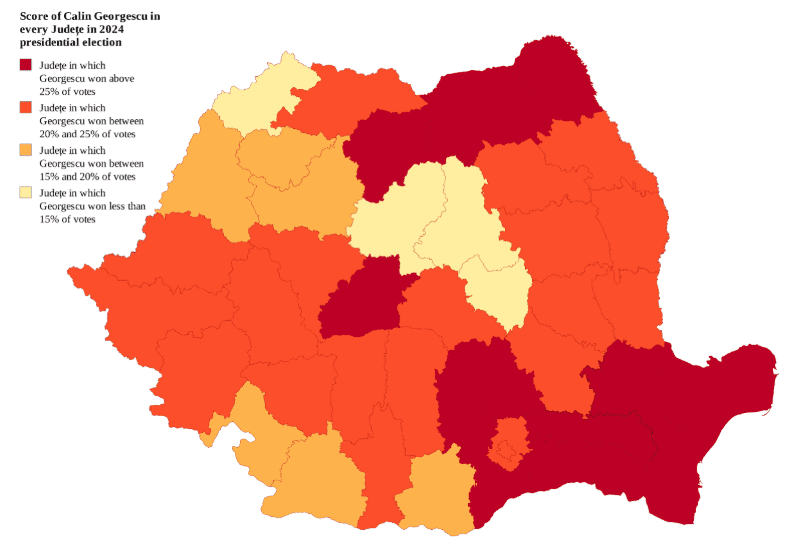
Annex 2 :
Annex 3 :
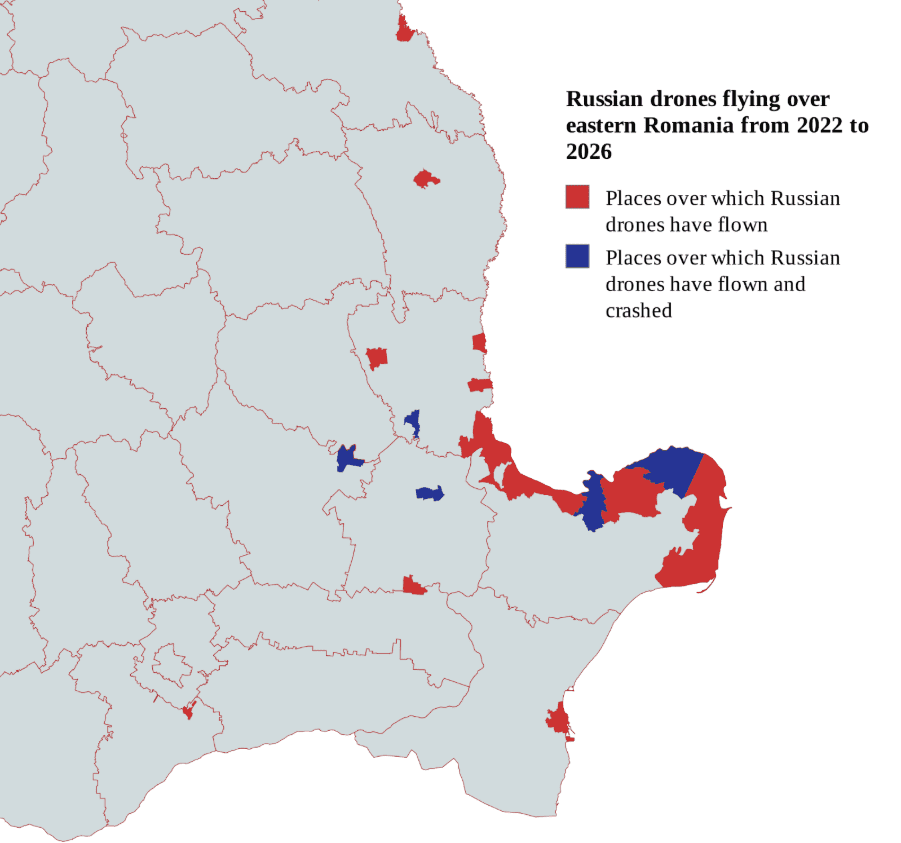
Annex 4 :