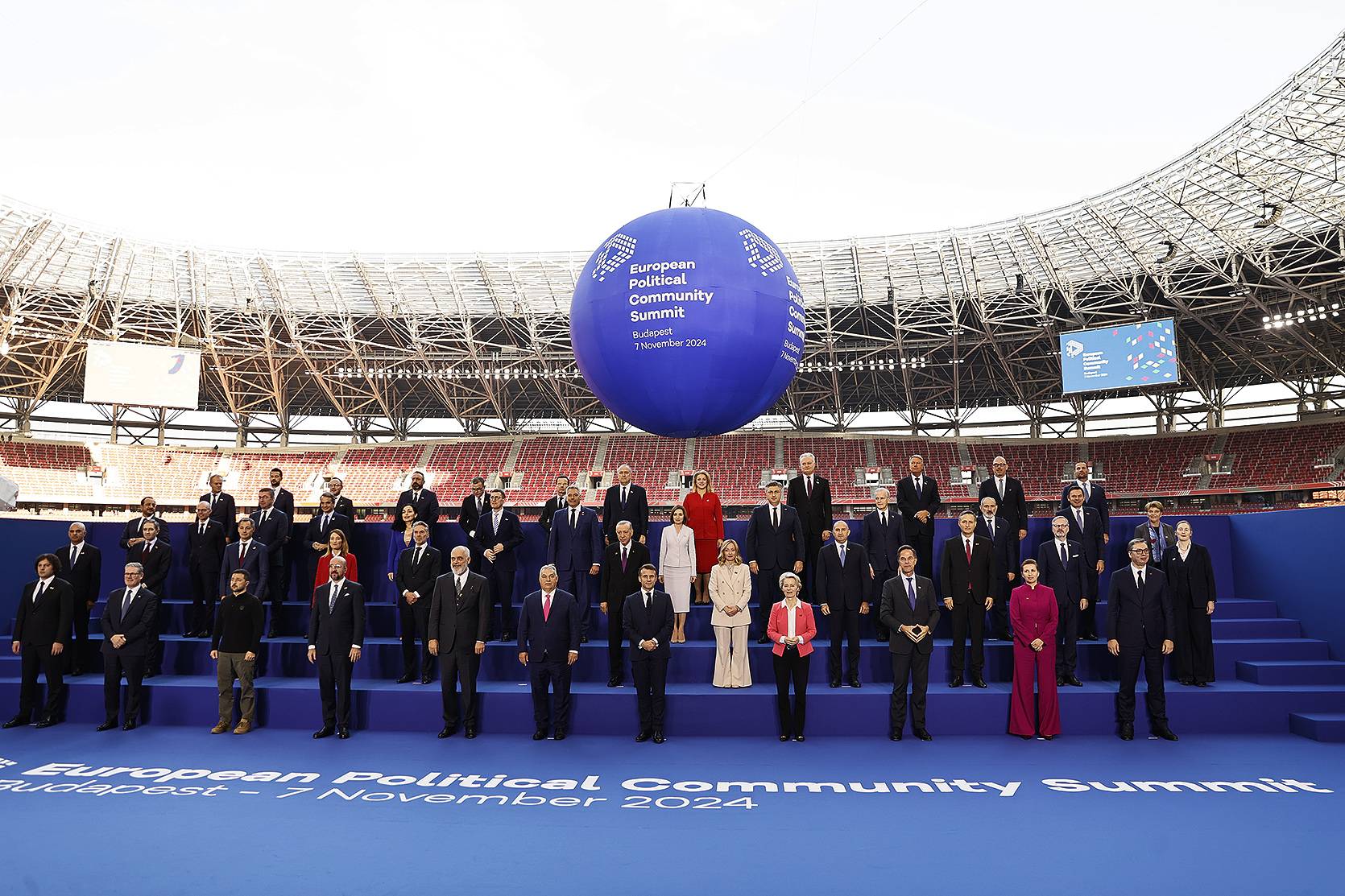

Armenia is set to become the center of Europe in early May. Under the slogan “Building the Future: Unity and Resilience in Europe,” Yerevan will host the 8th summit of the European Political Community, alongside the first-ever Armenia–European Union summit. Discussions in Yerevan will focus on strengthening democratic resilience, advancing connectivity, and enhancing economic and energy security, while also addressing evolving security dynamics and regional challenges[i].
What is the European Political Community, and is it still relevant?
The need for the establishment of the European Political Community emerged in 2022 following the outbreak of the Russia-Ukraine War, when the initiative was put forward by Emmanuel Macron. The forum aims to provide a platform for discussing political and strategic issues concerning the future of Europe and to strengthen coordination on these matters, particularly in the areas of security and the energy crisis.
Notably, participation in the EPC includes both EU member states and non-EU countries that share European values. It is also significant that the EPC has facilitated the United Kingdom’s “return” to discussions on Europe’s common future.
In a number of countries, the creation of the European Political Community was initially perceived as a move that could hinder further enlargement of the European Union. The argument was that, by providing a platform for dialogue, the format might serve as a substitute for the membership process, potentially stalling accession. As a result, it faced considerable criticism. At the same time, concerns were raised that the platform would duplicate existing institutions such as the European Union, the Organization for Security and Co-operation in Europe, and the Council of Europe, calling into question its overall purpose.
In practice, however, the platform has come to complement existing formats, many of which have long struggled to produce coordinated decisions for the broader European region and, to some extent, appear to have lost their relevance. Some of their mechanisms have simply ceased to function effectively. For example, the European Neighbourhood Policy—including the Eastern Partnership—has largely lost its original purpose and significance. The OSCE can be described as effectively paralyzed due to tensions with Russia, while decision-making within the EU is often complicated by internal political divisions.
Unlike the aforementioned organizations, the European Political Community is not a decision-making body. This, however, may be seen as an advantage: within such a flexible framework, states are freer to articulate their positions, and the likelihood of reaching ad hoc agreements increases, without the constraints of heavy bureaucracy and procedural rigidity.
Despite initial skepticism, the platform has retained its relevance—first, in the context of the prolonged conflict in Ukraine, and more recently, in light of Donald Trump’s return to the White House and the need to adapt to rapidly evolving geopolitical dynamics. In this context, the EPC’s primary function appears to be the consolidation of Europe as a center of power and the advancement of a coherent European security architecture[ii].
As for concerns that the platform might hinder EU enlargement, the opposite may be true: it can help countries integrate more closely into the European space. It is evident that the EPC cannot replace the EU accession process—and is not intended to do so. Rather, its core purpose is to serve as a bridge that facilitates and accelerates integration. At the same time, this format can meaningfully promote transactional and strategic cooperation between EU member states and non-member countries.
There is also an ongoing discussion within European expert circles about the potential institutionalization of the European Political Community, particularly with a view to making its activities more tangible and effective[iii].
The European Political Community and Armenia
Meetings of the European Political Community serve, first and foremost, as an important platform for non-EU countries in terms of delivering tangible outcomes. For example, the Community’s second summit, held on June 1, 2023, in Chisinau, provided clear support for Moldova’s European trajectory. In particular, the European Union formally launched the European Union Partnership Mission in Moldova to counter hybrid threats. Progress was also made in synchronizing Moldova’s electricity grid with the European network and reducing its dependence on Russian gas, including through a €200 million energy support package. In addition, the EU and participating countries highlighted efforts to impose sanctions on entities seeking to destabilize the Moldovan government. Ahead of the summit, Moldova’s armed forces received €7 million worth of non-lethal equipment financed through the European Peace Facility. Poland also delivered six C-130 aircraft carrying weapons and ammunition, donated to the Moldovan police[iv].
Thus, while the format is primarily intended to address urgent pan-European issues and develop a shared strategic approach, it is also highly significant as a venue for bilateral and smaller multilateral engagements that can yield concrete results.
The first summit of the European Political Community, held on October 6, 2022, in Prague, not only demonstrated Europe’s political unity in a time of crisis, but also produced tangible outcomes for Armenia, particularly in the context of normalizing relations with Azerbaijan.
It was within the framework of this meeting that talks took place between Nikol Pashinyan and Ilham Aliyev, during which the parties reaffirmed their commitment to the United Nations Charter and the 1991 Almaty Declaration, through which both sides recognize each other’s territorial integrity and sovereignty[v]. This statement effectively laid the foundation for the subsequent normalization process between Armenia and Azerbaijan, which ultimately led to the outcomes of the August 8, 2025 Peace Summit in Washington.
Perhaps the most significant outcome for Armenia at the Prague summit was the agreement to deploy an EU civilian monitoring mission, which was stationed on the Armenian side of the border immediately after the summit and made a substantial contribution to maintaining stability along the Armenia–Azerbaijan border[vi].
Perhaps the most significant outcome for Armenia at the Prague summit was the agreement to deploy an EU civilian monitoring mission, which was stationed on the Armenian side of the border immediately after the summit and made a meaningful contribution to maintaining stability along the Armenia–Azerbaijan border.
At present, Armenia’s hosting of this important European event also carries symbolic significance, particularly given that Armenia is among the participating countries of the European Political Community with one of the lowest levels of integration with the European Union. It should be noted that the venue for EPC summits is not determined on a strictly rotational basis, but rather selected by participating states. According to an informal understanding, one of the two annual summits is held in an EU member state, and the other in a non-member country. In this context, Armenia’s selection as host underscores the mutual interest in deepening relations, as well as Armenia’s growing importance for Europe.
The summit will be the largest international event ever hosted by Armenia, placing Yerevan at the center of global attention—an important factor in strengthening the country’s international standing. It will also provide an opportunity to showcase progress in democratic reforms. As the host country, Armenia may also put forward initiatives aimed at strengthening the format and enhancing its effectiveness.
From a more practical perspective, it is important to note that the summit agenda includes areas in which Armenia has a direct stake—ranging from resilience to connectivity, as well as economic and energy security. In this regard, Armenia will have a valuable opportunity to advance discussions on attracting investment, particularly in the areas of transport connectivity and energy. While bilateral agreements in such sectors are not formally outcomes of EPC summits, they often make use of this inclusive platform.
Drawing on previous experience, including that of Moldova, discussions may also address the future mandate and activities of the EU civilian monitoring mission, especially as public debate on this issue has intensified following the August 8, 2025 Washington summit. Notably, in the lead-up to the EPC summit in Yerevan, the EU has already announced its decision to deploy a second civilian mission in Armenia. In the coming months, the EU Partnership Mission in Armenia (EUPM Armenia) is expected to become operational. It is worth noting that, after Palestine, Armenia will become only the second location where the EU maintains two active civilian missions simultaneously.
It is also possible that new financial assistance packages for Armenia will be announced, aimed at strengthening democratic institutions—particularly in light of upcoming electoral processes and the associated rise in hybrid threats.
The summit also presents a valuable opportunity to mark important milestones in bilateral relations. Several leaders are expected to visit Armenia not only to participate in the summit but also to pursue their own bilateral agendas. The signing of a strategic partnership agreement between Armenia and France has already been officially announced, and further deepening of defense cooperation may be expected. There may also be progress toward defining a strategic partnership framework with Germany, particularly in the areas of economy and infrastructure.
Conclusion
In conclusion, the upcoming EPC summit in Armenia represents a significant opportunity for the country to strengthen its international standing. At the same time, its tangible impact will depend on how effectively Armenia is able to translate dialogue into durable partnerships.
Varduhi Harutyunyan, International Relations Specialist
[i] https://epcyerevan2026.am/
[ii] https://www.chathamhouse.org/2025/10/european-political-community-can-be-more-unidentified-political-object#:~:text=The%20rise%20of%20Reform%2C%20the,expression%2C%20that%20its%20summits%20enable
[iii] https://geopolitique.eu/en/2022/10/05/what-can-the-european-political-community-achieve/#:~:text=On%20the%20other%20hand%2C%20the,accelerate%20accession%20to%20the%20EU
[iv]https://www.europarl.europa.eu/RegData/etudes/BRIE/2023/747431/EPRS_BRI(2023)747431_EN.pdf#:~:text=The%20European%20leaders%20once%20again%20sent%20a,test%20which%20it%20needs%20to%20meet%20united.
[v] https://www.primeminister.am/hy/foreign-visits/item/2022/10/06/Nikol-Pashinyan-visiting-Praha/
[vi] https://www.eeas.europa.eu/eeas/%C2%AB%D5%B0%D5%A1%D6%80%D6%81-%D5%B8%D6%82-%D5%BA%D5%A1%D5%BF%D5%A1%D5%BD%D5%AD%D5%A1%D5%B6%C2%BB-%D5%B0%D5%A1%D5%B5%D5%A1%D5%BD%D5%BF%D5%A1%D5%B6%D5%B8%D6%82%D5%B4-%D5%A5%D5%B4-%D5%A4%D5%AB%D5%BF%D5%B8%D6%80%D5%A4%D5%A1%D5%AF%D5%A1%D5%B6-%D5%AF%D5%A1%D6%80%D5%B8%D5%B2%D5%B8%D6%82%D5%A9%D5%B5%D5%A1%D5%B6-%D5%B4%D5%A1%D5%B6%D5%A4%D5%A1%D5%BF%D5%AB-%D5%BE%D5%A5%D6%80%D5%A1%D5%A2%D5%A5%D6%80%D5%B5%D5%A1%D5%AC_hy