
Ahead of the regular parliamentary elections scheduled for June 2026, numerous political forces and figures have declared their intention to participate. For some, this participation is driven primarily by the desire to announce their presence, enter the political arena, or secure minimal representation in parliament. However, beyond the ruling Civil Contract party—whose clear objective is to secure a parliamentary majority—there is one additional political force that aims to present itself as a serious competitor. This is the Strong Armenia party, formed by the Mer Dzevov (“Our Way”) movement.
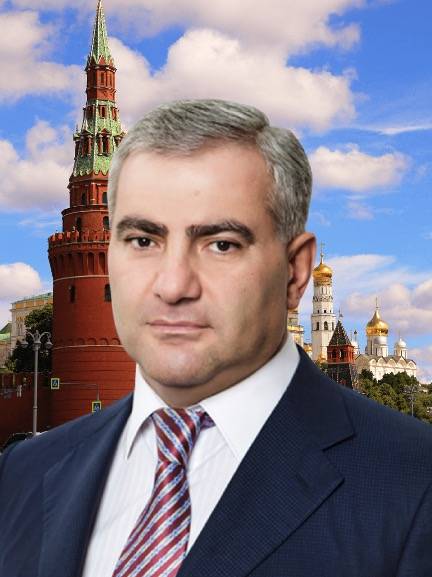
At present, this force relies heavily on actors and voter groups with a pronounced pro-Russian orientation. If in 2021 these actors and voters placed their hopes in the Armenia Alliance, this time the overwhelming majority of them view Russian-Armenian oligarch Samvel Karapetyan as an alternative aligned with Russian interests to the current government’s policies.
Karapetyan himself, however, cannot personally run in the elections, as he does not meet the legal requirement of permanent residence in Armenia. Nevertheless, representatives of this political force consistently invoke his “capabilities,” “resources,” and “experience.” It remains unclear through what formal or legal mechanisms Karapetyan’s “capabilities” and “experience” would be applied in governing the Republic of Armenia if he is legally ineligible to be elected. The implicit assumption appears to be a governance model akin to that of Georgia, where oligarch Bidzina Ivanishvili—dispatched from Russia—has exercised de facto shadow governance. Although such an arrangement would constitute a violation of Armenia’s Constitution, this does not seem to particularly concern the political actors advancing these ideas.
This raises the core question: what is the principal ideological orientation of this political force and its representatives?
An analysis of the rhetoric of the leaders of the party bearing the emphatic name Strong Armenia suggests that they propose a single overarching path to “strengthening” both the domestic and foreign policy arenas. In essence, this entails a “reset” of relations with Russia in foreign policy, and the implementation of new economic projects domestically through Russian—or Russia-linked—capital.
In the sphere of foreign policy, particular attention is drawn to the proposal to “allocate a share to Russia alongside other centers.” Put more plainly, this can be described as a “return to Russia’s embrace.” This approach is not surprising, given that a segment of Armenian society expresses such preferences, and the representatives of this force are clearly attempting to secure those votes. In addition, members of the Strong Armenia party appear to hope for support from certain Russian circles in the form of resources.
Domestically, the proposed solution is “consolidation,” which in practice would imply the exclusion of dissent through rigid, authoritarian methods. In parallel, the party advances economic proposals, the centerpiece of which is the creation of 300,000 new jobs. Yet it remains unclear under what model these jobs would be created. At first glance, the proposal closely resembles a “planned economy” model—the very system that ultimately led to the collapse of the Soviet Union. If, on the other hand, the intention is to attract investment within the framework of free-market relations, Armenia is already moving along precisely that path.
Between 2018 and 2025, this approach has resulted in the creation of approximately 275,000 jobs. Consequently, the proposal effectively amounts to replacing incoming capital with Russian capital—an outcome that appears highly unlikely given Russia’s current economic and political circumstances.
In sum, this political force—which will most likely emerge as the main institutional opposition in the next parliament—will represent Russian interests there, much as the Armenia Alliance sought to do between 2021 and 2026. In this light, it may already be worth aligning the party’s name with its ideology by formally re-registering it as Strong Russian Armenia. At the very least, this would be a more honest designation.