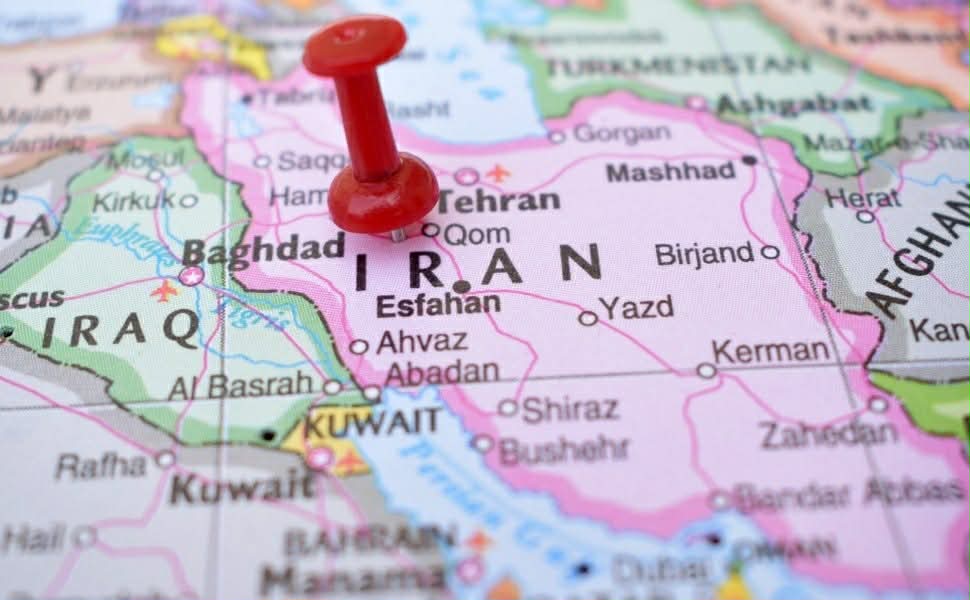

The war between the United States and Iran is unfolding in Armenia’s immediate neighborhood, and it is therefore natural to follow developments closely, seeking to understand their possible implications for the region and for Armenia itself. Although the war is still ongoing, it is already possible to draw certain conclusions regarding its underlying drivers and the broader logic of developments associated with it in the sphere of international relations.
Motivations for the Use of Force and the Outbreak of War
The United States National Security Strategy adopted in November 2025 stated that the Middle East is no longer among Washington’s primary priorities, particularly because, as a result of the 12-day war earlier that year, Iran had already lost a significant portion of its capabilities, including its ability to develop nuclear weapons, and could no longer pose an immediate threat to Israel.
Despite these provisions—which suggested that further use of force was unwarranted—the United States initiated military action against the country just a few months later. In the decision-making process, the role of Israeli lobbying was undoubtedly significant. However, this alone would likely not have led to this outcome without the protests that erupted in Iran. These protests acted as a catalyst for the launch of military operations, as they created the impression that the ruling regime in Iran was weak, that public dissatisfaction was high, and that it could be managed and steered accordingly.
The protection of Israel’s security is, in itself, an influential factor for the U.S. administration. However, it is not sufficient to justify initiating large-scale military operations that require vast resources and involve significant uncertainties. More compelling arguments, rooted in direct U.S. interests, were necessary. An additional—though no less important—consideration in favor of launching the war was likely the opportunity to demonstrate American power and superiority on a global scale. This served as a means of reasserting unilateral global leadership and signaling U.S. dominance to all potential competitors. The United States demonstrated that it is the only country capable of conducting military operations anywhere in the world without incurring significant losses. Finally, by striking Iran, it also indirectly strikes at its rivals. By weakening or potentially pushing Iran out of the geopolitical arena, it delivers a blow to its backers as well.
Implications for the System of International Relations
The war against Iran, launched without the approval of the United Nations Security Council, inflicts a serious—possibly irreparable—blow to international law and to the system of multilateral relations. This is not the first war to grossly violate international law and the fundamental principle of the non-use of force in interstate relations. However, it is the first action of this kind carried out by the United States in recent decades. In the past, Washington either secured approval from the Security Council or, at the very least, ensured broad international support and formed a wide coalition.
The war against Iran represents a unilateral action. It undermines the very foundations of international law. This is particularly dangerous for small states, whose security often depends on the consistent application of international legal norms.
Global Implications
The war has demonstrated that organizations such as BRICS and the Shanghai Cooperation Organization—established to counterbalance the United States on the international stage—are, if not ineffective, then at least incapable of taking meaningful action. Iran, a member of these groupings that aspire to consolidate the Global South, did not receive adequate support from its partners. This applies both to India and, in particular, to Russia and China. Their “outrage” was limited to statements expressed in a relatively restrained tone.
This situation indirectly points to the reaffirmation of American hegemony in the international system. It also shows that even major powers such as Russia and China—which outwardly position themselves against US dominance and in favor of a multipolar world—are not prepared, at critical moments, to sacrifice their own interests or enter into direct confrontation with the United States.
As has become evident, Iran also lacks reliable allies in the Islamic world. The war has demonstrated that, in a broader sense, there is no real Islamic solidarity—only interests that are not guided by sentiment. Although Iran’s own reckless actions toward its neighbors did little to foster such solidarity, these states nevertheless showed no determination to defend a fellow Muslim country.
At the same time, it must be acknowledged that Iran is miscalculated in its strategic assessments. Its regional ambitions did not correspond to its actual capabilities. Regardless of how the war concludes, it is clear that Iran will emerge significantly weakened—with a damaged economy and a partially impaired system of governance. Ultimately, it is the Iranian people who will bear the cost of the country’s leadership’s unfounded foreign policy ambitions.
Regional Implications
If the war concludes in line with an American scenario—leading to the emergence of a pro-U.S. government in Iran—it will significantly reshape the broader region. Both in the South Caucasus and in Central Asia, Russia’s influence will be substantially weakened, while that of the United States will be strengthened. The geopolitical concept of the “North–South axis” will effectively be removed from the strategic landscape.
In the event of such a transformation of Iran, Turkey would remain the only state in the region capable of counterbalancing Israel. It is no coincidence that Israel is already seeking to establish regional arrangements aimed at countering Turkey. Under this scenario, Azerbaijan’s regional role and its significance for Israel would also diminish.
Possible Scenarios for Further Developments
The objectives of the war remain uncertain; there is no clear answer as to what point the U.S. would consider its mission accomplished. From the outset, the perception has been that the ultimate aim of U.S. actions is the replacement of Iran’s ruling administration with a government that is friendly to Washington, rather than hostile to Israel. It was initially assumed that the elimination of Iran’s leader would bring about such an outcome, yet events have shown otherwise. On the contrary, it is quite possible that removing the previous leadership will strengthen the position of even more hardline forces.
In the current context, the potential goal of the war is increasingly described not as the radical transformation of the regime, but rather as the neutralization of Iran’s nuclear capabilities, alongside a significant reduction in its regional influence, power, and ability to project force. However, the question remains as to when the United States will achieve these objectives. As such, the war risks devolving into a “quagmire,” reminiscent of conflicts in Iraq or Vietnam. According to some U.S. analysts, while the conflict initially had a limited scope—aimed at inflicting major damage without seeking complete destruction—it is now inadvertently transforming into a medium-scale war with no clearly defined objectives. This scenario is undoubtedly the least favorable for Washington and could entail serious strategic costs, even if it achieves the intended security outcomes for Israel.
It should also be noted that, domestically, a weak and poorly governed Iran constitutes an additional risk, potentially threatening regional stability and, through its proxies, Israel’s security.
Conclusion
Armenia must take into account that the war against Iran could have significant geopolitical repercussions, both globally and regionally. In the event of a complete U.S. victory—if all its objectives are realized—Russia’s role in the region would be further diminished. At the same time, the ongoing erosion of international law is already evident, which necessitates caution in Armenia’s foreign policy, particularly avoiding goals whose implementation relies on consistent adherence to international legal norms. It is also crucial to remain prudent regarding potential developments in Israeli–Turkish relations, avoiding unfounded assumptions.
Hrachya Tashchyan
23 March 2026